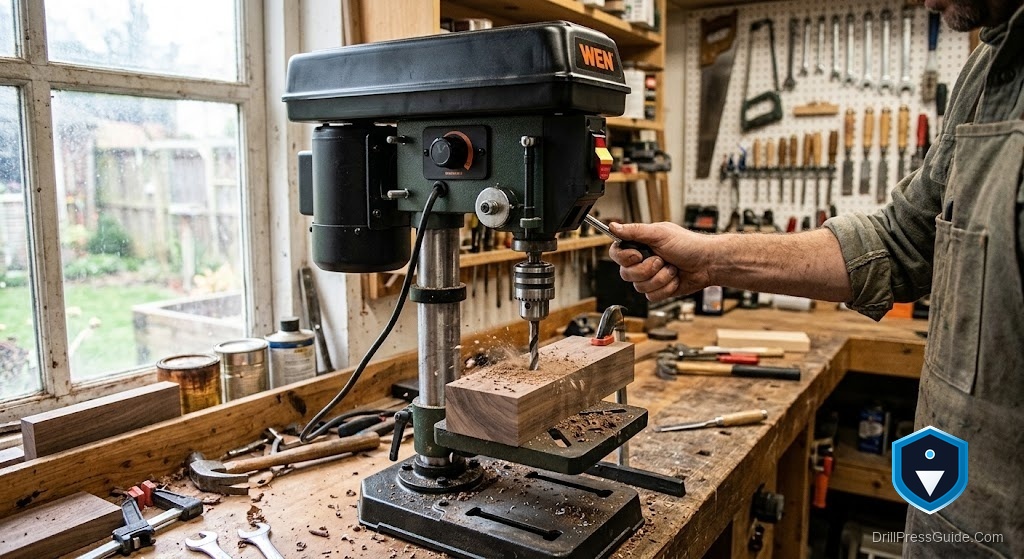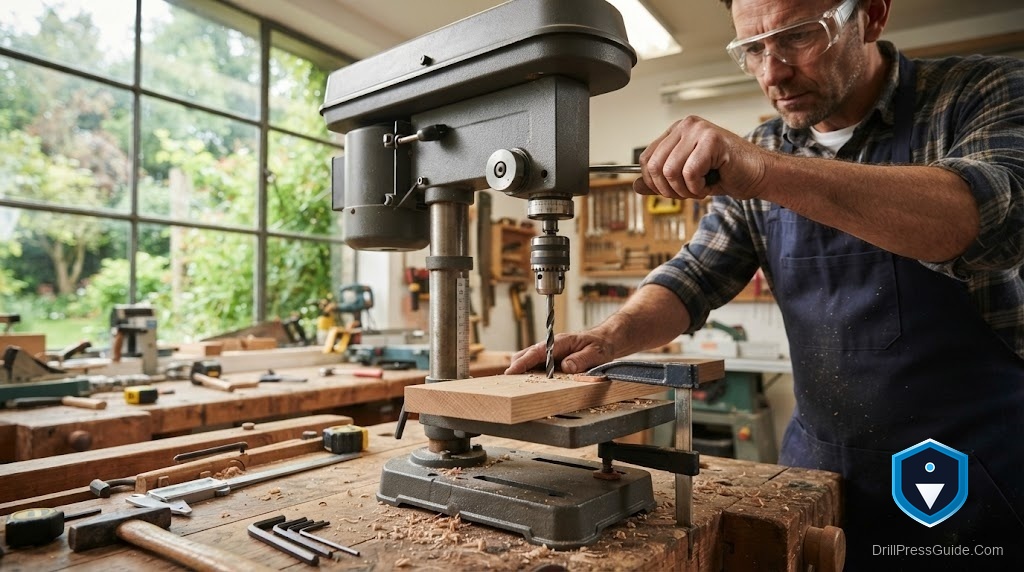
A Practical Guide to the WEN Variable-Speed Drill Press Lineup
Variable speed is the feature that changes how a drill press feels to use. Instead of stopping to move a belt between pulleys every time you switch from a large bit to a small one, you turn a dial and the machine changes RPM while it runs. WEN has made this convenience accessible across a lineup of benchtop presses, from 8-inch machines to the popular 12-inch, and that is why “WEN variable speed drill press” is such a common search. Here is a practical guide to how the lineup breaks down and which one fits your bench.
What variable speed actually does
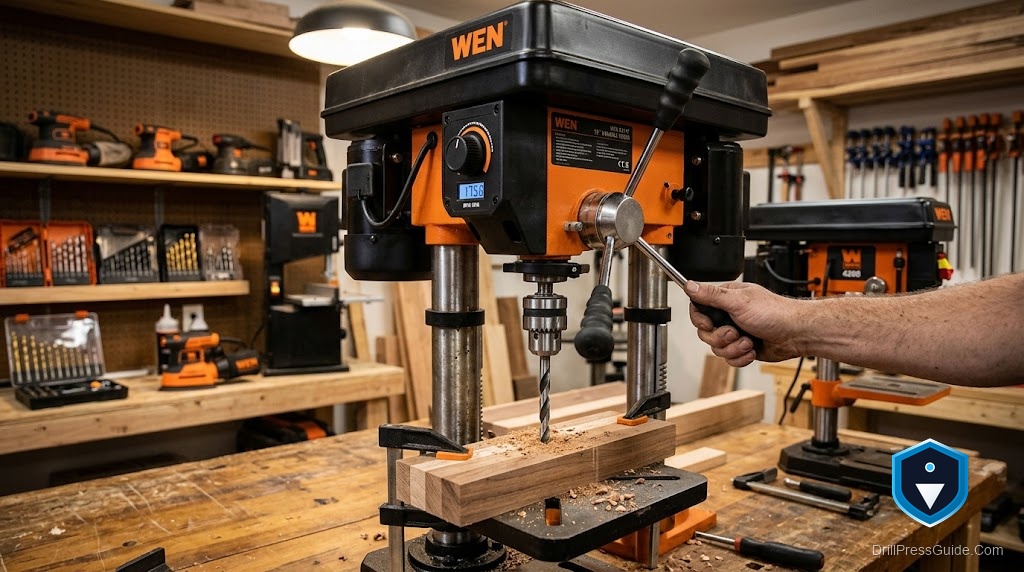
First, the feature itself, because it is the whole point. On a traditional belt-drive press, you set speed by opening the head and moving the belt across stepped pulleys. A variable-speed WEN replaces that with a mechanical system you adjust by turning a dial or handle, changing RPM smoothly without moving the belt. The flagship 12-inch WEN pairs this with a digital speed readout so you see the exact RPM. The benefit is real: you match speed to material and bit instantly (slower for large bits and metal, faster for small bits in wood), which encourages using the right speed every time rather than leaving the belt where it sits.
How the lineup breaks down
WEN’s variable-speed presses sort mainly by swing:
- The 12-inch (4214 / 4214T). The flagship: a 12-inch swing, a 5-amp induction motor, a 580 to 3200 RPM variable-speed range with a digital readout, a laser, a work light, an adjustable depth stop, a table roller extension, 3-1/8-inch spindle travel, and a 5/8-inch keyed chuck. The “T” versions add an upgraded table.
- The 10-inch (4212 class). A 10-inch variable-speed machine for a smaller footprint, keeping the dial convenience with less swing.
- The 8-inch and 5-amp bench models. Smaller WEN presses; note that some 8-inch WEN machines are 5-speed belt-change rather than variable-speed, so check the description before buying if the dial matters to you.
- The DPA2412T table. WEN’s accessory MDF table with a fence, a stop block, and a removable insert upgrades compatible machines for woodworking.
The practical takeaway: the 12-inch 4214T is the full-featured flagship, the 10-inch 4212 trades swing for a smaller footprint, and the smaller machines may be belt-change, so confirm variable speed if you want it.
Where the variable-speed WENs fit
Let me be direct about the appeal. For a home woodworker, a variable-speed WEN delivers convenience usually found on machines well above its class: the dial and (on the 12-inch) the digital readout make matching speed to material effortless, and the laser, light, and generous travel round out a genuinely useful package. The 12-inch 4214T in particular is one of the best value feature-rich benchtop presses available. What these are not is industrial machines, so match them to home-shop wood and light metal. Within that lane, the variable-speed convenience is exactly what makes them so popular.
Tooling and replacement parts
Get the most from a variable-speed WEN with good tooling. Fit a quality 5/8-inch keyed drill chuck with the matching arbor if the original wears, keep a fresh drill press V-belt on the shelf, and add a set of Forstner bits to use the swing. A drill press vise helps metal work, and a spare drill press chuck key saves a stalled job. You can find the flagship as the WEN 4214T variable-speed drill press. Confirm the taper before ordering an arbor.
The verdict
The WEN variable-speed drill press lineup is built around one genuinely useful convenience: changing RPM with a dial instead of moving a belt, so you always match speed to the material. Choosing within it is about swing: the 12-inch 4214T is the full-featured flagship (variable speed, a digital readout, a laser, a light, and generous travel) and the best value pick for most home woodworkers, while the 10-inch 4212 trades swing for a smaller footprint, and the smaller 8-inch machines may be belt-change rather than variable-speed, so confirm before buying. Match one to home-shop wood and light metal, add the DPA2412T table for woodworking, and back it with a good chuck and Forstner bits. For heavy industrial work, a larger floor press is the next step.
Takeaways:
- Variable speed lets you change RPM with a dial instead of moving a belt, so you always match speed to the material.
- The 12-inch 4214T is the full-featured flagship (variable speed, digital readout, laser, light, 3-1/8-inch travel) and the best value pick for most.
- The 10-inch 4212 trades swing for a smaller footprint; some 8-inch WEN machines are belt-change, so confirm variable speed before buying.
- Match one to home-shop wood and light metal, add the DPA2412T table for woodworking, and back it with a good chuck and bits.
FAQ
What does variable speed mean on a WEN drill press? You change spindle RPM by turning a dial or handle while the machine runs, instead of stopping to move the belt between pulleys. The 12-inch flagship adds a digital readout of the exact speed.
Which WEN variable-speed drill press is best? The 12-inch 4214T is the full-featured flagship (variable speed, digital readout, laser, light, generous travel) and the best value for most home woodworkers. The 10-inch 4212 suits a smaller footprint.
Are all WEN drill presses variable speed? No. Some smaller WEN machines, like certain 8-inch models, are 5-speed belt-change rather than variable-speed. Confirm the description if the dial matters to you.
What are the WEN 4214T specs? A 12-inch swing, a 5-amp motor, a 580 to 3200 RPM variable-speed range with a digital readout, a laser, a work light, a depth stop, a table roller extension, 3-1/8-inch travel, and a 5/8-inch keyed chuck.
What is the WEN 4212? A 10-inch variable-speed WEN drill press, keeping the dial convenience in a smaller swing and footprint than the 12-inch flagship.
Can variable-speed WENs drill metal? Light metal at appropriate low speeds, yes, and the dial makes setting that speed easy. They are woodworking-focused benchtop presses, not industrial machines.
What chuck do they use? The 12-inch uses a 5/8-inch keyed chuck; smaller machines use smaller chucks. Confirm the taper by removing the chuck before ordering a replacement arbor.
References
- WEN Products, variable-speed drill press lineup (4214T, 4212) and specifications: https://wenproducts.com/collections/drill-presses
- WEN Products, drill press accessory tables and documentation: https://wenproducts.com/products/wen-4214t
- WEN Products, drill press manuals and support: https://wenproducts.com/pages/product-manuals