
The VFD Drill Press: A Practical Guide
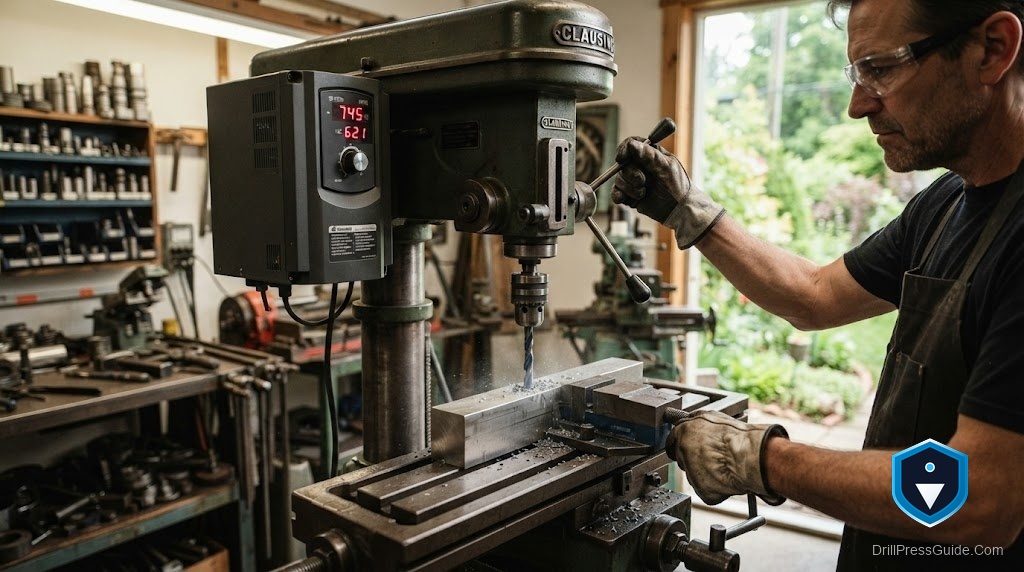
Changing speed on most drill presses means stopping, opening a cover, and moving a belt across pulley steps, a small chore that gets old fast when a job needs frequent changes. The VFD drill press does away with it, letting you dial the spindle speed with a knob while the machine runs, the way a modern machine tool should. The trick is a variable frequency drive controlling the motor, and while it is one of the most rewarding upgrades you can make, it also brings real electrical considerations you need to get right. Understanding what a VFD drill press is, what it gives you, and what it demands is the key to doing it well. This guide covers it.
A VFD drill press is one whose motor speed is controlled by a variable frequency drive, an electronic controller that varies the frequency (and voltage) supplied to the motor to change its speed smoothly, instead of relying only on belt and pulley changes. It is typically built around a three-phase AC motor, which a VFD drives and speed-controls cleanly, and the result is stepless, dial-in speed control at the turn of a knob. The VFD replaces the fiddly mechanical speed change with electronic control, and that single change transforms how the machine is used.
What a VFD gives you
The benefits are why people go to the trouble. Speed changes become instant and stepless, a knob turn while running instead of stopping to move a belt, and you can fine-tune the exact speed for a bit and material rather than picking the nearest pulley step. You can run a three-phase motor from single-phase household power, since a VFD can take single-phase input and output three-phase, which is often the whole reason for fitting one to a machine with a three-phase motor. And you gain features like smooth soft start, controlled stopping, and often reversing, which make the machine pleasant and, with a soft start, easier on the belt and motor. For a shop that changes speeds often or has a three-phase machine on single-phase power, a VFD is genuinely transformative.
What a VFD demands
Honesty about the requirements keeps the project safe, because a VFD is an electrical undertaking, not a bolt-on. It must be matched to the motor, sized to the motor’s voltage, phase, and power rating, since a mismatched drive will not run it properly or safely. It must be wired correctly, with proper input and output connections, grounding, and often the motor wired for the correct voltage, which is work to do carefully and to code. And the motor controls should go through the VFD, not switch the motor directly, since a VFD is controlled by its own inputs and switching a running VFD’s output can damage it. If you are not comfortable with this level of electrical work, it is a job to plan carefully or have done properly, because doing it wrong risks the drive, the motor, and safety.
Setting up a VFD drill press
Done right, setup rewards care. Mount the VFD where it stays cool and clean, away from chips and coolant, since these are electronics in a dusty environment. Program the drive’s basic parameters to the motor, the motor’s rated frequency, voltage, and current, and set sensible acceleration and deceleration ramps for a smooth start and stop. Set the speed range appropriately, remembering that running a motor far below its rated speed reduces its cooling and torque, so keep within a sensible range or add cooling if you run very slow. Then confirm the direction and the emergency stop work correctly before drilling.
Using it well
A VFD makes good drilling habits easier, so use them. Dial the correct speed for the bit and material, now trivial to set exactly, running slow for large bits and steel and fast for small bits and wood. Use the soft start and controlled stop rather than snapping power on and off, which is gentler on everything. Still clamp the work in a drill press vise bolted to the table, since electronic speed control does nothing to change the need to hold work against the drilling torque, and use sharp bits and cutting fluid on metal. If your machine still has its pulleys, you can combine a coarse pulley setting with fine VFD control for the best of both.
Conclusion
The VFD drill press trades the belt-and-pulley speed change for electronic control, giving instant stepless speed at a knob, the ability to run a three-phase motor on single-phase power, and smooth soft starts and stops. Those benefits are real and transformative for anyone who changes speeds often, but they come with genuine electrical requirements: the drive must be matched to the motor, wired correctly and to code, and controlled through its own inputs. Set it up with the VFD kept cool, its parameters programmed to the motor, and sensible speed limits, then enjoy dialing the exact speed for every job while still clamping the work and using sharp bits. Done properly, a VFD makes a drill press feel like a far more modern machine.
Three takeaways: a VFD gives stepless dial-in speed, runs a three-phase motor on single-phase power, and adds soft start and stop; it demands a drive matched to the motor, correct code-compliant wiring, and control through the VFD’s own inputs; and set it up cool and programmed to the motor, then still clamp work and run correct speeds.
Frequently Asked Questions
What is a VFD drill press? A drill press whose motor speed is controlled by a variable frequency drive, an electronic controller that varies the frequency to the motor for smooth, stepless speed changes, instead of relying only on belt and pulley changes.
What are the benefits of a VFD on a drill press? Instant stepless speed changes at a knob while running, the exact speed for any bit and material, the ability to run a three-phase motor on single-phase power, and smooth soft start, controlled stop, and often reversing.
Can a VFD run a three-phase motor on single-phase power? Yes, that is a common reason to fit one. A VFD can take single-phase input and output three-phase to drive and speed-control the motor, which lets a three-phase machine run on household single-phase supply.
What does a VFD require to set up safely? A drive matched to the motor’s voltage, phase, and power; correct, code-compliant wiring and grounding; the motor wired for the right voltage; and control through the VFD’s own inputs rather than switching the motor directly.
Can I run the motor at any speed with a VFD? Within a sensible range. Running a motor far below its rated speed reduces its cooling and torque, so keep to a reasonable range or add cooling for very slow running. Set acceleration and deceleration ramps for smooth starts and stops.
Do I still need to clamp work on a VFD drill press? Yes. Electronic speed control does nothing to change the need to hold work against the drilling torque. Clamp the work in a vise bolted to the table, use sharp bits, and use cutting fluid on metal, as on any press.
References
- VintageMachinery.org, machine tool references and literature. http://vintagemachinery.org
- Sears PartsDirect, drill press parts and diagrams. https://www.searspartsdirect.com


