Convert a Drill Press to Variable Speed: Capacity, Setup, and Everyday Use
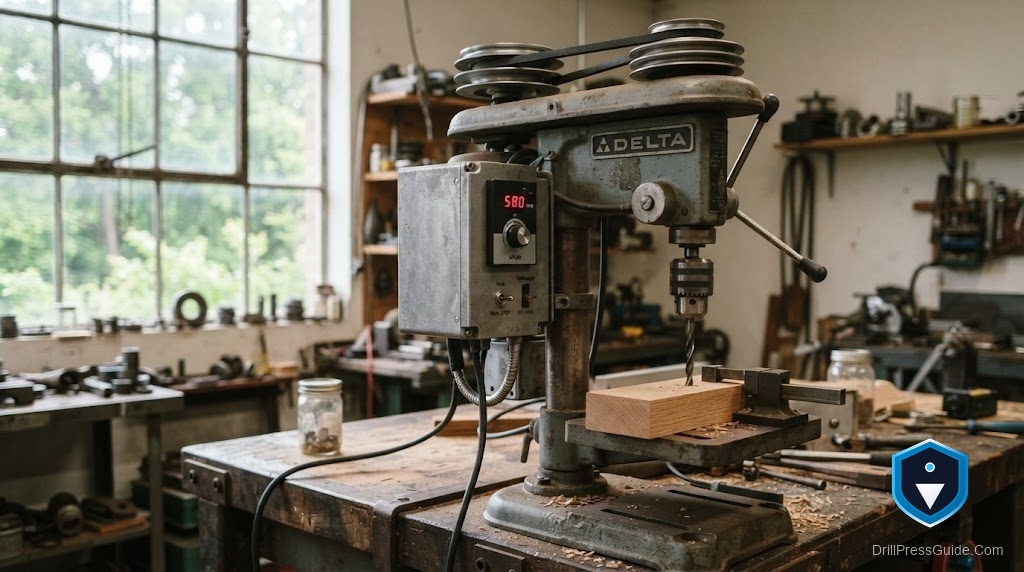
Moving a belt across stepped pulleys to change speed is one of those chores that feels fine the first time and tedious the hundredth. Drill a hole in pine, then a big hole in steel, then back to pine, and you are opening the pulley cover twice per project. The appeal of variable speed is simple: turn a dial, watch the RPM change, never touch the belt. Converting a belt-driven press to variable speed is doable, but the right method depends on your motor, and one popular shortcut can quietly wreck a machine.
You can convert a drill press to variable speed in two main ways: fit a variable frequency drive to a three phase motor, which is the clean, full-range solution, or replace the motor and control with a DC or electronic variable speed setup. Running a standard single phase induction motor through a cheap router-style speed controller is not a real conversion and usually overheats the motor.
Start by knowing your motor
Everything hinges on what is bolted to the back of your press.
Most hobby drill presses run a single phase induction motor. These are built to run at one speed, and they cool themselves with a fan on the same shaft. Slow them with a simple triac controller, the kind that dims a router, and they lose torque, run hot, and can burn out, because the cooling fan slows with them and the motor was never designed for it. That is the shortcut to avoid.
A three phase induction motor, by contrast, is happy on a variable frequency drive, often just called a VFD. The drive changes the frequency of the power it sends, and the motor changes speed smoothly across a wide range while keeping usable torque. This is how many shop-built variable speed conversions are done.
The two honest conversion paths
Path one, VFD on a three phase motor. If your press already has a three phase motor, or you swap one in, a VFD gives you a dial and a genuine speed range. You still keep the belt on one or two pulley positions to set a mechanical range, then fine tune with the dial. This is the setup people mean when they praise variable speed: quiet, wide range, and no cover-opening between holes. It is the most involved conversion because it can mean a new motor and wiring, so it suits someone comfortable with electrical work or willing to hire it out.
Path two, a DC motor and controller kit. Replacing the original motor with a DC motor and matched speed control also gives real variable speed. It is a larger change and cost, but it avoids three phase power if you do not have it.
Either way, you are changing the drive system, not tricking the existing one.
Or skip the conversion and buy variable speed
Be honest with yourself about the math. A conversion takes parts, time, and some electrical confidence, and on an inexpensive press it can cost more than the machine is worth. Many people are better served by a press built for variable speed from the factory, such as the WEN 4214T variable speed drill press, which changes speed by a mechanical variable-speed system with a handle and a readout, no belt moving between jobs. If you already own a good press with a three phase motor, convert it. If you are starting from a basic single phase machine, buying variable speed is often the smarter path.
Conversion methods compared
| Method | Works with | Range and feel | Effort |
|---|---|---|---|
| VFD | Three phase motor | Wide, smooth, keeps torque | High, may need new motor and wiring |
| DC motor and control | New DC motor | Wide, smooth | High, motor swap |
| Triac or router controller | Single phase induction | Poor, loses torque, overheats | Low, but not recommended |
| Factory variable speed press | New machine | Wide, reliable | Buy and use |
Setup and everyday use after conversion
Once converted, set a mechanical belt range for the general job, coarse for big bits in metal, higher for small bits in wood, then use the dial for fine control within that range. Keep the belt-drive enclosure closed while running, respect the same safety rules the OSHA drill press eTool lays out, and mount an emergency shut-off you can hit fast. Label your dial with rough RPM marks so you can return to a known speed for repeat work.
The verdict
Converting a drill press to variable speed is worth it when you already have a solid machine with a three phase motor and a VFD to match, giving you a smooth, wide range with no belt fuss. It is not worth it, and can be harmful, if it means starving a single phase induction motor through a cheap dimmer-style controller. Three takeaways: identify your motor before buying anything, use a VFD on three phase or a DC swap rather than a triac controller on single phase, and price the conversion honestly against a factory variable speed press. Who should skip converting? Anyone starting from a basic single phase machine, where buying variable speed usually beats fighting the electronics.
Frequently asked questions
Can you convert any drill press to variable speed? Mechanically yes, but the clean methods need either a three phase motor with a VFD or a DC motor swap. A standard single phase induction motor should not be run through a cheap speed controller.
Why can’t I just use a router speed controller? Those triac controllers slow single phase induction motors by cutting power, which drops torque and slows the cooling fan, so the motor overheats and can fail. It is not a real conversion.
What is a VFD conversion? Fitting a variable frequency drive to a three phase motor. The drive varies the power frequency, smoothly changing motor speed across a wide range while keeping usable torque.
Is converting to variable speed worth it? If you own a good press with a three phase motor, yes. If you have a basic single phase machine, a factory variable speed press is often cheaper and simpler than converting.
Do I still use the belt after converting? Usually yes. You set a mechanical range on the pulleys, then fine tune with the drive dial within that range.
What are the benefits of variable speed? You change speed by a dial instead of moving a belt, match RPM precisely to bit and material, and switch between wood and metal jobs without opening the pulley cover.
Is a factory variable speed press better than a conversion? For most people starting fresh, yes, it is engineered, reliable, and warrantied. Conversions shine when you already have a capable machine to upgrade.
References
- OSHA, Woodworking eTool: Drill Press. https://www.osha.gov/etools/woodworking/production/machines-tools/drill-press
- CCOHS, Metalworking Machines: Drill Presses. https://www.ccohs.ca/oshanswers/safety_haz/metalworking/drillpresses.html
- Pro Tool Reviews, How to Use and Set Up a Drill Press. https://www.protoolreviews.com/how-to-use-drill-press/