
Clausing Drill Press Bearing Replacement: The Checks That Prevent a Bad Repair
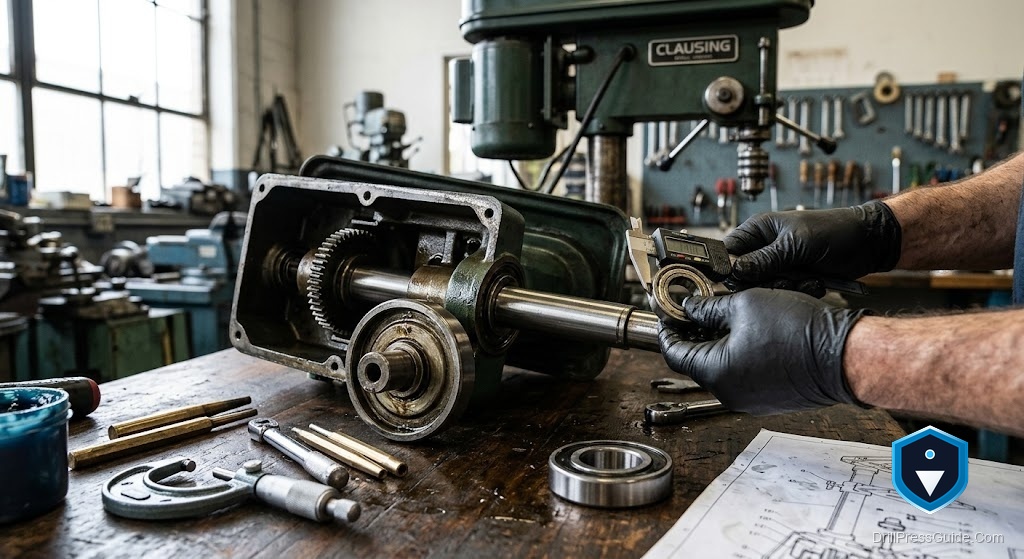
Clausing built its presses to last, so when one starts to whine or leave rough holes, worn spindle bearings are usually the cause and a rebuild is well worth doing. Clausing drill press bearing replacement is a rewarding repair, but the checks you make before pressing anything, the numbers, the seats, the fit, are what stop you from turning a good machine into a puzzle of mismatched parts.
The spindle bearings are the ball bearings that let the spindle turn smoothly inside the quill. Replacing them means pulling the spindle and quill, pressing out the worn bearings, and pressing in matching new ones, so the spindle runs quiet and true.
Short answer: confirm the noise is bearings, identify the exact bearing numbers for your Clausing model, pull the spindle, then press the old bearings out and new ones in with even force, checking the spindle runs free with no play.
The checks that prevent a bad repair
- Confirm the fault. Spin the spindle by hand with the belt off; roughness there is bearings, not the belt.
- Identify the numbers. Clausing models use several bearing sizes, so read the numbers off the old bearings or a parts diagram, never guess.
- Inspect the seats. Check the spindle and quill bore for scoring before fitting new bearings.
- Match sealed or open. Fit the same type the press used, usually sealed for a clean shop.
Tools and the parts
Removal is where presses get damaged, so a bearing separator and puller set grips behind each bearing and draws it off evenly, protecting the spindle and bore. For the common 6203-size bearings many presses use, a 10-pack of 6203-2RS sealed bearings gives you matched spares, but confirm your Clausing’s exact numbers first.
The honest drawback: a wrong bearing number means starting over, and a separator needs clearance behind the race to seat its jaws. Who should skip the job: anyone whose noise is a belt, pulley, or dry quill rather than a failed bearing.
Replacing them, step by step
- Unplug the press.
- Confirm the bearings are the fault with the belt off.
- Remove the pulley, then pull the spindle and quill.
- Draw the old bearings off with the separator and record the numbers.
- Press matching new bearings onto clean seats with even force, square to the shaft.
- Reassemble and confirm the spindle turns quiet and free with no play.
Check the numbers, press it square
Replacing Clausing bearings rewards care: confirm the fault, identify the exact numbers, inspect the seats, and press with a separator and even force. Do that and a well-built press runs quiet and true for years more.
Three takeaways:
- Confirm the noise is bearings before disassembly.
- Identify the exact bearing numbers; many presses use the 6203 size, but verify.
- Use a separator to remove bearings and press new ones in square.
FAQ
How do I know my Clausing bearings are worn? A whine or rumble that rises with speed, felt in the spindle when you turn it by hand with the belt off, points to worn bearings rather than the belt.
What bearings does a Clausing drill press use? It varies by model. Many presses use the 6203 size, but read your exact numbers off the old bearings or a parts diagram before ordering.
Can I replace bearings without pulling the spindle? No. The bearings ride on the spindle inside the quill, so you must pull the spindle to press them out and in.
Why not hammer the bearings out? Hammering damages the spindle and quill bore and ruins the bearings. Use a separator and press for even force.
Sealed or open bearings? Match what the press used, usually sealed bearings, which keep dust out and need no added grease.
How do I confirm the repair worked? The spindle should turn quiet and free with no side play, and a straight bit should run with low runout.
References
- VintageMachinery.org, Clausing drill press manuals and replacement bearing documentation: http://vintagemachinery.org


