
A Practical Guide to Parts for an Older Delta Drill Press, Number 1346008
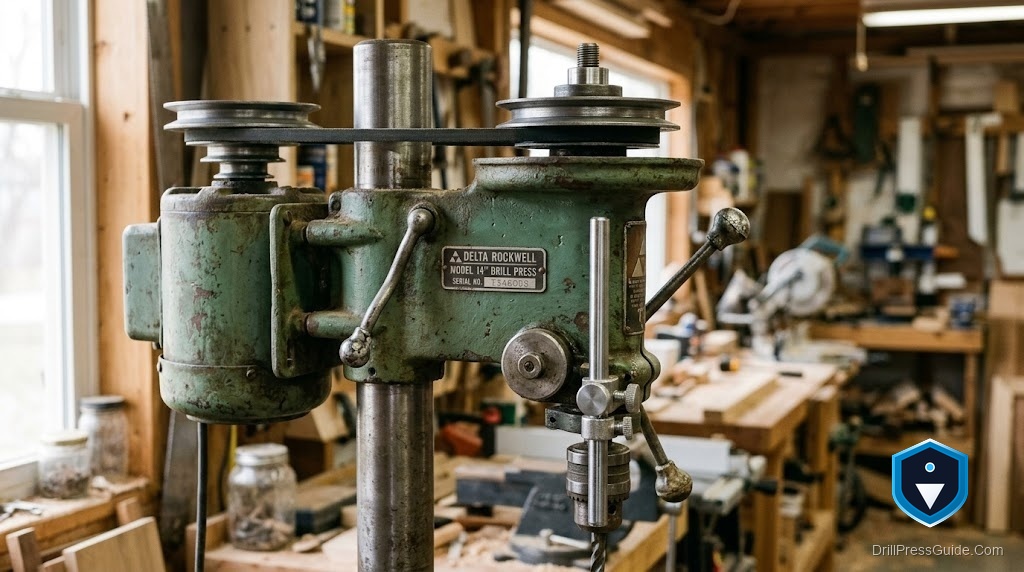
Sooner or later, restoring an older Delta means chasing a specific part number, and 1346008 is one that sends owners searching. The number is stamped or listed in an old parts diagram, the press still runs, and you need the matching component to finish a repair. The honest challenge with parts for an older Delta drill press like number 1346008 replacement part is that Delta’s vintage numbering does not always map cleanly to anything you can buy new today, so the practical skill is confirming what the part actually is and then matching it by function and measurement.
An older Delta parts search usually starts with a number from a manual or a casting, such as 1346008. The number identifies one specific component (a chuck, arbor, spring, pulley, or bracket) on one model, and finding a replacement means first identifying which component it is.
The direct answer: identify what part number 1346008 actually is on your specific Delta model, then match it either by a genuine used Delta part or by a generic equivalent matched to measurement, since older Delta numbers rarely map to a new off the shelf part. Confirm the component and its dimensions before buying anything.
Step one, identify the part
A bare number tells you nothing until you tie it to a component:
- Find the model number and manual. The full model number on the ID label lets you look up the parts diagram that lists 1346008 and shows what it is.
- Match the number to the diagram. The exploded view in an old Delta manual maps the number to a specific part and its neighbors.
- Measure the part it replaces. Whatever 1346008 turns out to be, measuring the old one gives you the specification to match generically.
Step two, match by used part or measurement
Once you know what the part is, two paths exist:
- Genuine used Delta part. For originality or an odd shaped casting, a used part by the Delta number keeps the press correct.
- Generic equivalent by measurement. For common wear parts, a generic component matched to measurement is usually available. A worn chuck matches a replacement drill chuck and JT33 arbor, a tired belt matches a drill press V belt by length and width, a broken return spring matches a drill press quill return spring, and a cracked pulley matches a drill press step pulley by bore and steps.
Where people go wrong
The first mistake is searching for the bare number 1346008 as if it were a current catalog item, when older Delta numbers rarely map to a new part. The second is buying a used part for a different Delta model that happens to share a similar number. The third is ordering a generic equivalent without measuring the original, so the fit is wrong.
The verdict
Chasing a part like Delta number 1346008 is really two steps: find out what the part is, then decide between a genuine used Delta piece and a measured generic equivalent. Use the model number and parts diagram to identify the component, measure the original, and match by function and dimension. Reserve the hunt for a genuine used part for castings and odd shapes, and use readily available generic parts for common wear items. Approached that way, an older Delta stays serviceable long after its exact part numbers have faded from any catalog.
Three takeaways:
- Identify what the number is before searching for a replacement.
- Older Delta numbers rarely map to a new off the shelf part.
- Match common wear parts generically by measurement.
FAQ
What is Delta part number 1346008? It is one specific component on one older Delta model, identified through that model’s parts diagram. Find your model number and manual to see exactly what the number refers to before searching for a replacement.
Can I still buy this part new? Often not. Older Delta numbers rarely map to a current catalog item. Identify the component, then match a genuine used part or a generic equivalent by measurement.
How do I find out what the part is? Read the full model number off the ID label, find the parts diagram or manual for that model, and locate the number in the exploded view to see the component and its neighbors.
Should I buy a used Delta part or a generic one? Use a genuine used part for odd castings or originality. For common wear items like belts, springs, chucks, and pulleys, a generic equivalent matched to measurement is usually available.
Why not just search the number online? A bare vintage number often returns nothing useful. Tie it to a component and its measurements first, then you can match a part you can actually buy.
How do I match a generic part correctly? Measure the original: belt length and width, spring size, chuck taper and capacity, or pulley bore and steps, then match a generic part to those measurements.
Where is my model number? On the ID label, usually on the head casting or column, along with the serial number and manufacture date.
References
- Zoro Resource Hub, Morse vs. Jacobs Tapers. https://www.zoro.com/resourcehub/what-are-the-dimensions-and-angles-of-morse-tapers-and-jacobs-tapers/
- Occupational Safety and Health Administration, Woodworking eTool: Drill Presses. https://www.osha.gov/etools/woodworking/production/machines-tools/drill-press


