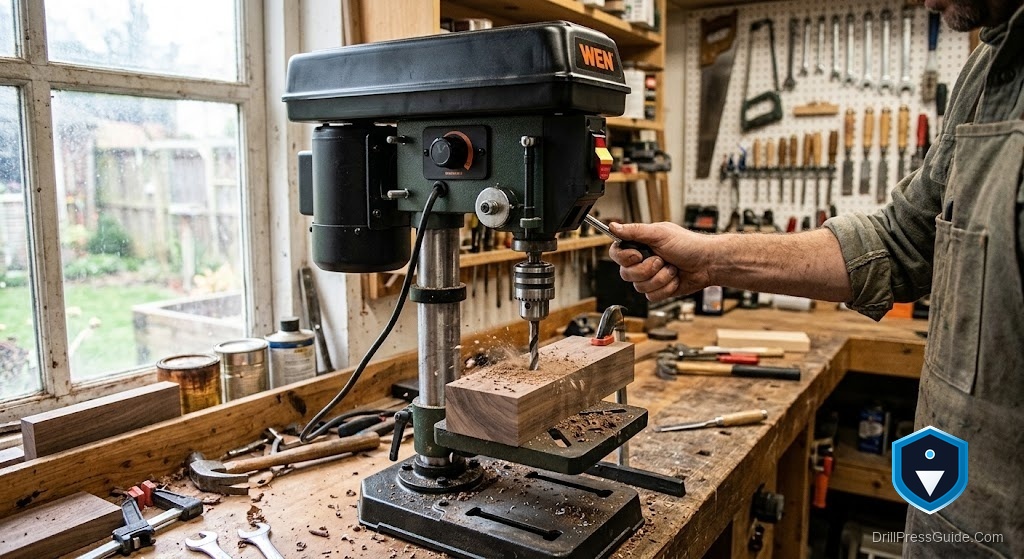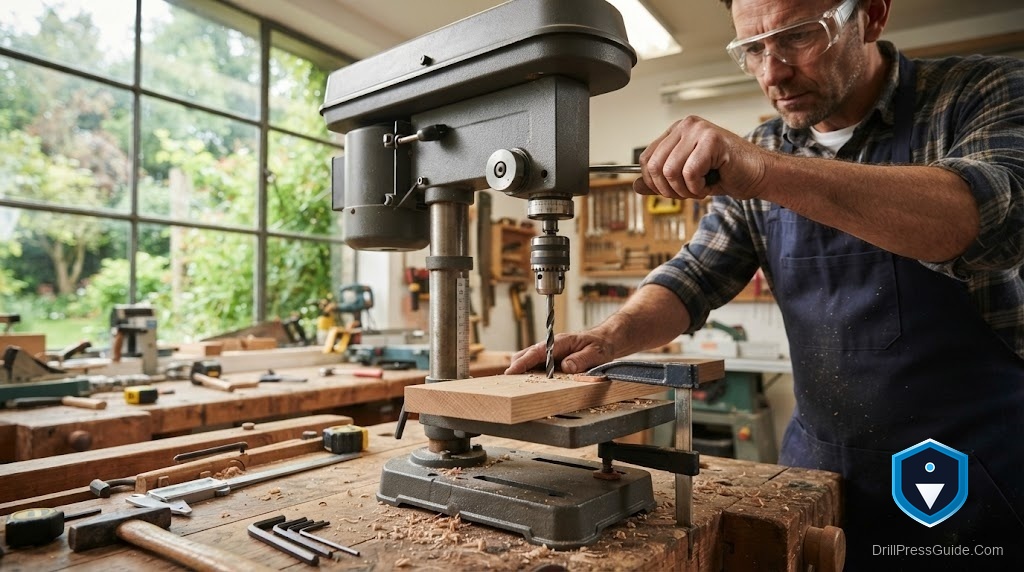
How to Change Belt Speed on Drill Press: Setup, Checks, and Common Mistakes
Most people run a drill press at one speed for years: whatever it happened to be set at the day they bought it. Then a big spade bit chatters, or a small twist bit in metal squeals and burns, and they realize the machine had gears all along. Learning how to change belt speed on a drill press takes ten minutes to learn and pays off on every hole after. The trick is knowing which speed a job wants, and moving the belt without pinching a finger or leaving it too loose to pull.
Changing belt speed means repositioning the drive belt on the stepped pulleys so the spindle turns faster or slower. A larger driven step paired with a smaller drive step gives a slower, higher torque spindle. The reverse gives higher speed. That relationship is fixed physics, not brand specific.
The direct answer: unplug the press, release belt tension, move the belt to the pulley steps that give your target speed (bigger bits slower, smaller bits faster), then retension and confirm the belt deflects about half an inch. The speed chart inside the pulley cover tells you which steps to use.
The rule that decides the speed
Big bits slow, small bits fast. A large diameter cutter moving too fast overheats its edge and burns the work. A small bit turning too slow just drags. Manufacturers print a speed chart inside the pulley cover for exactly this reason, listing which pulley steps produce which RPM. Match the chart to your bit and material and the guesswork disappears. If your chart is missing, the pulley ratio is simple: the belt on a small motor step driving a large spindle step gives the slowest, strongest setting.1
Multi step pulleys versus a variable speed dial
Two systems exist and they change speed differently:
- Multi step (belt drive) presses need you to physically move the belt between pulley steps with the power off. This is the common home setup.
- Variable speed presses use a dial that shifts a split pulley while the machine runs, changing RPM without touching the belt. On these, you turn the dial with the motor running, never stopped, because the mechanism needs to be turning to shift.
Know which you have before you start, because forcing a variable speed dial while stopped can damage it.
Changing speed on a belt drive press
- Unplug the press. Speed changes happen with the power off on a belt drive machine.
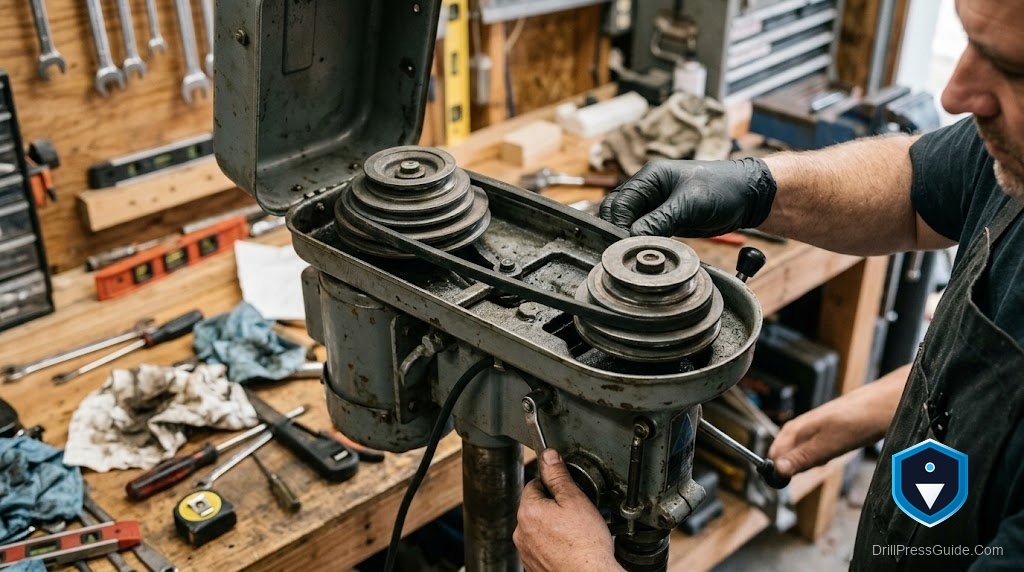
- Open the pulley cover.
- Release tension. On most presses you loosen the motor lock and pivot or slide the motor toward the spindle.
- Move the belt to the target steps from the chart. On a three step or four step pulley, keep the belt square across matching steps.
- Retension by sliding the motor back until the belt deflects about half an inch under a finger midspan.
- Lock the motor, spin the spindle by hand, close the cover, and test.
Tools and upgrades worth having
If your belt is old and part of the problem, a fresh drill press V belt makes speed changes smoother, and a link belt removes the cold thump some owners fight. A simple drill press speed chart magnet or reference on the machine saves you re deriving the settings every time.
Where people go wrong
The first mistake is changing a belt drive press without unplugging it, which is how fingers get pinched between belt and pulley. The second is leaving the belt too loose after the change, so it slips under load and mimics a weak motor. The third is treating a variable speed dial like a belt press and forcing it while stopped, which strains the split pulley.
The verdict
Changing drill press speed is one of the highest value habits a new owner can build. Match the bit and material to the chart, move the belt with the power off on a belt drive machine, and retension by feel. Turn the dial only while running on a variable speed press. Do that and hardwood stops chattering, small bits stop burning, and the tool finally works the way it was designed to.
Three takeaways:
- Big bits slow, small bits fast, per the chart in the cover.
- Belt drive changes happen with the power off, variable speed dials while running.
- Retension to about half an inch of deflection so the belt does not slip.
FAQ
How do I change the speed on a belt drive drill press? Unplug it, open the cover, loosen the motor to release belt tension, move the belt to the pulley steps that match your target RPM on the speed chart, then retension and close up.
Which way do I move the belt to go slower? Put the belt on a smaller motor pulley step and a larger spindle step. That gives lower speed and more torque, right for large bits.
Do I change speed with the machine running or off? Off for a belt drive press, always. On a variable speed press with a dial, turn the dial while the motor is running.
What speed should I use for a given bit? Large bits and hole saws run slow, small twist bits run fast. Use the speed chart inside the pulley cover to match RPM to bit size and material.
Why does my belt slip after I change speed? Tension is too loose. Slide the motor back until the belt deflects about half an inch midspan under a finger.
My variable speed dial is stiff. Should I force it? Not while the machine is stopped. Turn it with the motor running so the split pulley can shift. Forcing it while stopped can damage it.
Can I leave the belt on one speed for everything? You can, but you will burn small bits or chatter large ones. Matching speed to the bit protects both the cutter and the work.
References
- The Engineering ToolBox, Belts: Pulley Diameters vs. Speed. https://www.engineeringtoolbox.com/pulley-diameters-speeds-d_1620.html
- Occupational Safety and Health Administration, Woodworking eTool: Drill Presses. https://www.osha.gov/etools/woodworking/production/machines-tools/drill-press
Footnotes
-
Pulley ratio and speed relationship, The Engineering ToolBox. ↩