
Ridgid Drill Press DP15000 Parts: How to Identify the Correct Version
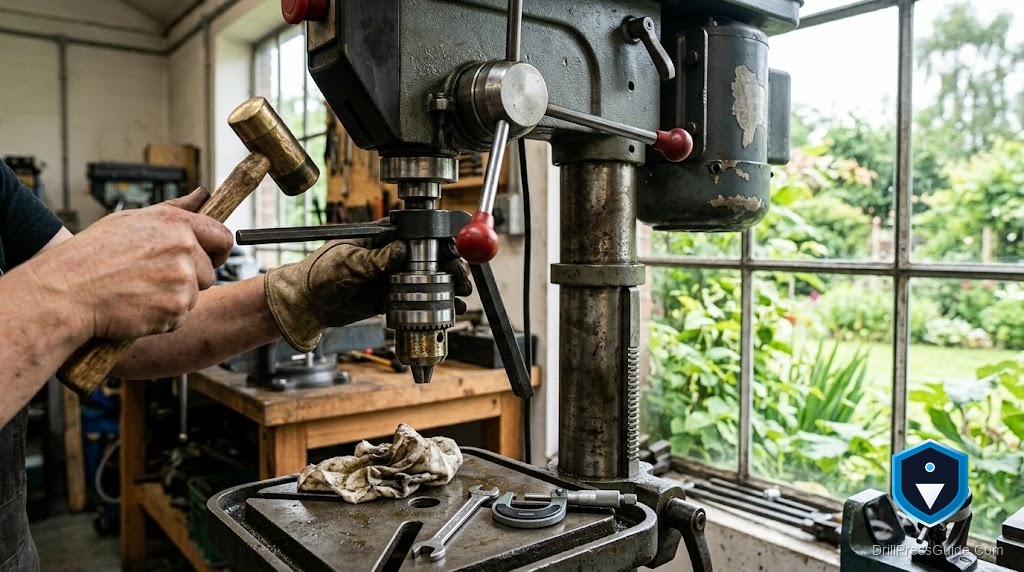
The first time a DP15000 owner goes looking for a replacement chuck or a fresh drive belt, they usually hit the same wall: the machine still runs fine, but nobody at the counter recognizes the model number, and half the parts photos online look almost right without being right. If you own a Ridgid drill press DP15000 parts search, the whole game is version identification first, buying second. Get the version wrong and you end up with a rack that won’t mesh or an arbor that won’t seat.
The DP15000 is a 15-inch benchtop and floor-style drill press Ridgid sold through Home Depot, built around a cast-iron head, an induction motor, and a 5/8-inch keyed chuck on a Morse-taper spindle. It has since been discontinued, which is exactly why careful part matching matters more than it would on a current model.
So here is the short answer for anyone who just wants to order and move on: find the model and type number on the motor nameplate, match your part against the official DP15000 parts diagram by key number, and always order by part number rather than by the picture. That one habit prevents most returns.
Where the version actually hides
The number stamped on the casting is not enough. Ridgid ran the 15-inch platform under a few closely related identities, including the DP15000, the later DP15501, and the retail R1500, and the parts lists are not interchangeable across all of them. Look for the silver nameplate on the motor housing or the back of the head. You want the full model number plus any type or series designation printed next to it. Write that whole string down before you shop.
If the plate is gone, and on a well-used press it often is, measure instead. Note the swing (the DP15000 is a 15-inch, so the column-to-spindle distance is about 7.5 inches), the chuck capacity at 5/8 inch, and the spindle travel, which sits near 3.75 inches on this family. Those three numbers, cross-checked against a manual, narrow the field fast.
The parts people replace first
Three things wear out or walk off on a press this age: the drive belt, the chuck and its key, and the quill return spring. The belt is the easiest win. Owners of 8-inch presses reach for a K26, but the 15-inch DP15000 uses a longer V-belt, so measure your old one end to end before ordering rather than trusting a chart written for a smaller machine.
The chuck is where version discipline pays off. The DP15000 runs a 5/8-inch keyed chuck seated on a Morse-taper arbor. If yours is chewed up or slips off, a 1/32 to 5/8-inch JT33 keyed chuck paired with the correct Morse-taper arbor is a common route back to service, as long as you confirm your spindle taper first. When you only need the key, a universal ratcheting chuck key fills the gap without a special order.
The honest drawback with any aftermarket chuck on this press: runout. A generic chuck can introduce a few thousandths of wobble that a factory-matched arbor would not. If you drill mostly wood, you will never notice. If you drill metal to a layout line, you will, and you should hunt for an OEM-spec arbor instead.
OEM parts and diagrams that still exist
The machine is discontinued, but the documentation is not gone. Ridgid’s own parts channel lists the 15-inch press as obsolete while still pointing to diagrams, and third-party parts houses keep the exploded views alive. The full DP15000 parts list is available as a manufacturer-style PDF, and repair sites publish the same key-numbered figures with OEM numbers such as the motor (part 828929) and various column, rack, and table-clamp pieces.
Use those diagrams the way a mechanic does: find your broken piece on the figure, read its key number, then read across to the part number. Order by that number. The picture is a map, not a catalog.
Who should skip the parts hunt
If your DP15000 needs a motor and a chuck and a rack all at once, step back. On a discontinued machine, stacking three OEM orders can cost more effort than the press is worth, and a current 15-inch press would arrive with a warranty and available parts. The parts chase is worth it for a clean machine that needs one or two items. It is not worth it for a project press that fights you at every turn.
Conclusion: match first, buy once
The DP15000 is a genuinely good old press, and most of them fail on consumables, not castings. Treat every order as a matching exercise and you will keep it running for years.
- Record the full model and type number from the nameplate before buying anything.
- Order by OEM part number off the diagram, never by the photo.
- Measure the belt and confirm the spindle taper before buying a chuck or arbor.
- If three major parts are gone at once, weigh replacement over repair.
FAQ
What size chuck does the Ridgid DP15000 use? It uses a 5/8-inch keyed chuck seated on a Morse-taper arbor. Confirm the exact taper on your spindle before buying a replacement chuck.
Is the DP15000 the same as the DP15501? They are closely related 15-inch Ridgid presses, but they are separate models with separate parts lists. Match parts to your exact model number.
What belt does a DP15000 take? A V-belt sized for the 15-inch platform, longer than the K26 used on 8-inch presses. Measure your existing belt end to end before ordering.
Where can I find a DP15000 parts diagram? Ridgid lists the model as obsolete but still references diagrams, and parts retailers publish key-numbered exploded views with OEM part numbers.
Is the Ridgid DP15000 still made? No. It has been discontinued, which is why matching parts to the correct version is so important.
How do I identify my version if the nameplate is missing? Measure the swing, chuck capacity, and spindle travel, then cross-check those figures against the DP15000 manual to confirm the model.
Can I use a keyless chuck on a DP15000? Yes, if it matches your spindle taper, though keyed chucks generally grip large twist bits in metal more securely on a press this size.
References
- RIDGID Store, Drill Presses (model status): https://store.ridgid.com/us/en/drill-presses
- Parts List for RIDGID 15” Drill Press Model No. DP15000 (PDF): http://romansparts.com/ipl/DP15000_001.pdf
- eReplacementParts, Ridgid DP15000 Drill Press diagrams: https://www.ereplacementparts.com/models/drill-press/ridgid/id772781/dp15000/
- Ridgid 15 in. Drill Press Operator’s Manual (Home Depot PDF): https://homedepot.com/catalog/pdfImages/84/8414de40-3701-4d30-b5c9-e7e44257e554.pdf


