
Dremel 212 Drill Press Manual: Setup, Compatibility, and Troubleshooting
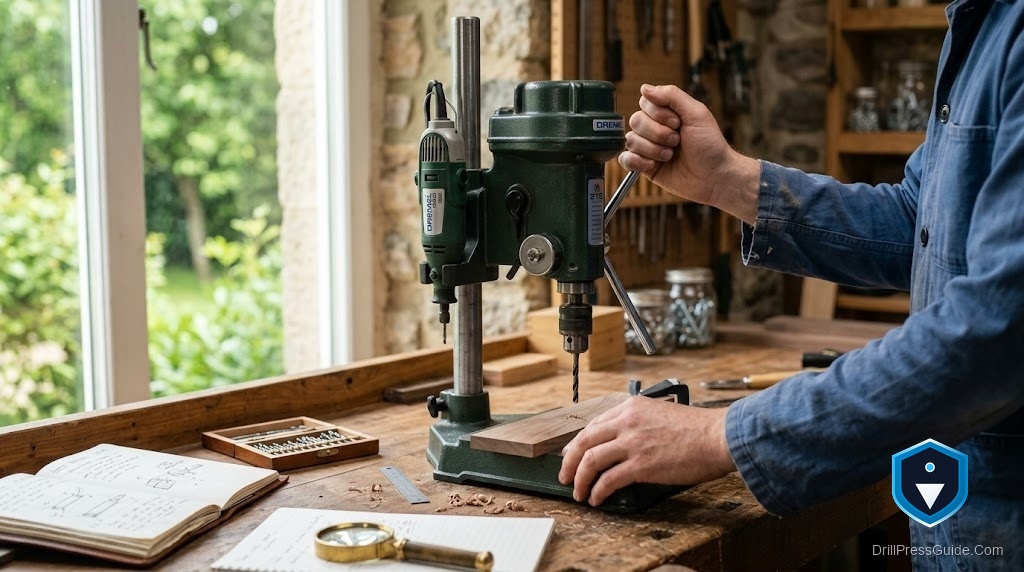
The Dremel 212 Drill Press is one of those tools that seems simple until you actually try to use it for precise work — and then suddenly the setup details matter a lot. This guide covers how to set up the 212 correctly, what it’s actually capable of, and how to solve the most common problems owners encounter.
What the Dremel 212 Is
Like the Dremel 210, the Dremel 212 Drill Press is a drill press stand accessory for Dremel rotary tools. The 212 is a different variant with a slightly different column design and adjustment mechanism. Neither model has its own motor.
Compatibility check before anything else: the Dremel 212 accepts certain Dremel tool body diameters. Check the compatibility chart in the manual or on Dremel’s website for your specific rotary tool model before using the stand.
Finding the Manual
- Dremel’s website — dremel.com/en-us/service/manuals, search “212”
- eReplacementParts.com — search “Dremel 212”
- Online PDF archives — the Dremel 212 manual PDF circulates on several manual archive sites
Setup Steps
Step 1: Secure the base
Always anchor the base before use. The mounting holes in the base accept standard bolts for workbench mounting. Use clamps if bolting isn’t practical.
Step 2: Mount the column and tool holder
Insert the column into the base. Slide the Dremel tool holder onto the column and secure it at the desired height.
Step 3: Insert your rotary tool
Insert the Dremel tool body into the holder and tighten the collar. The tool should have zero wobble — if it moves at all in the holder, it’s not properly seated.
Step 4: Check perpendicularity
Install a bit, lower the quill onto a flat reference surface, and check that the bit meets the surface squarely. Adjust the column tilt mechanism until perpendicular.
Depth Stop Use
The depth stop limits quill travel — set it and lock it for repetitive-depth drilling. On PCBs, acrylic, and thin model stock, consistent depth control is the difference between clean through-holes and shattered material.
What the 212 Does Best
- PCB drilling (0.8mm to 3mm bit range)
- Thin acrylic and polycarbonate
- Model making and hobby metalwork (thin stock only)
- Repetitive small-hole patterns
For anything requiring bits larger than 1/4 inch or materials thicker than 1/4 inch metal, you need a dedicated drill press with an induction motor.
Common Issues
| Issue | Likely Cause | Solution |
|---|---|---|
| Holes not straight | Column not perpendicular | Re-calibrate before drilling |
| Quill spring failure | Spring broken or unseated | Re-seat or replace spring |
| Rotary tool collar slipping | Clamp undertightened | Retighten; clean collar if oily |
| Excessive vibration | Worn rotary tool bearings | Service the rotary tool |
Comparison: 210 vs. 212
Both are Dremel drill press stands for rotary tools. The 212 typically has a more robust column adjustment and depth stop mechanism than the 210. If you have a choice, the 212 is the better-built option for precision work. Either way, the rotary tool is the limiting factor.
SEO Metadata


