How to Make a Drill Sergeant Hat Press: What to Check Before You Start
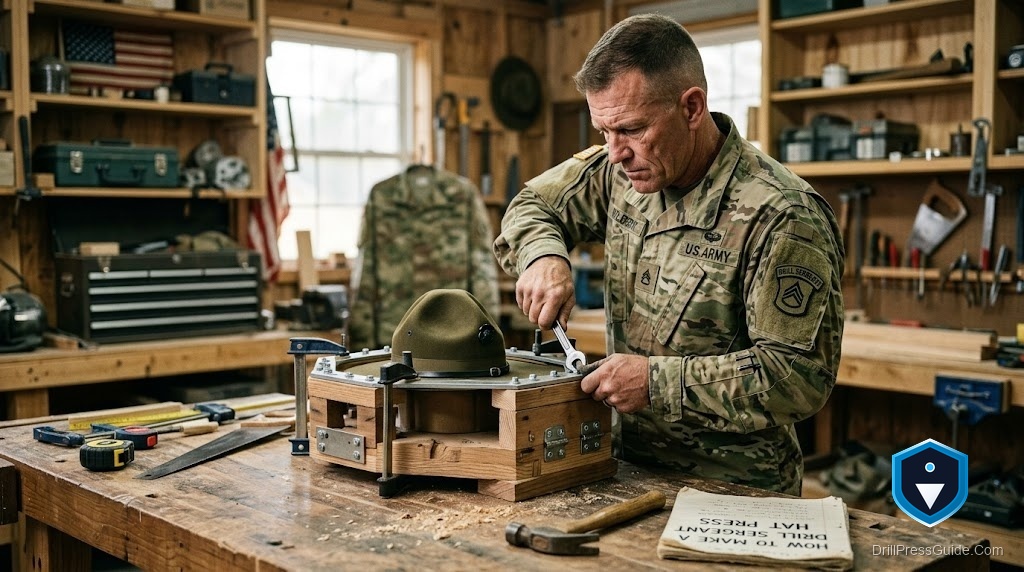
The stiff, flat-brimmed campaign hat a drill sergeant wears only looks sharp because it is kept shaped, and the tool that keeps it that way is a hat press: a fixture that holds the crown and brim in their correct form while the felt is steamed and set. Making your own is a practical project for anyone who maintains one of these hats, but a hat press is really a precision clamp for a specific shape, so before you build, it pays to check exactly what the hat needs and what the press must do.
A drill sergeant hat press is a shaping fixture that holds a campaign hat’s crown and brim in their correct form, usually clamping the flat brim between boards and supporting the crown in a mold, so that when the felt is dampened or steamed it dries and sets to the proper shape. Making one means building a brim press that keeps the brim dead flat, a crown form that holds its shape, and a way to clamp them together evenly.
Short answer: before you start, check the exact dimensions and shape of your hat, the crown form and brim flatness it requires, the clamping method that will apply even pressure, and how you will steam or dampen the felt safely. A hat press succeeds when it holds the brim truly flat and the crown to the right form under even pressure, so those requirements should drive the whole build.
Check the hat’s shape and dimensions first
Before building anything, measure and understand the hat you are shaping, because the press must match it. Note the brim’s diameter and the fact that it must be held perfectly flat, the crown’s height and shape, and any peak or pinch the crown is meant to have. A campaign hat has a specific crown form, and the press has to reproduce it, so the mold or form you build must match those contours. Checking the hat’s exact shape and size first means the press fits it; building a generic press and hoping the hat conforms is how you end up with a brim that is not flat or a crown that is the wrong form.
Check the brim press and the crown form
The two working parts are the brim press and the crown form, and each has a job. The brim press is typically two flat, rigid boards that sandwich the brim and hold it dead flat while it sets, so check that your boards will be truly flat and stiff enough not to bow under clamping pressure, since any bow lets the brim dry with a wave. The crown form is a mold, often shaped wood or a block, that supports the crown to its correct shape from inside or outside. Check that the form matches the crown contour and is smooth so it does not mark the felt. Getting the brim dead flat and the crown correctly formed is the entire point, so plan both carefully.
Check the clamping and even pressure
A hat press only works if it applies even pressure, so check how you will clamp it. The brim boards need to be drawn together evenly across the whole brim, commonly with bolts and knobs near the edge and around the crown opening, so pressure is uniform rather than concentrated in one spot, which would flatten unevenly or crease the felt. The crown form needs to hold its position while the brim is clamped. Plan the clamping hardware, its placement, and enough points of pressure before building, because uneven or insufficient clamping is the most common reason a homemade hat press leaves a wavy brim or an ill-formed crown.
Check the steaming and setting process
Finally, check how you will dampen or steam the felt and let it set, because the press and the process work together. Felt is shaped by moisture and heat, then holds the shape as it dries, so plan to steam or lightly dampen the hat, place it in the press, clamp it evenly, and let it dry fully before removing. Check that your press materials tolerate the moisture, sealed or finished wood resists warping and staining the felt, and that you can apply steam safely without burning yourself. Confirming the process before you start ensures the press you build actually suits how the hat is shaped, rather than being a clamp that cannot handle the moisture the job requires.
Conclusion
Making a drill sergeant hat press comes down to building a precise clamp for one specific shape, so the checks before you start matter more than the woodworking itself. Measure the hat’s brim and crown so the press matches it, build a brim press flat and stiff enough to hold the brim dead flat, shape a crown form to the correct contour, plan clamping hardware that applies even pressure across the whole hat, and confirm a safe steaming and drying process with moisture-tolerant materials. Check those things first and the press will set the hat crisply time after time; skip them and you risk a wavy brim or a misshapen crown that defeats the purpose.
Frequently asked questions
What does a drill sergeant hat press do? It holds a campaign hat’s crown and brim in their correct form while the dampened or steamed felt dries and sets, keeping the brim flat and the crown properly shaped.
What should I check before building one? Your hat’s exact brim diameter and crown shape, how the brim will be held flat, the crown form’s contour, the clamping method for even pressure, and how you will steam and dry the felt safely.
How is the brim kept flat? By sandwiching it between two flat, rigid boards that are stiff enough not to bow under clamping pressure. Any bow in the boards lets the brim dry with a wave.
How is the crown shaped? With a mold or form, often shaped wood or a block, that supports the crown to its correct contour and is smooth enough not to mark the felt while it sets.
Why does even clamping pressure matter? Because uneven or concentrated pressure flattens the brim unevenly or creases the felt. The boards should be drawn together evenly with enough clamping points across the brim.
What materials work for a hat press? Flat, stiff, smooth wood that is sealed or finished so it tolerates the moisture of steaming without warping or staining the felt. Confirm the materials handle dampness before building.
References
- Forest Products Laboratory, wood properties and moisture references, fpl.fs.usda.gov
- OSHA, general workshop and burn safety guidance, osha.gov