
How to Make a Drill Press Into a Milling Machine: Setup, Checks, and Common Mistakes
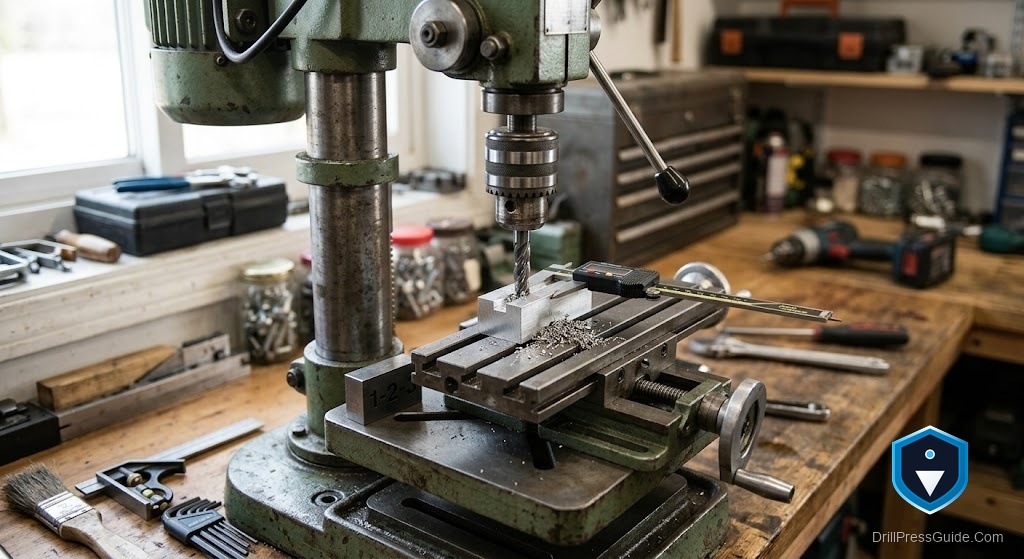
It is one of the most tempting ideas in a home shop: you already own a drill press, a milling machine is expensive, and both spin a cutter, so why not turn one into the other? The honest answer is that you can do light milling on a drill press with the right setup and a lot of caution, but a drill press is not built for the side forces milling creates, and pretending otherwise is how people damage machines and hurt themselves. This is how to do it as safely as the tool allows, and where the hard limits are.
Making a drill press into a milling machine means using the drill press to perform light milling cuts, removing material sideways with an end mill, rather than only drilling straight down. It involves adding a milling table or cross-slide vise for controlled horizontal movement and holding cutters securely, while accepting that a drill press lacks the rigidity and spindle design a real mill has.
Short answer: you can do only very light milling on a drill press, and only with a cross-slide vise for controlled movement, end mills held in a proper collet or chuck rated for side load, shallow cuts, and constant attention to the spindle. The critical limit is that a drill press spindle and quill are built for downward force, not sideways force, so heavy milling is unsafe and will damage the machine.
Understand the limit before you start
The whole reason this is risky is that a drill press is designed for axial force, pushing straight down, while milling applies lateral force, pushing sideways against the cutter. A drill press quill can deflect under side load, and the chuck can loosen or the arbor can come free, because neither is made to resist sideways force. A milling machine, by contrast, has a rigid spindle and a quill built for exactly that load. So going in, accept that you are asking the tool to do something outside its design. That single fact shapes every choice: light cuts, secure tooling, and stopping the moment anything feels wrong.
The setup that makes it as safe as possible
If you proceed, add a cross-slide vise or a compound milling table to the drill press table, which lets you move the workpiece horizontally in controlled, measured increments rather than by hand. Hold end mills in a collet system or a chuck genuinely rated for milling, since a standard drill chuck can release a cutter under side load. Make sure the arbor or spindle taper is secured so it cannot pull out. Lock the quill at the cutting depth rather than leaving it extended, to minimize deflection. Clamp the workpiece hard in the vise, never by hand. This setup does not make a drill press into a real mill; it just reduces the risks of light milling on one.
Common mistakes that cause damage or injury
The biggest mistake is taking too deep or too aggressive a cut, which overloads the spindle, deflects the quill, and can throw the work or break the cutter. Another is using a plain drill chuck, which can spit out an end mill sideways. Leaving the quill fully extended invites deflection; moving the work by hand instead of with a cross-slide invites grabs. People also forget that drill-press speeds may not suit end mills, and they skip clamping the vise itself to the table. Each of these turns an already marginal operation into a dangerous one, which is why light cuts, proper tooling, and solid clamping are non-negotiable.
When to use a real milling machine instead
Be honest about the work. If you need anything beyond occasional, very light material removal, slots, steel milling, precise or repeated cuts, a real milling machine is the right and safe tool, and no amount of accessories makes a drill press a substitute. Use the drill-press approach only for the lightest touch-up milling in soft material, and stop if the spindle flexes, the cutter chatters hard, or the chuck loosens. Recognizing where the limit is protects both you and the machine, and it is the mark of doing this responsibly rather than pushing a tool past what it was built to survive.
Conclusion
You can make a drill press do light milling, but you cannot make it into a milling machine, and the difference matters for your safety and the tool. Because a drill press is built for downward force, not the sideways force milling creates, keep cuts very light, use a cross-slide vise for controlled movement, hold end mills in tooling rated for side load, lock the quill, and clamp the work hard. Avoid deep cuts, plain drill chucks, and hand-feeding, the mistakes that cause damage or injury. For anything beyond the lightest work, use a real milling machine, and treat the drill-press method as a limited, cautious workaround rather than a true conversion.
Frequently asked questions
Can a drill press really be used for milling? Only for very light milling, and only with careful setup. A drill press is built for downward force, not the sideways force of milling, so heavy milling is unsafe and damages the machine.
Why is milling on a drill press risky? Because the quill can deflect under side load and a standard chuck or arbor can loosen or release the cutter, since none of it is designed to resist sideways force the way a mill is.
What setup do I need to try light milling? A cross-slide vise or compound table for controlled horizontal movement, end mills held in a collet or a chuck rated for milling, a secured arbor, a locked quill, and the workpiece clamped hard.
Can I hold end mills in a normal drill chuck? It is unsafe. A standard drill chuck can release an end mill under side load. Use a proper collet system or a chuck genuinely rated for milling, and secure the arbor so it cannot pull out.
What are the most dangerous mistakes? Taking cuts that are too deep, using a plain drill chuck, leaving the quill extended, and feeding the work by hand instead of with a cross-slide. Each can throw the work or break the cutter.
When should I just use a milling machine? For anything beyond occasional, very light material removal in soft stock, or for slots, steel, or precise repeated cuts. A real mill is the right, safe tool, and no accessory makes a drill press equal to it.
References
- OSHA, Machine Guarding eTool: Drill Presses, osha.gov
- Vintage Machinery, machine tool design references, vintagemachinery.org


