
How to Buy a Drill Press: Setup, Checks, and Common Mistakes
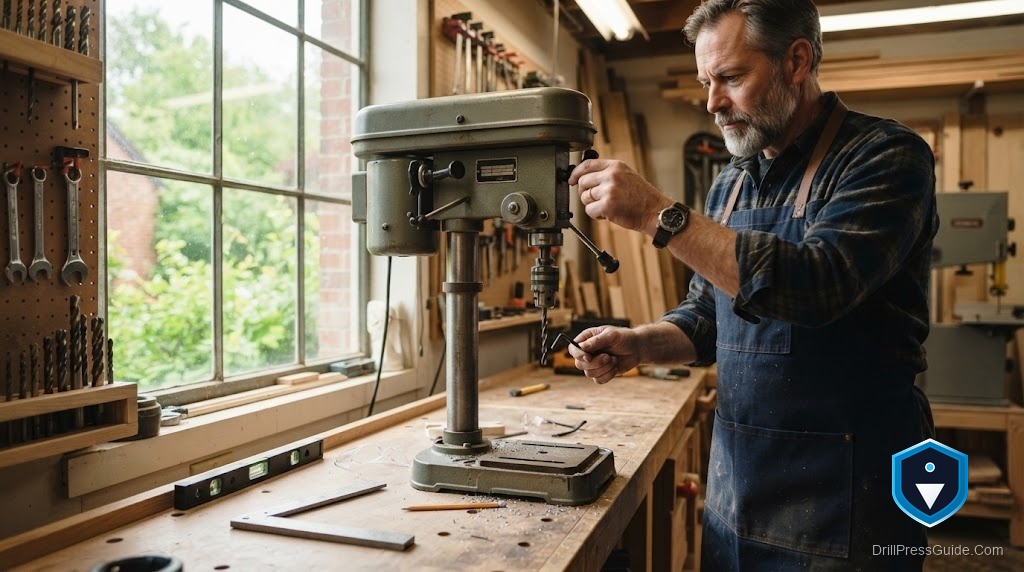
You walk into a tool store or browse online and see a wall of drill presses. Ten-inch benchtops, twelve-inch variable speed models, floor-standing monsters with lasers and digital readouts. The specs blur together. You want a machine that drills straight, holds speed, and does not shake itself off the bench. But how do you know which one actually delivers?
I have bought, set up, and repaired drill presses for years. The buying process is simple if you break it into steps. Define your work, check the specs that matter, inspect the machine if you can, and set it up correctly. This guide walks through each step and the mistakes that waste money and time.
A drill press is a stationary machine that holds a rotating bit in a vertical chuck and lowers it into a workpiece with a hand crank. Unlike a handheld drill, it gives you square holes, controlled depth, and repeatable speed. The right machine for your shop depends on what you drill, how often you drill, and how much space you have.
The short answer is that most home buyers should start with a 10-inch or 12-inch benchtop press with a cast-iron table and either five fixed speeds or variable speed. Buy a floor press only if you need a 15-inch swing or larger, or if you drill metal daily. Buy a used machine only if you can inspect it in person. Buy a new machine if you want warranty support and predictable performance.
Step 1: Define Your Work Before You Shop
The biggest mistake is buying a press based on price or features rather than your actual needs. If you drill shelf pin holes in 3/4-inch plywood, a 10-inch benchtop press with 2-inch travel is enough. If you build furniture with 1-1/2-inch hardwood and large panels, you need a 12-inch or 15-inch swing and at least 3-inch travel. If you drill steel plates, you need a slow minimum speed and a rigid quill.
List the materials you drill. Wood, plastic, and aluminum are forgiving. Steel, stainless steel, and cast iron need slow speeds and strong motors. List the bit sizes you use. Small twist drills need high speed. Large Forstner bits and hole saws need low speed and high torque. List the largest workpiece you drill. That determines the swing you need.
List the features you will actually use. A laser guide is helpful for alignment but not essential. A digital readout is useful if you change speeds often. A work light is nice but can be added later. A table extension or roller support is useful for long boards. Do not pay for features you will ignore.
Step 2: Check the Specs That Matter
Motor power is the first spec to check. A 1/3-horsepower or 2-amp motor is the minimum for wood. A 1/2-horsepower or 5-amp motor is the standard for general work. A 3/4-horsepower or 6-amp motor is better for metal and large bits. Do not assume that a bigger motor is always better. A big motor in a flimsy frame just shakes more.
Swing size is the second spec. Measure the widest board you need to drill in the center. A 10-inch swing handles 10-inch boards. A 12-inch swing handles 12-inch boards. A 15-inch swing handles most cabinet panels. If you turn the work and drill from both sides, you can get away with a smaller swing, but that is slow and inaccurate.
Spindle travel is the third spec. Two inches is the minimum for general work. Three inches is better for mortising and thick stock. Floor presses often offer 4 to 6 inches. If you do deep work, do not settle for 2 inches. You will regret it.
Speed range is the fourth spec. A minimum speed of 500 to 600 RPM is good for wood. A minimum of 200 to 300 RPM is better for metal and large hole saws. A maximum of 3000 to 3500 RPM is standard for small bits. Variable speed is more convenient than fixed-speed belt changes. If you work with mixed materials, variable speed is worth the extra cost.
Table quality is the fifth spec. Cast iron is the best material. It is heavy, flat, and dampens vibration. Aluminum is acceptable but dents easily. Stamped steel is the worst. It flexes, rings, and warps. Check the table size and whether it has T-slots or clamping holes. A large table with T-slots is better than a small plain table with a laser.
Step 3: Compare Models and Read Owner Reviews
Once you know your specs, narrow the field to three to five models. Read owner reviews on retailer sites and forums. Look for patterns. If multiple reviewers mention runout, table wobble, or motor overheating, those are real problems. Ignore reviews that complain about shipping damage or missing parts. Those are logistics issues, not machine issues.
Watch video reviews from owners who have used the machine for months. First impressions are useful, but long-term reliability is what matters. Look for videos that show the table elevation, the speed change process, and the depth stop. These are the parts you will use every day. A machine that looks good in a photo may be awkward in real use.
Compare the warranty and support. A two-year warranty from a company with a phone number and parts stock is worth more than a five-year warranty from a company that does not answer emails. Check whether the manufacturer sells replacement belts, chucks, and bearings. These parts wear out and you will need them eventually.
Step 4: Inspect Before You Buy, Especially Used
If you are buying a used drill press, inspect it in person. Bring a straight drill bit and a combination square. Mount the bit and spin the chuck by hand. Watch for visible wobble. A small wobble is acceptable on budget machines. A large wobble means worn bearings or a bent spindle.
Check the table elevation. Turn the crank or loosen the clamp and slide the table up and down. It should move smoothly without grinding, binding, or skipping. A stiff rack or bent column makes height adjustments frustrating. Check the table tilt mechanism. Lock it at 45 degrees and try to rock the table. If it moves, the lock is weak and angled holes will be inaccurate.
Test the motor under load. Turn the machine on and press a block of wood against the spinning bit. The motor should maintain speed without slowing dramatically, smoking, or squealing. If the motor bogs down or smells hot, the bearings or windings are worn. Check the belt and pulleys for cracks, glazing, or rust. A cracked belt is a cheap replacement, but it tells you the machine was neglected.
Look at the depth stop. It should thread smoothly and lock firmly. If the stop rod is bent or the lock nut is stripped, repetitive hole depths will be hard to achieve. Finally, check the chuck key. A missing key is minor, but it may indicate that other accessories are missing too. Ask the seller about the machine’s history. A home shop machine is usually better cared for than a production machine.
Step 5: Set Up the Machine Correctly
Once you have the press, set it up on a sturdy bench or stand. A lightweight bench will vibrate and walk across the floor. The bench should be level and solid enough that the press does not rock when you plunge the quill. Bolt the press to the bench if possible. Most benchtop presses have bolt holes in the base for this purpose.
Check the table alignment. Use a combination square to verify that the table is perpendicular to the chuck. If the table is tilted, your holes will be angled. Adjust the table trunnions or shims until the square shows a right angle. Recheck the alignment after the first few hours of use because vibration can loosen the bolts.
Install a drill press vise or a wooden sub-table. A vise holds work securely and keeps your hands away from the bit. A wooden sub-table with a fence and stop block makes repetitive drilling faster and more accurate. Both are cheap upgrades that improve safety and precision.
Choose the right speed for each bit and material. Large bits in hardwood need the slowest speed. Small bits in softwood can run at the highest speed. Metal needs slow speeds and cutting fluid. Use a speed chart as a starting point, then adjust based on chip formation and motor load. Sharp bits and correct speed do more for hole quality than any machine feature.
Common Mistakes to Avoid
Buying too small is the most common mistake. A 10-inch press with 2-inch travel is fine for a first machine, but most users outgrow it within a year. If you have the space and budget, buy a 12-inch or 15-inch press with 3-inch travel. The extra capacity costs more upfront but saves you from buying twice.
Buying too big is the second mistake. A 17-inch floor press is impressive, but it needs floor space, headroom, and a strong bench. If you only drill small parts and occasional holes, a floor press is overkill. The extra capacity is wasted, and the machine becomes an obstacle.
Ignoring runout is the third mistake. Runout is the wobble of the chuck as it spins. Excessive runout makes holes oversized, breaks small bits, and wears bearings. Check reviews for runout complaints before you buy. If you buy used, test the runout with a dial indicator or by eye with a straight bit.
Forgetting hidden costs is the fourth mistake. The press is not the only expense. You need a bench, a vise, bits, and possibly a sub-table or fence. Budget for these accessories. A cheap press with good accessories drills better holes than an expensive press with no vise and dull bits.
Frequently Asked Questions
What is the best drill press for a beginner? A 10-inch benchtop press with a 5-amp motor and variable speed is the best entry point. The WEN 4212T and SKIL DP9505-00 are excellent choices.
Should I buy a used or new drill press? Buy new if you want warranty, support, and predictable performance. Buy used if you can inspect the machine in person and verify runout, motor health, and table alignment. Avoid used machines with cracked castings, missing parts, or worn bearings.
What size drill press do I need for woodworking? A 12-inch swing and 3-inch travel is the sweet spot for most woodworking. A 10-inch swing is enough for small projects. A 15-inch or larger swing is better for furniture and cabinets.
What speed should I use for drilling metal? Slow speeds between 200 and 600 RPM are best for most metal drilling. Use cutting fluid and sharp bits. Large hole saws in steel need the slowest speed your press can deliver.
Can I use a drill press as a milling machine? No. Drill presses are designed for vertical drilling only. Side loads from milling can damage the quill, bearings, and spindle. Use a milling machine or a router for side-cutting operations.
What is the difference between a benchtop and floor drill press? A benchtop press sits on a workbench and is portable. A floor press stands on its own legs and offers larger swing, longer travel, and more power. Floor presses are better for heavy work and large panels. Benchtop presses are better for small shops and general use.
Do I need variable speed on a drill press? Variable speed is convenient if you work with mixed materials or change bit sizes often. Fixed-speed presses are adequate for wood-only work. Variable speed is worth the extra cost for metalworkers and generalists.
What is runout, and why does it matter? Runout is the wobble of the chuck and bit as they spin. Low runout means precise holes and longer bit life. High runout means oversized holes, broken bits, and premature bearing wear.
How much should I spend on a drill press? Spend what your work justifies. A $200 benchtop press is enough for occasional hobby work. A $500 to $800 benchtop press is the sweet spot for active home shops. A $1000+ floor press is worth it for daily use and heavy metalwork.
What accessories do I need for a drill press? A drill press vise is essential. A wooden sub-table or fence helps with repetitive work. Quality bits, a depth stop, and cutting fluid for metal are also important. A laser or light is nice but not essential.
References
- Fine Woodworking: Benchtop drill press comparison tests and buyer’s guides.
- Bob Vila: “The Best Benchtop Drill Press Options” testing and recommendations.
- Consumer Reports: Power tool reliability data and cost-per-use analysis.
- WEN Products: 4212T and 4214T specification sheets and pricing data.
- JET Tools: JDP-15B and JDP-17 specification sheets and feature comparisons.
SEO Metadata


