The Metal Belt-Driven Drill Press: Restoring and Running a Classic Machine
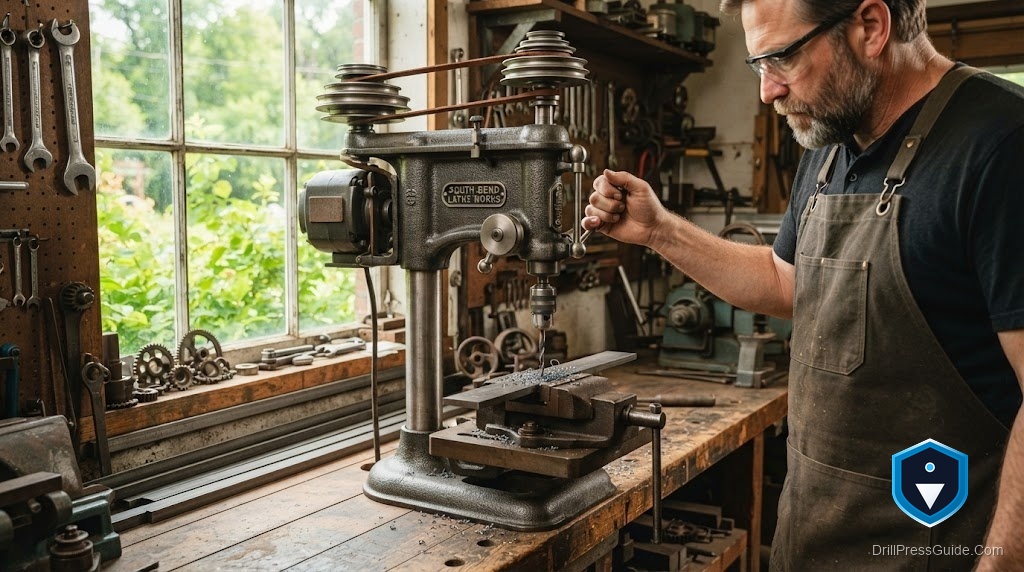
There is a reason old cast-iron belt-driven drill presses still turn up in shops and estate sales decades after they were built: they were made from thick castings, simple mechanisms, and parts you can still service by hand. A metal belt-driven drill press, whether a vintage floor model or a current belt-drive machine, trades the convenience of a dial for rugged simplicity, and that simplicity is exactly what makes one worth restoring and keeping running.
A metal belt-driven drill press is a press whose motor drives the spindle through a belt and stepped pulleys rather than a variable-speed dial or gears, common in both classic cast-iron machines and current models. Speed changes come from moving the belt between pulley steps.
The short answer: a belt-driven press is simple, durable, and serviceable, and running or restoring one comes down to the belt, the pulleys, the spindle bearings, and the quill return spring. Learn those four parts and you can keep a classic machine drilling accurately for decades.
How belt drive works and why it endures
Speed on these machines is set by moving the V-belt across a stepped pulley on the motor and a matching one on the spindle. A larger driven step turns the spindle slower; a smaller one turns it faster. There is no electronics to fail, which is why century-old machines still run.
The honest tradeoff is convenience: changing speed means opening the cover and shifting the belt by hand, slower than turning a variable-speed dial. In exchange you get a drive that is cheap to maintain, easy to understand, and nearly immortal. For many shops that is a fair trade.
The belt and pulleys
The belt is the first thing to check on any belt-driven press, new or old. A cracked, glazed, or stretched V-belt slips, robs power, and causes speed to wander under load, so replacing a tired belt with the correct size restores performance instantly. Match the belt profile and length to the machine.
Pulleys matter too. On a vintage machine, check the stepped pulleys for cracks, wobble, and worn grooves, and confirm the set screws or keys that lock them to their shafts are tight. A loose or wobbling pulley throws the belt and drills out-of-round holes. Clean the grooves and align the motor and spindle pulleys so the belt runs straight.
Spindle bearings and the quill
The heart of accuracy is the spindle and its bearings. Grab the chuck with the power off and try to rock it; noticeable play means worn bearings, which drill oval holes and must be replaced to restore accuracy. On a restoration, worn spindle bearings are the most important fix, and quality replacements bring an old machine back to true.
The quill, the sleeve that carries the spindle up and down, should slide smoothly and return on its own. A sticky quill usually needs cleaning and light lubrication of the bore. If it will not return, look to the return spring next.
The quill return spring and final setup
The coiled quill return spring pulls the spindle back up after a hole. On old machines it can weaken, slip its tension, or break, leaving the quill to drop or fail to retract. Re-tensioning or replacing this spring is a common restoration step and restores safe, smooth feed. Set its tension so the quill returns firmly but not violently.
With the belt, pulleys, bearings, and spring sorted, tram the table square to the spindle, lubricate the moving parts, and test at each pulley speed. A restored belt-driven press should run smooth and quiet, return crisply, and drill round, true holes.
The verdict
A metal belt-driven drill press rewards the owner who understands its four key parts: the belt and pulleys that set and transmit speed, the spindle bearings that hold accuracy, and the quill return spring that governs feed. Its stepped-pulley speed changes are slower than a dial, but its simplicity makes it durable and endlessly serviceable, which is why classic machines outlive their owners. Check the belt first, cure spindle play with new bearings, and re-tension the return spring, and a belt-driven press stays accurate and reliable for decades. The rocking-chuck test is the one check to run before trusting any of them.
Keep these in mind:
- Speed is set by moving the belt across stepped pulleys; simple and durable, but slower to change.
- A cracked or glazed belt slips; replacing it restores performance at once.
- Spindle play means worn bearings and oval holes; replace them to restore accuracy.
- A weak or broken quill return spring causes drop or poor retraction; re-tension or replace it.
Frequently asked questions
How does a belt-driven drill press change speed? By moving the V-belt across a stepped pulley on the motor and a matching one on the spindle. A larger driven step is slower, a smaller one faster.
Are belt-driven drill presses good? Yes. They are simple, durable, and easy to service, which is why vintage cast-iron machines still run. The tradeoff is that changing speed means shifting the belt by hand.
Why is my belt-driven press losing power or wandering in speed? Usually a worn, glazed, or stretched V-belt that slips under load. Replacing it with the correct size restores performance. Check pulley tightness too.
How do I know if the spindle bearings are worn? With the power off, grab the chuck and try to rock it. Noticeable play means worn bearings, which drill oval holes and should be replaced.
What does the quill return spring do? It pulls the spindle back up after a hole. If it weakens or breaks, the quill drops or fails to retract, so re-tension or replace it for safe feed.
Is it worth restoring an old belt-driven drill press? Often yes. Their thick castings and simple, serviceable mechanisms mean a belt, bearings, and spring refresh can bring a classic machine back to accurate service.
References
- Vintage Machinery, drill press manuals and restoration references: http://vintagemachinery.org/
- Occupational Safety and Health Administration, machine guarding for drilling machines: https://www.osha.gov/machine-guarding