Drill Press Speed Chart Steel: The Setup Details That Change the Result
Most people looking for a steel speed chart want a single number to dial in and forget. The number matters, but by itself it will not save a bit or produce a clean hole. Steel responds to the whole setup: the speed, yes, but also the feed pressure, the cutting fluid, and how firmly the part is held. Change one of those and the same RPM gives you a different result.
The quick answer first. For sharp high-speed steel bits in mild steel, start near 3000 RPM at 1/8 inch, drop to about 1500 at 1/4 inch, 1000 at 3/8, 750 at 1/2, and 500 at 3/4. Then read the chips and adjust. Everything below explains why those numbers work and what else has to be right.
A steel speed chart
| Bit diameter | Mild steel RPM | Stainless RPM |
|---|---|---|
| 1/8 in | 3000 | 1200 |
| 1/4 in | 1500 | 600 |
| 3/8 in | 1000 | 400 |
| 1/2 in | 750 | 300 |
| 5/8 in | 600 | 250 |
| 3/4 in | 500 | 200 |
Stainless runs at roughly half the mild-steel speed because it hardens under heat. If you take nothing else from the chart, take that ratio.
The setup detail people skip: feed pressure
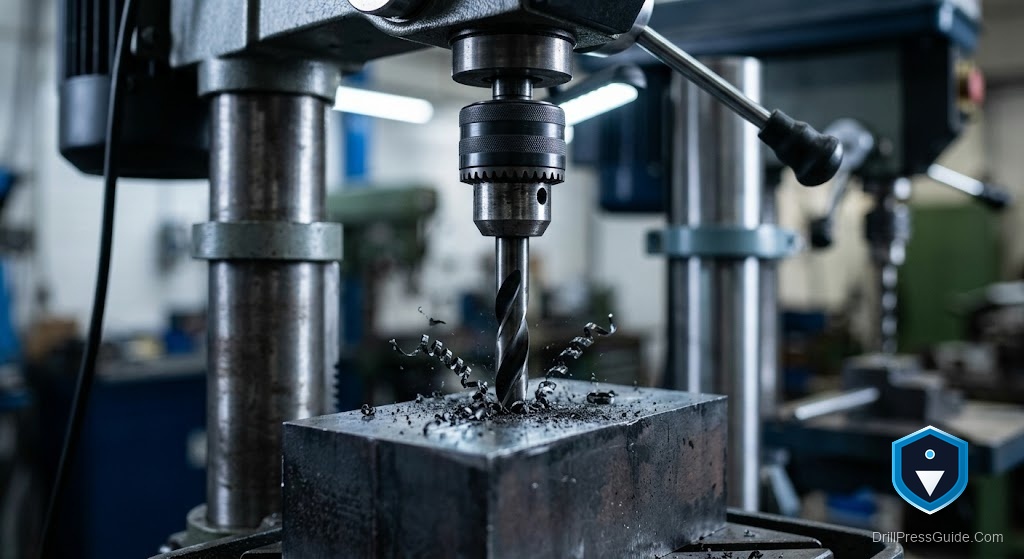
Speed gets all the attention, but feed pressure decides whether the edge cuts or rubs. Too little pressure and the bit skates on the surface, generates friction, and work-hardens steel before it ever bites. Too much and you overload the edge and the machine. The target is steady pressure that produces continuous chips. On a drill press you control this with the feed lever, and the feel is more useful than any number: push until curls form, then hold that pressure.
Cutting fluid is part of the speed
A speed chart quietly assumes you are using cutting fluid on steel. Fluid carries heat away from the edge and flushes chips out of the hole. Without it, the edge climbs past its safe temperature even at the correct RPM, and the chart stops being accurate. A few drops of dark cutting oil on mild steel, reapplied as you peck, changes tool life dramatically. Dry drilling is why so many people think their bits are low quality when the real problem is heat.
Center punch, pilot, and peck
Three habits turn the chart into clean holes. Center punch so the bit starts on your mark. Pilot larger holes with a smaller bit so the big bit’s chisel edge is not fighting the full diameter at once. Peck deep holes by retracting to clear chips, which keeps the flutes from packing and the edge from overheating. None of these change the RPM, but all of them change the result at that RPM.
Hold the work down
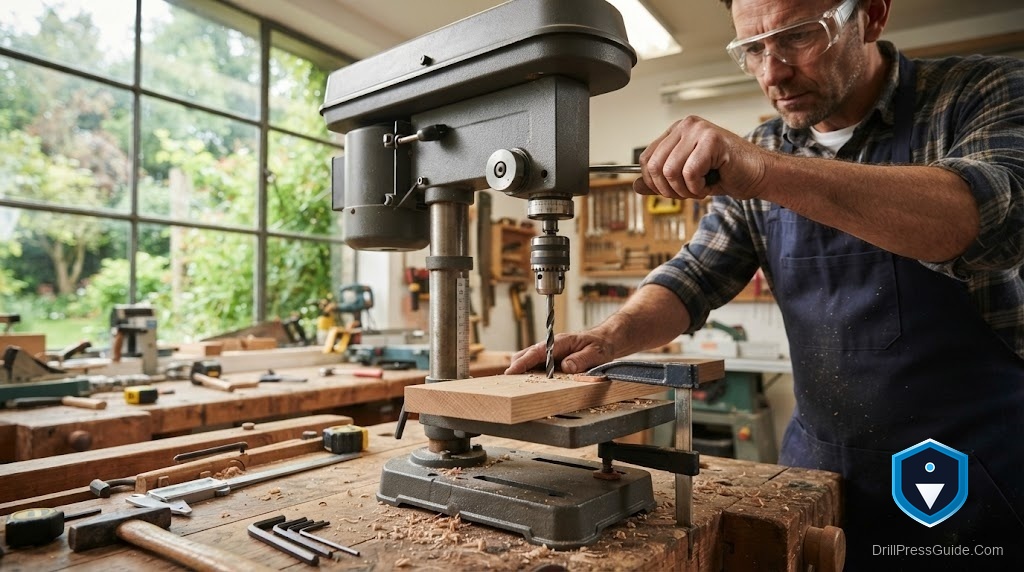
Steel plate and bar will grab and spin as the bit breaks through the far side, and a spinning part is dangerous. Clamp the work to the table or hold it in a drill press vise. The break-through moment is when accuracy and safety are most at risk, and a clamp is what keeps the hole round and your hands clear.
The verdict
A steel speed chart is the starting point. What changes the result is everything around it:
- Match RPM to diameter and remember stainless runs at half of mild steel.
- Feed with steady pressure to make chips, and never let the bit rub.
- Use cutting fluid, peck deep holes, and clamp the part.
Who should skip the chart? Nobody drilling steel. But treat it as one input among several. The people who get clean holes are the ones who set the speed and then get the feed, fluid, and clamping right.
Frequently asked questions
Why does my bit squeal and turn blue at the chart speed? That is heat, usually from no cutting fluid or too little feed pressure. Add fluid, push harder to make real chips, and the squeal usually stops.
Is there one speed for all steel? No. Mild steel and stainless are far apart, and diameter shifts the number too. That is why the chart has rows and columns.
Do I need cutting fluid for a tiny hole? Even small holes benefit, but the need grows fast with diameter and depth. For anything past a light tap of the bit, use fluid.
What if my press cannot reach the slow speed for a large hole? Use the slowest belt step, step up through pilot sizes, and keep fluid flowing. Very large holes in steel may exceed a light benchtop machine.
Why pilot a large hole? The center of a large bit does not really cut; it pushes. A pilot hole removes that material first so the big bit’s edges do the work and track true.
How do I know the feed pressure is right? Watch the chips. Continuous curls mean good pressure. Powder means too little. A stalling machine means too much.
References
- Dynabrade HSS Drill Speed Recommendation Chart: https://www.dynabrade.com/pdf/lit/D1201_Singles/D12.01_pg134.pdf
- CCOHS, Metalworking Machines - Drill Presses: https://www.ccohs.ca/oshanswers/safety_haz/metalworking/drillpresses.html
- Delta 17-900 Instruction Manual: https://powertool.manualsonline.com/manuals/mfg/delta/17900.html