
10-Inch 12-Speed Benchtop Drill Press: Capacity, Setup, and Everyday Use
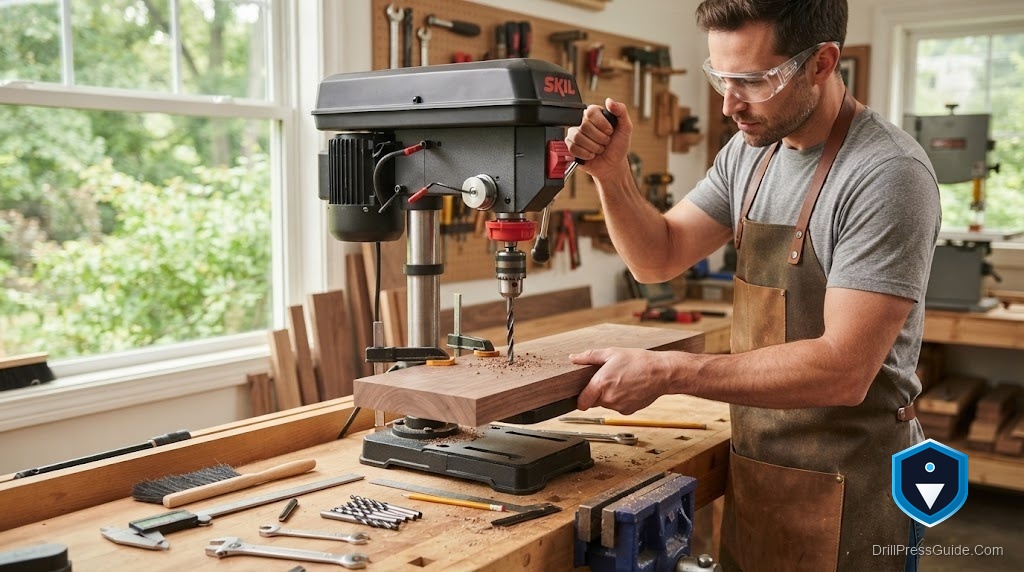
The 10-inch, 12-speed benchtop drill press is the sweet spot a lot of home shops land on, and for good reason. The 10-inch swing covers most workpieces you will center a hole in, and twelve speeds give you enough range to run tiny bits in wood and larger bits in metal without compromise, all in a machine that sits on a bench rather than eating floor space. But the specs only pay off if you understand what the two numbers actually promise and how to set the thing up. Here is the practical picture.
A 10-inch 12-speed benchtop drill press has a 10-inch swing, meaning it can center a hole in a piece up to 10 inches wide, and twelve belt-selectable speeds so you can match RPM to bit size and material. It suits woodworking, light metalwork, and plastics in a home shop. Set it on a solid bench, bolt it down, and pick the speed from a chart for each job.
What the two numbers mean
10-inch is the swing, twice the distance from the bit to the column. It tells you the widest piece you can center a hole in, a 10-inch disc, for example, and nothing about drilling depth or workpiece height, which are separate specs. 12-speed means the belt-and-pulley system offers twelve RPM settings, typically spanning a few hundred RPM up to around 3000. That range is the real value: slow speeds for large bits and metal, fast speeds for small bits in wood. A model such as the TREEYX 10-inch 12-speed benchtop drill press is built around exactly this pairing, with a chuck taking bits up to 16 mm.
What it handles well
This class of machine is a strong all-rounder. In wood it drills clean, perpendicular holes and drives Forstner and spade bits at the right lower speeds. In mild steel and aluminum it works well at its slow settings with steady feed. Plastics and acrylic drill cleanly when you slow down to avoid melting. Where it reaches its limits is tall workpieces (bounded by table-to-chuck clearance), very deep single-pass holes (bounded by spindle travel, usually a couple of inches), and heavy, continuous metal drilling, where a floor machine’s power and mass pull ahead.
Capacity at a glance
| Spec | Typical value | What it governs |
|---|---|---|
| Swing | 10 in | Widest piece you can center |
| Speeds | 12 | RPM range for bit and material |
| Chuck capacity | Up to about 1/2 in / 16 mm | Largest bit shank |
| Spindle travel | About 2 in | Deepest single-pass hole |
| Speed range | Roughly a few hundred to 3000 RPM | Wood to metal coverage |
Setting it up
Because it is benchtop and top-heavy, mounting comes first. Put it on a bench solid enough not to tip, bolt the base through its mounting holes, and confirm it does not rock. Square the table to the bit so holes come out straight. Then, for each job, set the speed by moving the belt across the pulleys to the position that matches your bit and material from a speed chart, slow for big bits and metal, fast for small bits in wood. Clamp the work in a vise or to the table, never by hand, per OSHA and CCOHS, and set the depth stop for repeat holes. General setup habits from Pro Tool Reviews apply directly.
Who it is for
This size and speed count fit the home woodworker or hobbyist who wants one machine to cover wood, occasional metal, and plastics without dedicating floor space. If you routinely drill tall stock, sink very deep holes, or drill thick steel all day, step up to a floor model. For everyone else, the 10-inch 12-speed benchtop hits the balance of reach, range, and footprint that makes it the default recommendation.
The verdict
A 10-inch 12-speed benchtop drill press pairs a swing that centers holes in pieces up to 10 inches wide with a twelve-speed range that spans wood to metal, in a compact bench-mounted package. Three takeaways: the 10-inch figure is swing (reach across the work), the twelve speeds are what let you drill everything from small bits in wood to larger bits in metal, and its limits are tall or very deep work and heavy continuous metal drilling. Who should buy one? Home woodworkers and hobbyists wanting a versatile all-rounder, those with tall or heavy metal work should look at a floor machine instead.
Frequently asked questions
What does 10-inch 12-speed mean on a drill press? Ten inches is the swing, twice the bit-to-column distance, so it centers a hole in a piece up to 10 inches wide. Twelve speeds means the belt-and-pulley system offers twelve RPM settings to match bit size and material.
Is a 10-inch 12-speed benchtop drill press good for metal? Yes, for mild steel and aluminum at its slower speeds with steady feed. It handles light and occasional metalwork well. For thick steel or heavy continuous drilling, a more powerful floor machine is better suited.
How thick a piece can it drill in one pass? That is set by spindle travel, usually about two inches on this class of machine, not by the swing. For deeper holes you drill in stages or step up to a machine with more travel.
What size bits fit the chuck? Typically up to about a half inch, or 16 mm, shank. Larger bits like big Forstner or hole saws may exceed the chuck, so check the chuck capacity against the bits you plan to use.
Do I need to bolt down a benchtop drill press? Yes. It is top-heavy and produces torque that can spin it if a bit grabs. Bolt the base to a solid bench through its mounting holes and confirm it does not rock, for both safety and accuracy.
How do I choose which of the 12 speeds to use? Match the speed to your bit size and material using a speed chart: slower for large bits and metal, faster for small bits in wood. Move the belt across the pulleys to the position that gives that RPM.
Is 12 speeds enough, or do I need variable speed? Twelve discrete speeds cover the common range well for most home and hobby work. Variable speed adds convenience and fine-tuning, but twelve belt settings are plenty to match nearly any bit and material sensibly.
References
- Pro Tool Reviews, How to Use and Set Up a Drill Press. https://www.protoolreviews.com/how-to-use-drill-press/
- OSHA, Woodworking eTool: Drill Press. https://www.osha.gov/etools/woodworking/production/machines-tools/drill-press
- CCOHS, Metalworking Machines: Drill Presses. https://www.ccohs.ca/oshanswers/safety_haz/metalworking/drillpresses.html


