How to Use a Drill Press Safely: What to Check Before You Start
A drill press feels tame. It stands still, it drills a hole, it stops. That calm is exactly why people get hurt on it, because the two things that cause the worst injuries, a workpiece that spins loose and loose clothing or hair caught in the chuck, happen in a fraction of a second and only when someone has stopped respecting the machine. Using a drill press safely is less about fear and more about a short checklist you run every time, until it becomes automatic.
To use a drill press safely, secure the workpiece so it cannot spin, tie back hair and remove loose clothing, gloves, and jewelry, wear eye protection, set the correct speed, keep the belt guard closed, clear chips with a brush not your hand, and let the bit come to a stop on its own. The two rules that prevent the worst injuries are clamping the work and keeping anything loose away from the rotating chuck.
The two rules that matter most
Everything else supports these two.
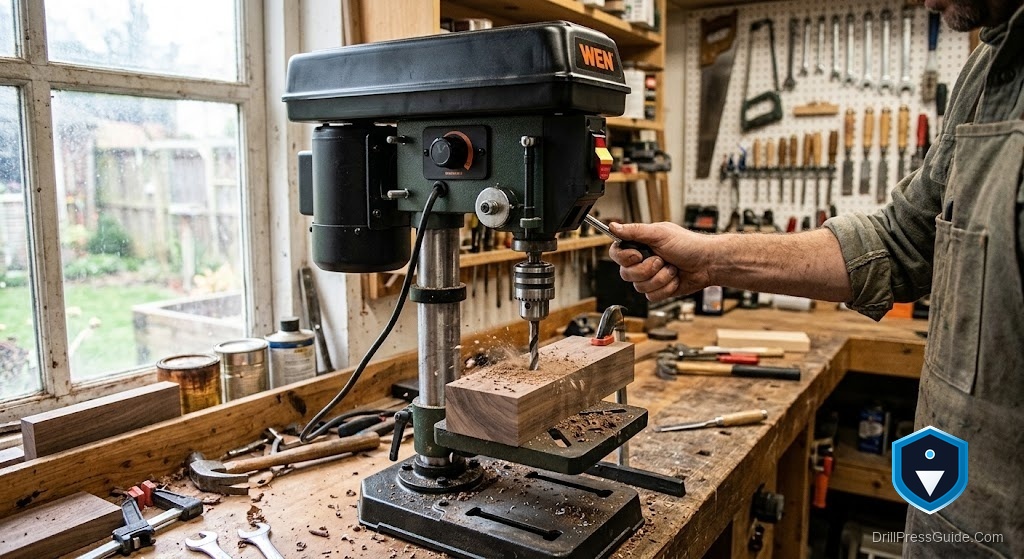
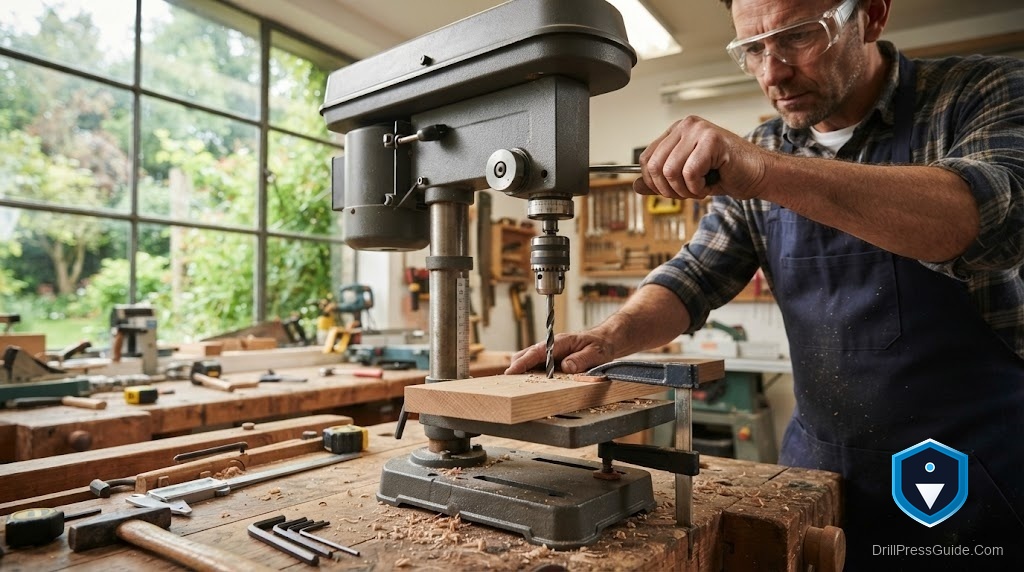
Secure the work, never hold it by hand. When a bit grabs, an unclamped piece becomes a spinning blade. Clamp it, put it in a vise, or cradle round stock in a V-block. Both OSHA and CCOHS put securing the workpiece at the center of drill press safety for this reason.
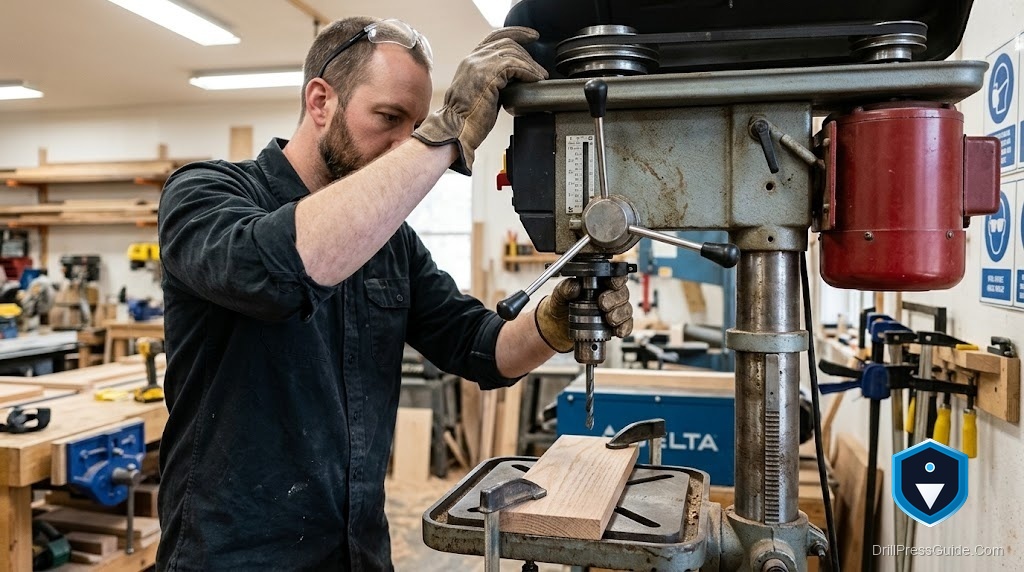
Keep loose things away from the rotating chuck. The spinning chuck will catch a sleeve, a glove, a necklace, or long hair and pull your hand in before you can react. Roll up sleeves, remove gloves and jewelry, and tie back hair. Never wear gloves at a drill press.
The pre-start checklist
Run this every time, before you flip the switch.
1. Machine secure. The press is bolted down and does not rock.
2. Bit tight and chuck key removed. The bit is seated and tight, and the chuck key is out of the chuck. A key left in becomes a projectile when the motor starts.
3. Work clamped. The piece is in a vise or clamped to the table, with a backer board under it.
4. Speed set. The speed matches the bit and material, slower for large bits and metal.
5. Guard closed. The belt-drive cover is shut.
6. You are ready. Eye protection on, sleeves and hair secured, no gloves, and a clear path to the switch.
While the machine runs
Feed smoothly and let the bit cut rather than forcing it. Ease off as the bit breaks through the far side, where grabbing is most likely. Keep your hands away from the point of operation and never reach around or under a spinning bit. If something feels wrong, a chatter, a grab, a smell, stop and check. Do not clear chips or swarf while it turns, since hot chips cut and can wrap the bit.
After the hole
Let the spindle stop on its own before clearing chips or changing the bit, and use a brush or hook, not your fingers, for the sharp swarf. Retract the bit, and if you are done, switch off and let everything come to rest. Rushing the shutdown, brushing chips or swapping bits while the chuck still turns, is a classic way to get cut.
Safety rules at a glance
| Rule | Why it matters |
|---|---|
| Clamp the work | Stops a grabbing bit spinning the piece |
| No gloves, loose sleeves, or jewelry | Prevents catching in the rotating chuck |
| Tie back hair | Same catch hazard, severe if it happens |
| Eye protection | Chips and swarf fly toward your face |
| Remove the chuck key | A left-in key launches at startup |
| Correct speed | Prevents grabbing, burning, and dull bits |
| Belt guard closed | Keeps fingers out of the drive |
| Brush chips, never by hand | Swarf is hot and sharp |
The verdict
Using a drill press safely comes down to a short checklist you run every time, anchored by two rules: secure the workpiece so it cannot spin, and keep hair, sleeves, gloves, and jewelry away from the rotating chuck. The rest, eye protection, correct speed, chuck key out, guard closed, brushing chips, and letting the spindle stop, all support those two. Three takeaways: clamp the work and never hold it by hand, remove gloves and secure anything loose before starting, and never clear chips or change bits until the spindle has stopped. Who most needs the discipline? Everyone, because the machine’s calm is exactly what makes people careless.
Frequently asked questions
How do you use a drill press safely? Secure the workpiece so it cannot spin, remove gloves and secure loose clothing and hair, wear eye protection, set the right speed, remove the chuck key, close the guard, and let the bit stop before clearing chips.
What is the most important drill press safety rule? Securing the workpiece. A clamped part resists a grabbing bit, while an unclamped one can spin into a fast-moving hazard right where your hands are.
Why can’t you wear gloves at a drill press? A glove can be caught by the rotating chuck and pull your hand into the machine. The same applies to loose sleeves, jewelry, and untied hair.
Do I need eye protection for a drill press? Yes. Drilling throws chips and swarf toward your face, and metal chips especially are hot and sharp. Always wear safety glasses.
Why must I remove the chuck key before starting? A chuck key left in the chuck becomes a projectile the instant the motor starts, which can cause serious injury. Always remove it before switching on.
How should I clear chips from a drill press? With a brush or hook after the spindle has stopped, never with your bare hand. Swarf is hot and sharp and can wrap around the bit.
What speed keeps drilling safe? A speed matched to the bit and material, slower for large bits and metal. The wrong speed causes grabbing, burning, and dulled bits, all of which raise risk.
References
- OSHA, Woodworking eTool: Drill Press. https://www.osha.gov/etools/woodworking/production/machines-tools/drill-press
- CCOHS, Metalworking Machines: Drill Presses. https://www.ccohs.ca/oshanswers/safety_haz/metalworking/drillpresses.html
- Pro Tool Reviews, How to Use and Set Up a Drill Press. https://www.protoolreviews.com/how-to-use-drill-press/