
Understanding the Craftsman 13-Inch Drill Press 2/3 HP: Setup, Limits, and Support
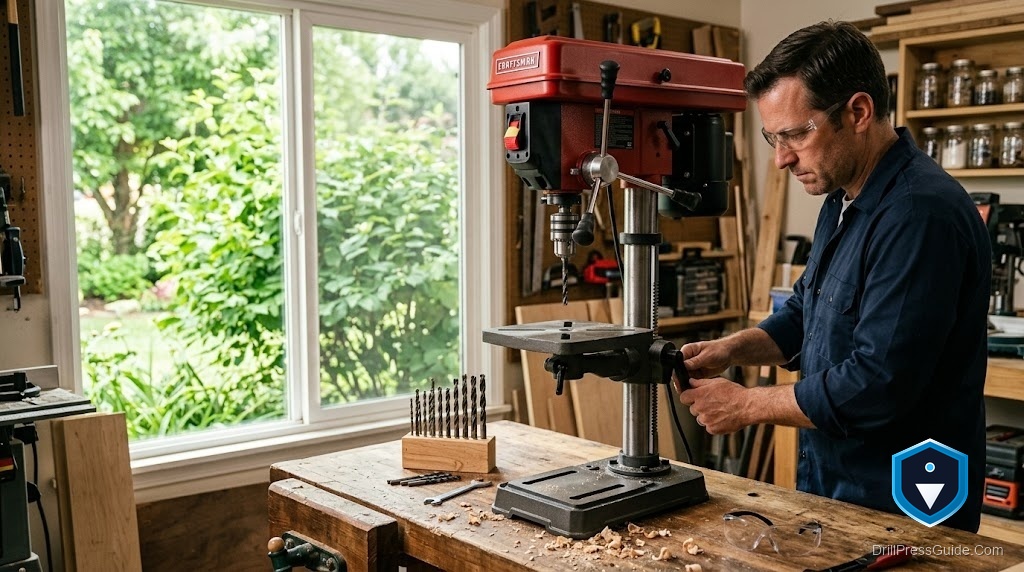
A friend called me over to look at a Craftsman 13 inch drill press 2/3 HP he had scored from a retiring cabinetmaker. It stood in his garage like it owned the place, taller than his shop vac, with a coat of sawdust and one worn belt. He wanted to know if he had bought a workhorse or a boat anchor. The answer, like most things with old Sears iron, sat in the details. Here is what this machine does well, where it stops, and how to keep it fed with parts long after the store stopped selling it.
A Craftsman 13 inch drill press is a floor-standing machine with a 13 inch swing, meaning the spindle centers about 6-1/2 inches from the column. The 2/3 HP rating is a maximum developed figure, a peak rather than a steady output. In plain terms, this is a capable mid-size press for wood, plastic, and light to moderate metal, with more reach and rigidity than a 10 inch bench model.
What the 2/3 HP rating means here
The horsepower label on old Craftsman presses causes more arguments than it should. “Maximum developed” is the motor’s brief peak under load. The power it delivers continuously is lower. On a 13 inch press that still adds up to a genuinely useful machine, because the extra mass and the floor stand let the tool run steadier than a small bench unit at the same power.
You will feel the limit with large Forstner bits, wide hole saws, and heavy metal drilling. Slow the speed, feed lightly, and let the chips clear, and it handles most home-shop and light-production work without complaint.
Specs at a glance
Sears built the 13 inch press in a couple of drive styles. The stepped-pulley floor model runs five set speeds, while later variable-speed versions dial in anything across the range.
| Feature | Spec |
| Swing | 13 in |
| Motor | 2/3 HP maximum developed |
| Speeds (stepped model) | 5 (400, 800, 1200, 1800, 2800 RPM) |
| Speeds (variable model) | 400 to 3000 RPM |
| Chuck | 5/8 in |
| Table tilt | 0 to 45 degrees |
| Type | Floor model |
Note the two speed systems. If the head has a simple stepped pulley under the guard, you move the belt by hand for one of five speeds. If it has a speed-change handle on the side, you have a variable-speed model that shifts within a 400 to 3000 RPM band while running. The change handle is a nice feature and a common failure point, so test it if the press has one.
Stepped-pulley versus variable-speed: which did you get?
| Trait | Stepped pulley | Variable speed |
| Speed change | Move belt by hand | Handle, changes while running |
| Speeds | 5 fixed | Anywhere 400 to 3000 RPM |
| Failure points | Belt, pulleys | Belt, plus variable-speed sheaves and handle |
| Best for | Simple, reliable use | Frequent speed changes across jobs |
The honest trade: the variable-speed version is more convenient and more to go wrong. Its sheaves and control mechanism wear, and belts for it can be specific to the model. The stepped-pulley press has almost nothing to fail beyond a belt. If you value reliability over convenience, the plain stepped model is the safer used buy.
Setup that saves you grief
Getting a used 13 inch press right on day one prevents most of the frustration owners report.
- Level and lag it down. A floor press that rocks will chatter and walk bits. Shim the base and bolt it to the floor if you can.
- Square the table to the bit. Chuck a rod, drop a small machinist square against it, and adjust the table until the gap is even. Do this before you trust any hole.
- Set belt tension by feel. Press the belt midspan with a finger. It should deflect a small amount, roughly a fingernail’s worth, not flop and not twang tight. Too tight wears the bearings, too loose slips.
- Match the speed to the material. Big bits and metal want low RPM. Small bits in wood want high. The panel on the head lists starting points.
Keeping it running: parts and support
This press left production years ago, so support comes from a small circle of dependable sources rather than a store shelf. Sears PartsDirect still hosts the original 13 inch owner’s manuals and exploded parts diagrams by model number, including floor models like the 113.213843, which makes it easy to identify a bearing, pulley, or spring cap by its part number. eReplacementParts carries overlapping OEM stock and shows the same diagrams.
The belt is the repair you will meet first. On the variable-speed models the belt part number is specific, so match it to your model rather than grabbing a generic one. Measure a stepped-model belt by length and top width before ordering, since a press that has changed hands a few times may not have the original on it. After belts, the usual work is refreshing spindle bearings and, on variable-speed heads, cleaning and lubricating the speed-change sheaves.
Accessories worth adding
The 13 inch press takes a 5/8 inch chuck, and many of these heads use the common JT33 spindle taper. Check your taper first, then a keyed replacement chuck in the right capacity swaps in cleanly. Import chucks can carry a little runout, so precision metal drillers should prefer a quality Jacobs.
For workholding, this is a press with enough table to make a vise worthwhile. A WEN 4-inch drill press vise bolts through the table slots and grips small stock well. It is on the light side, and the jaws can rack under heavy clamping, so anyone gripping larger or heavier work should move up to a Palmgren 4-inch drill press vise, which uses a heavier casting and replaceable steel jaws. Match the vise to your work, not the other way around.
The verdict
The Craftsman 13 inch 2/3 HP drill press is the sweet spot for a lot of home shops: enough swing and rigidity for real projects, floor stability that a bench unit lacks, and a chuck size that opens up bigger bits. It is not a metal-shop press, and the variable-speed versions ask for more upkeep than their convenience may be worth to a casual user.
Three things to carry with you:
- Identify the drive type first. Stepped pulley means simple and reliable, variable speed means convenient and more to maintain.
- Square the table and set belt tension before your first serious hole. Most complaints trace back to skipping these.
- Write down the model number. Belts especially are model-specific on the variable-speed heads.
FAQ
Is the Craftsman 13 inch drill press 2/3 HP a floor or bench model? It is a floor-standing model. The taller column and heavier base give it more rigidity and reach than a 10 inch benchtop press.
How many speeds does the Craftsman 13 inch drill press have? The stepped-pulley model offers five speeds (400, 800, 1200, 1800, and 2800 RPM). Variable-speed versions cover roughly 400 to 3000 RPM with a change handle.
What size chuck does the Craftsman 13 inch drill press use? A 5/8 inch chuck. Many heads use a JT33 spindle taper, so confirm your taper before ordering a replacement.
Can I get a replacement belt for a Craftsman 13 inch drill press? Yes. Stepped-model belts can be matched by length and top width. Variable-speed models use a model-specific belt, so order by your model number through Sears PartsDirect or eReplacementParts.
What is the RPM range on the Craftsman 13 inch variable speed drill press? About 400 to 3000 RPM, adjustable while the press is running using the speed-change handle.
Is 2/3 HP enough for a 13 inch drill press? For wood, plastic, and light to moderate metal, yes. Large Forstner bits, wide hole saws, and heavy steel work push it, so slow down and feed gently for those.
Where do I find the model number on a Craftsman 13 inch drill press? On a plate attached to the rear of the head. You will need it for every belt, bearing, or part you order.
Should I buy a used Craftsman 13 inch drill press or a new one? A sound used one is heavy cast iron with a long parts history, which is hard to match new at the same size. Buy used only after checking the spindle, quill return, belt, and, on variable models, the speed-change mechanism.
References
- 13-inch Floor Model Drill Press owner’s manual (model 113.213843), Sears PartsDirect (PDF): https://c.searspartsdirect.com/mmh/lis_pdf/OWNM/L0805251.pdf
- Craftsman drill press parts and diagrams, Sears PartsDirect: https://www.searspartsdirect.com/combo/0247-1234675/craftsman-drill-press-parts
- Craftsman drill press parts index, eReplacementParts: https://www.ereplacementparts.com/parts/power-tool/drill/drill-press/craftsman/


