
Antique Craftsman Drill Press: Dating, Inspecting, and Planning the Restoration
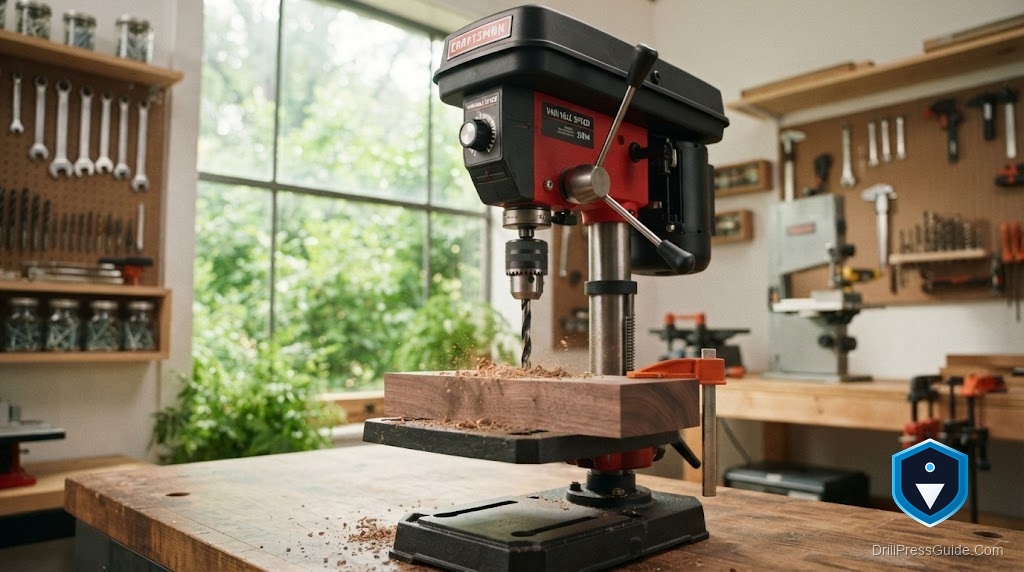
Most Craftsman drill presses you meet are vintage, not antique, and the difference matters more than it sounds. A true antique Craftsman drill press predates 1946, which is the year King Seeley began building the machines Sears sold under that name. Anything older wore the Craftsman badge but came from Atlas, Walker-Turner, or Dunlap, companies with their own engineering and their own parts. So when someone says they have an antique Craftsman press, the real question is who actually built it, because that decides everything about dating and restoring it.
An antique Craftsman drill press is a pre-1946 machine sold by Sears under the Craftsman or Dunlap name but manufactured by one of those earlier makers. These are heavier, more industrial machines than the postwar King Seeley presses, and they are dated and fed as products of their true manufacturer, not as later Craftsman models. Recognizing that is the first and most valuable step.
Can you restore one? Yes, and the simple, heavy construction helps. The challenge is identification and parts, because you are researching an Atlas or Walker-Turner machine wearing a Sears badge, not a documented Craftsman model number.
Dating: find the real maker first
Dating an antique Craftsman press is really about attribution. Start by looking past the badge. A pre-1946 machine will not carry the familiar 103 King Seeley prefix or the later 113 Emerson prefix, so the absence of those is your first clue that you have something older.
Next, read the castings. Atlas, Walker-Turner, and Dunlap each had recognizable design traits, and the vintage tool community has documented which Sears and Dunlap machines came from which maker. Photograph the castings, any numbers, and the overall form, then compare against the VintageMachinery.org archives and the maker registries. Once you know it is, say, an Atlas-built press, you can date it and find parts through Atlas information rather than chasing a Craftsman model that does not exist.
The Dunlap badge is a specific tell. Dunlap was Sears’s lower-price line, often the same or similar machines as Craftsman-badged ones, and Dunlap-marked presses from this era are firmly in antique territory.
Inspecting an antique-era machine
The inspection is the familiar vintage routine, with extra attention to age-related seizing and to completeness.
Castings. On a machine this old, the head, base, and column castings are the value. Check for cracks and old brazed repairs, which show up on hard-used prewar tools.
Spindle and quill. Expect stiffness from ancient grease. Feed the quill and judge the true condition past the grime; roughness that survives cleaning means a scored bore or a rough bearing.
Bearings and drive. Record bearing numbers when you open it, since prewar machines may use different arrangements. Note whether the drive is flat-belt or early V-belt.
Return spring and feed. Confirm the quill returns and the depth mechanism works.
Completeness. Missing prewar parts are the real obstacle, so confirm the chuck, table, and drive components are present. A complete filthy antique is worth far more than a clean one missing its table.
Planning the restoration
The plan mirrors any careful antique restoration, tuned for stubborn age and irreplaceable parts.
Disassemble and document, bagging hardware and photographing each step. Free seized parts with penetrating oil, time, and gentle heat rather than force, since a cracked prewar casting is rarely worth saving.
Remove rust with a method that spares the old metal. A chelating soak cleans hardware and machined parts without eating the parent steel. Evapo-Rust is the safe pick because it lifts rust by chelation, preserving threads and machined faces on parts you cannot replace. It grays some steel with a film that buffs off, and bare iron flash-rusts within the hour, so dry parts immediately.
Replace only the consumables, a fresh belt, any bearing that stays rough, a tired spring, keeping the original castings and hardware wherever sound. If the chuck is worn, confirm the arbor taper before buying, since prewar machines vary; where it is a JT33, a standard JT33 keyed chuck fits once the old one is driven off.
Protect the bare iron with a film of Boeshield T-9 on the table and column, buffed before use. Then reassemble with fresh grease, rewire any electric components to modern grounded standard, set belt tension and spring preload, and test on scrap.
Conclusion
An antique Craftsman drill press is really an Atlas, Walker-Turner, or Dunlap machine in Sears clothing, and dating it means identifying that true maker before anything else. Once attributed, the inspection is the standard vintage routine with extra care for age and completeness, and the restoration is a patient sequence that preserves the original castings while replacing only the worn consumables. Research the real manufacturer, and both parts and dating fall into place.
Three takeaways: identify the true prewar maker before you date or shop for parts, preserve original castings and hardware, and confirm the chuck taper rather than assuming.
Frequently Asked Questions
What makes a Craftsman drill press antique rather than vintage? Age and maker. Pre-1946 Craftsman and Dunlap presses were built by Atlas, Walker-Turner, or Dunlap before King Seeley took over the Craftsman line, which puts them in antique territory.
How do I date an antique Craftsman drill press? Identify the true manufacturer from the castings and design, since these predate the 103 and 113 model prefixes, then date it through that maker’s records on the VintageMachinery archives.
Is a Dunlap drill press the same as a Craftsman? Dunlap was Sears’s lower-price line, often the same or similar machines as Craftsman-badged ones. A Dunlap-marked press from this era is antique and researched the same way.
Where do I get parts for an antique Craftsman press? Research the real maker, Atlas, Walker-Turner, or Dunlap, and source standard consumables by measurement. Model-specific castings come from donor machines and the vintage tool community.
Are antique Craftsman drill presses worth restoring? Usually yes, if the castings are sound and the machine is reasonably complete. The heavier prewar construction is a point in their favor; missing model-specific parts are the main risk.
What chuck fits an antique Craftsman drill press? It depends on the arbor taper, which varies on prewar machines. Confirm the taper before buying; where it is JT33, a standard JT33 chuck fits.
References
- VintageMachinery.org, Atlas Press Co. and Walker-Turner histories and archives. http://vintagemachinery.org
- Sears PartsDirect, Craftsman and Dunlap tool parts and diagrams. https://www.searspartsdirect.com
- CRC Industries, Evapo-Rust Rust Remover product information. https://www.crcindustries.com/evapo-rust/


