Blum Mini Press Drill Bits: What They Are and How to Use Them Right
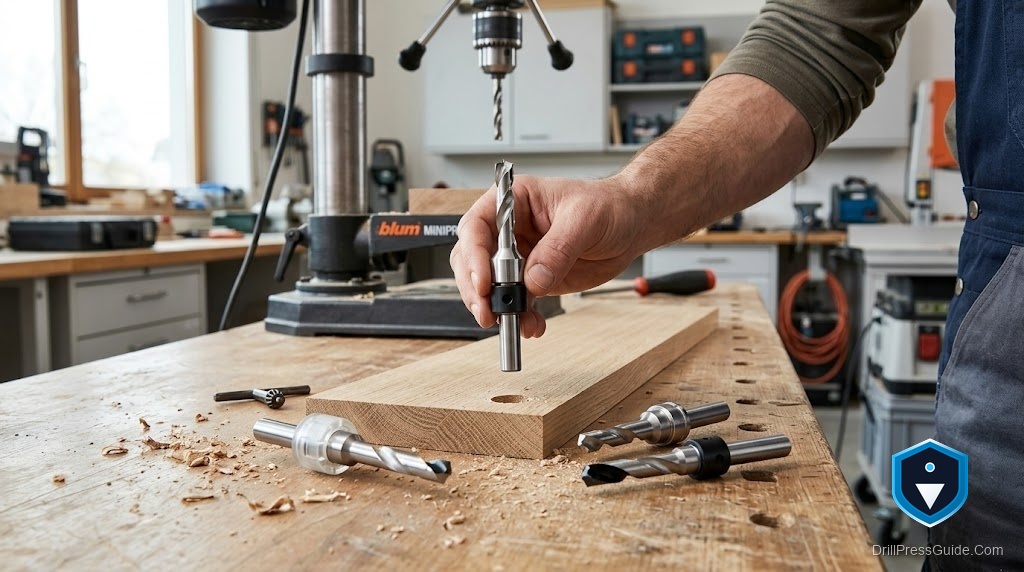
Anyone who has installed a set of European-style concealed cabinet hinges knows the moment of truth: the big round hole in the door that the hinge cup drops into. Bore it in the wrong spot, at the wrong depth, or off-square, and the door will never sit right. Blum’s minipress and the boring bits made for it exist to make that hole perfect every time, and understanding the bits, especially the all-important 35mm cup bit, is the key to hinge installs that look factory-made.
Blum mini press drill bits are the boring bits used with a Blum minipress, the compact hinge-boring machine that drills the cup hole for European-style concealed hinges and often the pilot holes in one stroke. The central bit is a 35mm hinge boring bit that cuts the recess the hinge cup seats into, and it is the single most important bit in cabinet hinge work.
Short answer: the bit that matters most is the 35mm cup boring bit, because 35mm is the near-universal cup size for European concealed hinges. Choose quality bits with the correct shank for your machine, set depth and spacing precisely, and use the right speed, and every hinge hole will come out clean, correctly placed, and the right depth.
Why 35mm is the number to know
European-style concealed hinges, the kind Blum is known for, almost all use a 35mm diameter cup that seats into a bored recess in the door. That makes the 35mm boring bit the workhorse of hinge installation; it cuts the exact recess the hinge cup drops into. Many minipress setups also bore the two pilot holes for the mounting screws at the same time, using smaller bits spaced to match the hinge. Knowing that 35mm is the standard means you buy the right main bit with confidence, and it explains why this one bit gets used on virtually every cabinet door you hang.
Getting a clean, correctly placed hole
Three things make a hinge hole right: position, depth, and squareness. Position covers how far the hole sits from the edge of the door and where it lands top to bottom; the minipress fence and stops set this so every door matches. Depth controls how deep the cup seats, which affects how the hinge adjusts, so set the depth stop carefully and test on scrap. Squareness is handled by the machine itself, which bores perpendicular to the door face, one of the main reasons to use a minipress rather than a handheld drill. Get position, depth, and square right and the hinge sits perfectly; miss any one and the door fights you.
Choosing and caring for the bits
Buy boring bits that match your machine’s shank and chuck, and favor quality carbide-tipped bits, because they stay sharp far longer and leave cleaner walls in chipboard, MDF, and plywood, the materials most cabinets are made from. Keep the bits sharp; a dull cup bit tears the recess and can burn the material. Confirm the pilot-hole bits are spaced to your specific hinge pattern, since not all hinges share the same screw spacing. Clean chips from the bits between holes for the cleanest cut. Well-chosen, well-kept bits are the difference between crisp recesses and ragged ones that undermine an otherwise careful install.
Setting up and boring
Set the fence for the correct edge distance, then set the depth stop for the cup depth and confirm it on a scrap piece before touching a real door. Run the bit at a speed suited to the material so it cuts cleanly without burning. Hold or clamp the door firmly against the fence, bore the hole in a smooth stroke, and let the bit clear its chips. Check the first door completely, drop in a hinge and confirm the fit and adjustment range, before boring the rest. Because a minipress repeats the same setup on every door, that one careful test setup translates into a whole run of identical, correct holes.
Conclusion
Blum mini press drill bits, led by the 35mm cup boring bit, are what make concealed hinge installation clean and repeatable. Because 35mm is the near-universal European hinge cup size, that bit does the essential work, while spaced pilot bits handle the mounting screws. The quality of the hole comes down to position, depth, and squareness, all of which the minipress is built to control once you set the fence and depth stop and test on scrap. Choose bits that match your machine, keep them sharp, and dial in one careful setup, and you will bore door after door that seats hinges perfectly and hangs exactly right.
Frequently asked questions
What size is a Blum hinge cup bit? 35mm. European-style concealed hinges almost all use a 35mm cup, so the 35mm boring bit is the main and most important bit for cabinet hinge work.
What does a minipress do that a handheld drill cannot? It bores the cup hole perfectly square to the door face at a set depth and position, and often bores the pilot holes at the same time, giving repeatable, factory-quality results.
What bits do I need besides the 35mm? Smaller pilot-hole bits spaced to match your hinge’s mounting-screw pattern. Many minipress setups bore the cup and both pilot holes in a single stroke.
Should I use carbide bits? Yes. Carbide-tipped boring bits stay sharp far longer and cut cleaner walls in chipboard, MDF, and plywood, which are the materials most cabinets are built from.
How deep should the cup hole be? Deep enough for the hinge cup to seat properly, which affects the hinge’s adjustment. Set the depth stop and test on scrap, since it varies with the hinge and material.
Why is my hinge recess tearing or burning? Usually a dull bit, the wrong speed, or feeding too fast. Keep the bit sharp, match the speed to the material, and bore in a smooth, steady stroke while clearing chips.
References
- Blum, minipress and hinge boring documentation, blum.com
- Forest Products Laboratory, wood and panel machining references, fpl.fs.usda.gov