A Practical Guide to the Jewelry Stone Drill Press
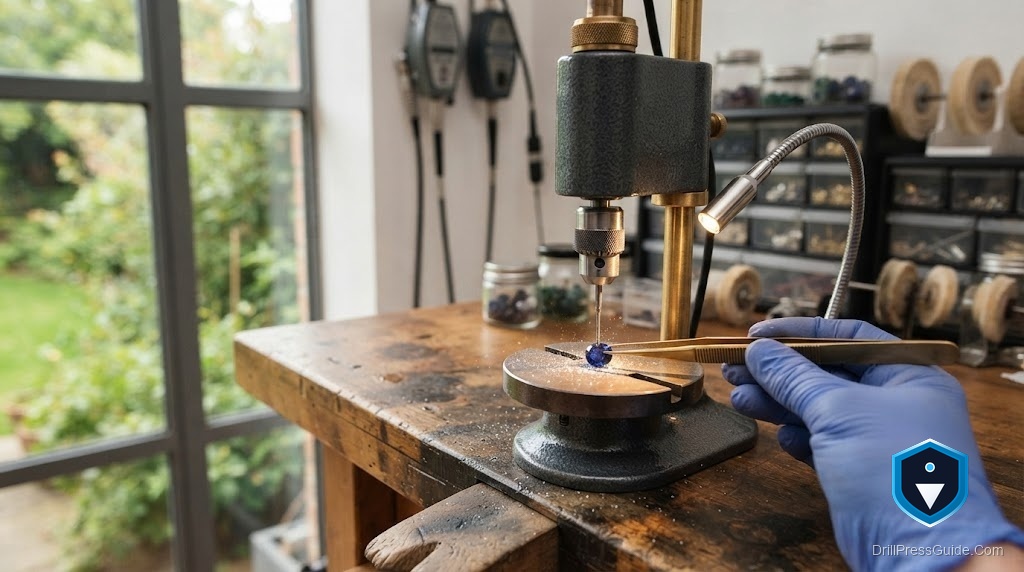
Drilling a hole through a piece of sea glass or a river stone for a pendant looks like it should be simple, right up until the stone cracks or the bit skates across a slick surface and scratches your work. Stone and gem materials are hard, brittle, and heat-sensitive, which means a jewelry stone drill press is less about power and more about control: a small, steady machine, the right diamond bits, water, and patience.
A jewelry stone drill press is a small or benchtop press used to bore holes in stones, gems, sea glass, and shells for jewelry, using diamond bits kept wet and run at controlled speed. The machine’s steadiness and the diamond tooling matter far more than motor power.
The short answer: use a compact press with fine speed control, diamond-coated bits sized to your beads and pendants, and keep the work wet, and let the diamonds grind slowly. Force and speed crack stones; patience and water do not.
Why a small press suits stone work
Jewelry drilling is delicate. The holes are tiny, the materials are brittle, and the bits are fragile diamond points a fraction of a millimeter to a few millimeters across. A big floor press is overkill and its mass makes fine control harder. A compact bench or mini press with smooth low-speed control and a small chuck that grips tiny shanks is the better tool.
A compact benchtop mini drill press suits this work, holding small bits and running at the controlled speeds stone needs. Its honest limit is that it is light-duty, so it is for small jewelry pieces, not heavy material, which is exactly the point for gem work.
Diamond bits, sized to the piece
Stone and glass are ground away by diamond grit, not cut by a blade, so diamond bits are the only option. For pendants and beads, small solid diamond points and tiny diamond core bits do the work. A diamond drill bit set for jewelry and gemstones covers the small solid-point sizes for sea glass, shells, and softer stones, while a 1/8-inch diamond hollow core set grinds slightly larger, cooler holes because water reaches the center.
Match the bit to the material and hole size. Core bits run cooler and suit harder stones and larger holes; solid points are fine for tiny holes in glass and soft stone. Keep spares, because fine diamond bits are consumable and wear with use.
Water and speed, the two rules that save stones
Keep the work wet at all times. Diamond bits must stay wet, because water carries away the heat that cracks stone and glass and flushes the ground grit from the hole. A shallow water bath, a putty dam filled with water, or a wet sponge all work. A dry bit overheats, sheds diamonds, and cracks the piece.
Run slow and feed gently. High speed and heavy pressure crack brittle material, so use a low speed and let the diamonds grind at their own pace with light, steady contact. Peck lightly to let water back into the hole. Patience is the whole technique here.
Support, workholding, and safety
Back the stone with a firm surface underwater or on a rubber pad so it cannot flex or shift, and hold small pieces in a clamp, putty, or a small vise rather than your fingers, both for accuracy and to keep hands away from the bit. As the bit nears the far side, ease off, since breakthrough is where a stone chips or cracks. Drilling halfway from each side gives the cleanest exit on beads.
Wear eye protection, and keep water away from the machine’s motor and switch. A small tray setup keeps the water where it belongs.
The verdict
A jewelry stone drill press is a study in restraint: a small, controllable press, fine diamond bits sized to the piece, constant water, slow speed, and a light touch. Power is beside the point; heat and force are the enemies. Get a compact press with good low-speed control, stock spare diamond bits, and never let the cut run dry, and stones, glass, and shells drill cleanly for pendants and beads. The habit that matters most is water, because a dry diamond bit and a cracked stone arrive together.
Keep these in mind:
- A small, controllable press beats a big one for delicate stone work.
- Only diamond bits drill stone and glass; match core bits to harder or larger holes.
- Keep the work wet always; heat is what cracks brittle material.
- Run slow, feed gently, and ease off at breakthrough to avoid chipping.
Frequently asked questions
Can I drill stones with a drill press? Yes, with diamond bits kept wet and run slowly. A small, controllable press suits the delicate, brittle nature of stones and gems better than a large one.
What bit drills stone and gemstones? Diamond bits, either small solid diamond points for tiny holes or diamond core bits for larger or harder stones. Regular bits will only crack the material.
Why do my stones crack when I drill them? Usually heat from drilling dry or too fast, or force. Keep the bit wet, run slow, feed gently, and support the stone so it cannot flex.
Do I need water to drill stone? Yes. Water cools the diamond bit and flushes grit from the hole. Drilling dry overheats the bit, sheds its diamonds, and cracks the stone.
What size drill press do I need for jewelry? A compact bench or mini press with fine low-speed control and a small chuck for tiny bits. Motor power matters little for this delicate work.
How do I get a clean hole through a bead? Drill halfway from one side, flip the piece, and finish from the other, easing off at breakthrough. This avoids chipping the exit.
References
- Lapidary Journal Jewelry Artist, drilling stones and beads techniques: https://www.interweave.com/
- Gemological Institute of America, gem materials reference: https://www.gia.edu/