Understanding the Magnetic Drill Press Used for: Uses, Limits, and Setup
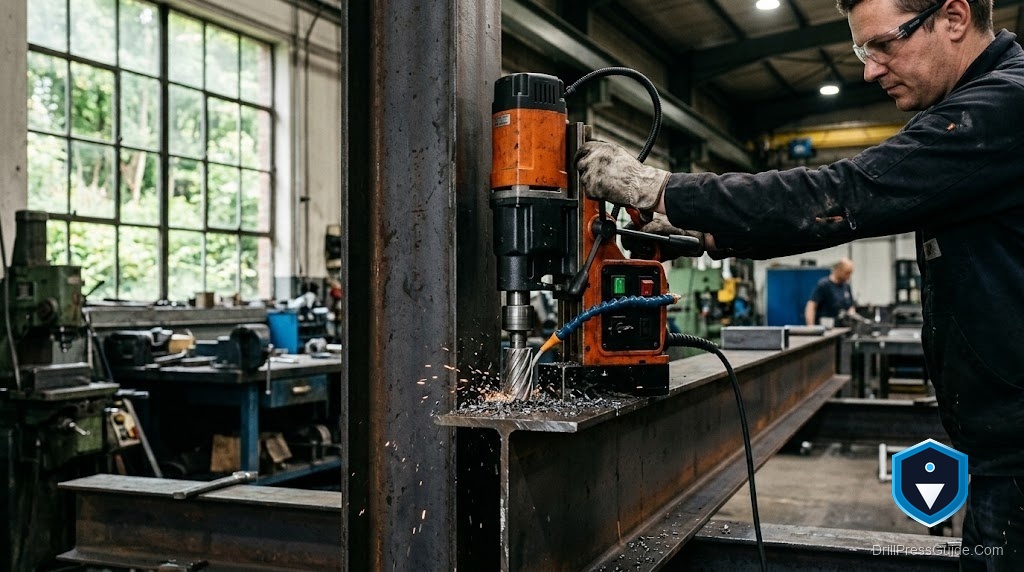
Picture a steel beam thirty feet in the air and a hole that has to go through it dead straight. You cannot bring the beam to a drill press, so you bring the drill press to the beam. That is the whole idea behind a magnetic drill press, and once you have used one, the appeal is obvious.
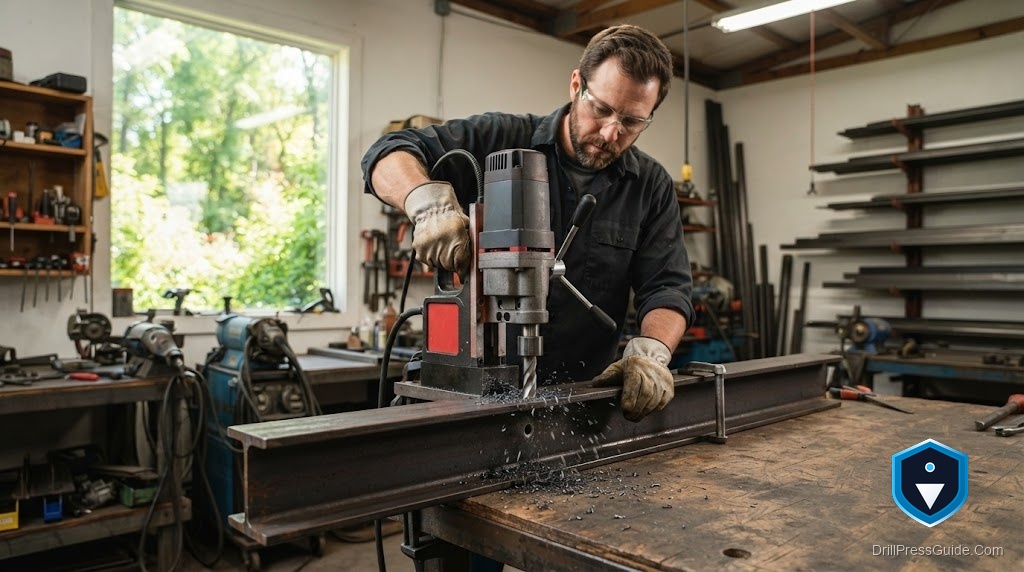
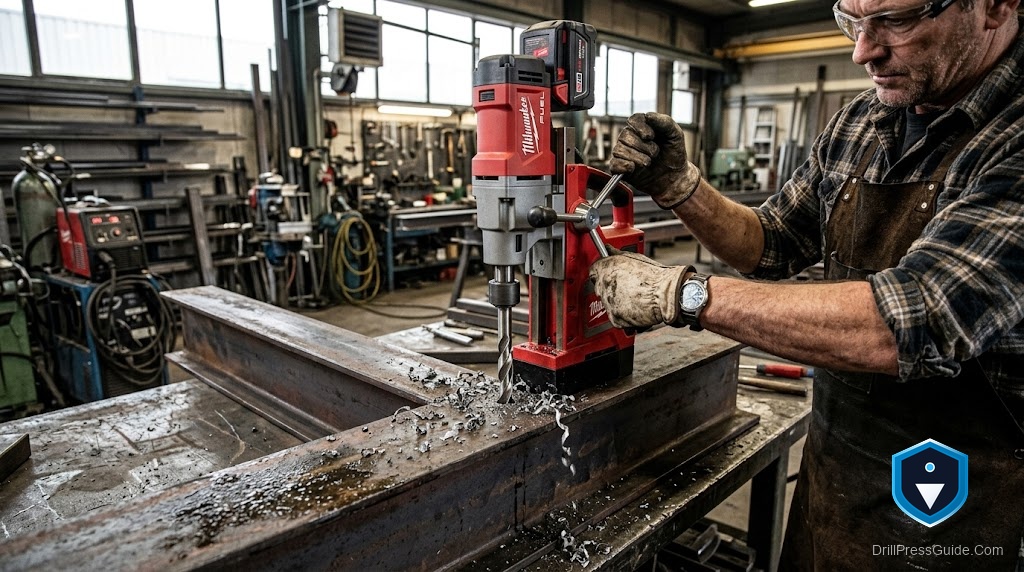
A magnetic drill press is a portable drilling machine that clamps itself to ferrous steel with an electromagnetic base, then feeds a rotating cutter straight into the work. It is used for making large, accurate holes in structural steel, plate, pipe, and heavy fabrications, especially in places a fixed machine can never reach: bridges, buildings, shipyards, and field repairs. The magnet gives it the one thing a handheld drill lacks on big steel, a rigid, square anchor.
Here is the direct answer to what it is used for. A mag drill is built for holes roughly half an inch and larger in thick ferrous stock, the kind of work that would stall or twist a hand drill. It runs annular cutters, hollow bits that cut only the ring of a hole instead of the whole disc, which is why it clears big holes fast with modest power. It also takes twist drill bits through a chuck adapter and can ream or countersink. Trades reach for it in steel erection, bridge and rail work, pressure vessel and tank fabrication, and machinery installation, anywhere the work is too big, too high, or too fixed to move. The magnet only grips ferrous metal, so it does not work on aluminum, stainless with low iron content, or anything nonmagnetic unless you use a clamp adapter.
The jobs a mag drill owns
Structural steel is its home. Erectors punch holes for bolted connections in beams and columns on site. Bridge crews drill for splice plates and gusset repairs where a part weighs tons. Shipyards and tank builders drill plate that is already welded in place. Maintenance teams bolt new machinery to steel bases without dragging anything to a shop. In each case the machine’s value is the same: a fixed-quality hole in a place you cannot move.
Annular cutters make this practical. Because they only cut the rim and eject a solid slug, they need less feed force and less power than a twist drill chewing the full hole. A two-speed gearbox lets you match the cutter to the steel, low and strong for big cutters, faster for small ones. Cutting fluid fed through the pilot pin keeps the edge cool and flushes chips, and a drip loop keeps that fluid off the motor.
Setup and safety, because gravity does not negotiate
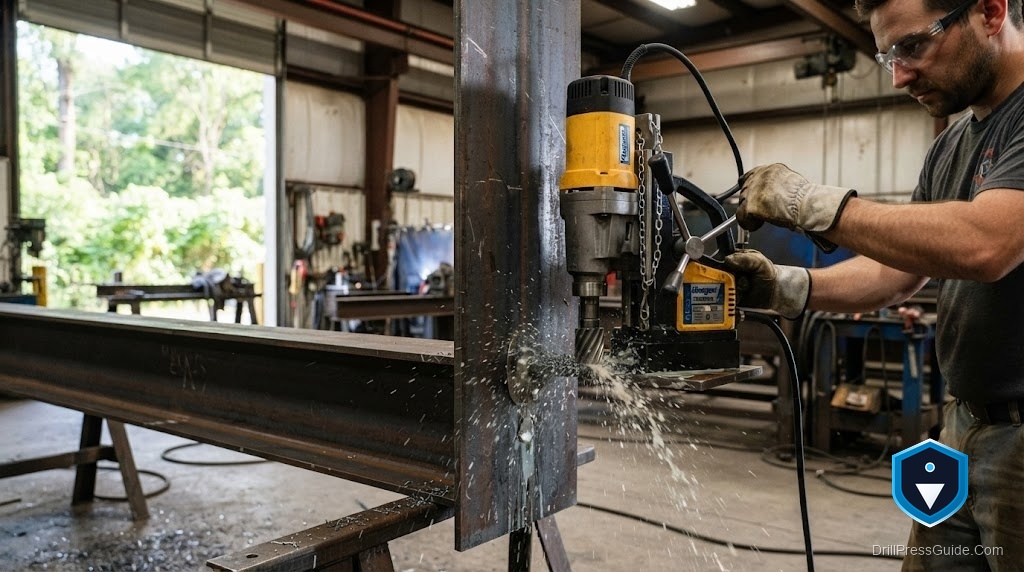
A mag drill’s safety rests on its grip. Clean, flat, bare steel gives full magnetic hold; paint, rust, scale, or a curved surface cuts that hold, and a mag drill that lets go under load is dangerous. Always fit the safety strap or chain so a lift-off does not drop the machine. Good units include lift-off detection that stops the cutter if the magnet weakens, and a partial magnet mode for thin stock where full power is not available.
For field steel work, a corded unit like the Evolution EVOMAG42 magnetic drill shows the pattern: an electromagnetic base, an annular cutter arbor, and a two-speed setup for matching the steel. For heavier and repeated production holes, an industrial machine such as the Hougen HMD904 magnetic drill leans on a stronger magnet and a stiffer feed. Either way, the setup ritual is the same: clean the steel, seat the magnet, strap the machine, feed cutting fluid, and only then start the cutter.
Comparison: mag drill versus a bench drill press
A bench or floor drill press is more accurate for repeated small holes and far better for wood and general shop work, but the work has to fit under it.
A magnetic drill press goes to the work and drills big holes in fixed steel that a bench machine could never accept, but it needs a clean ferrous surface and it is not the tool for delicate small holes.
My verdict: if your holes live in structural steel that cannot come to a bench, the mag drill is not a luxury, it is the only sane choice, and annular cutters are what make it earn its keep. For everyday shop drilling in wood and small parts, stay with a fixed drill press.
Conclusion
A magnetic drill press exists to bring drill-press quality to steel that will not move. It grips with a magnet, cuts big holes with annular cutters, and lets a worker drill straight and true up a column or across a bridge. Respect the magnet, strap the machine, and it will do work no bench tool can touch.
Key takeaways:
- Mag drills make large, accurate holes in fixed ferrous steel, on site and overhead.
- Annular cutters let a portable machine clear big holes with modest power.
- A clean bare-steel surface and a safety strap are non-negotiable for safe holding.
FAQ
What is a magnetic drill press used for? Making large, accurate holes in structural steel, plate, and heavy fabrications where the work cannot move to a bench machine.
Does the magnet work on any metal? Only ferrous steel. Aluminum, brass, and most stainless will not hold the magnet.
What is an annular cutter? A hollow cutter that removes only the ring of a hole and ejects a slug, so it cuts big holes with less force than a twist drill.
Can it drill overhead? Yes, with a proper magnet, a safety strap, and the right cutting fluid setup, though it takes care and training.
Why does surface prep matter so much? Paint, rust, and curves weaken the magnet, and a weak magnet under load can let the machine break free.
Can I use regular twist bits? Yes, through a chuck adapter, though annular cutters are the reason to own the tool.
What is lift-off detection? A feature that stops the cutter if the magnet loses grip, a real safety benefit on thick or awkward work.
References
- Occupational Safety and Health Administration, machine guarding standard 1910.212 (osha.gov)
- Hougen and Evolution Power Tools magnetic drill product documentation