Understanding the Magnetic Drill Press: What It Is and When You Need One
A regular drill press assumes the work comes to the machine. But a lot of drilling happens where the machine cannot go: a steel beam overhead, a bridge girder, a ship’s hull, a machine frame bolted to the floor. That is the exact problem a magnetic drill press solves. Instead of clamping the workpiece to the tool, it clamps the tool to the workpiece with a powerful electromagnet, so you can drill precise, heavy-duty holes in steel wherever the steel happens to be. This guide explains what a magnetic drill press is, how it works, and when it is the right tool instead of a standard press.
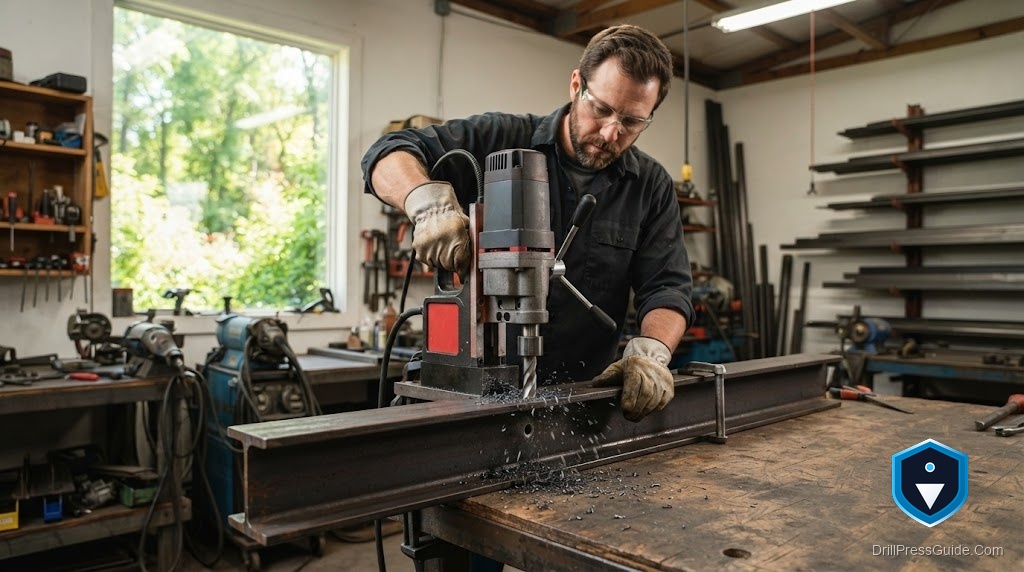
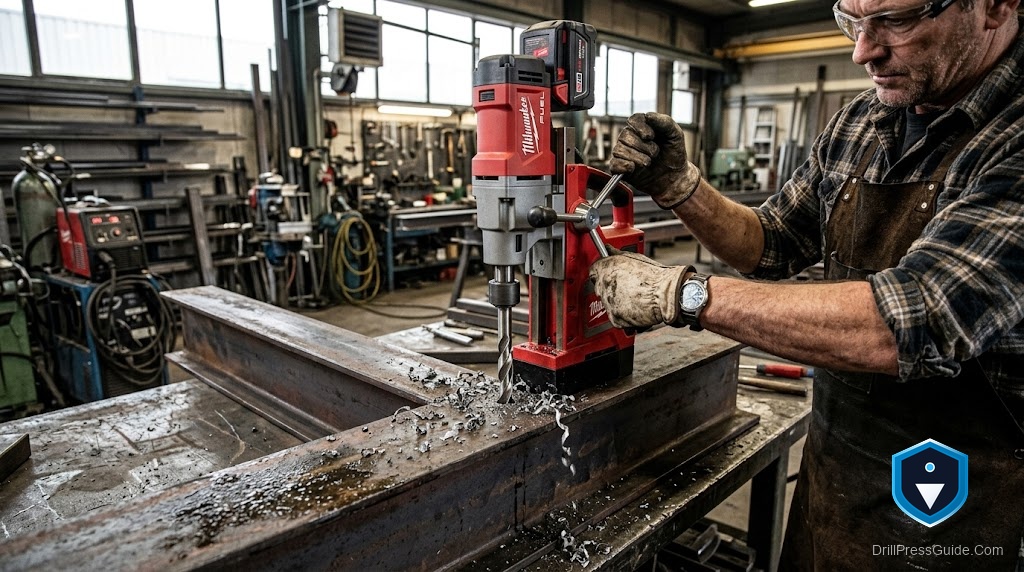
A magnetic drill press, often called a mag drill, is a portable drilling machine with an electromagnetic base that clamps it to a ferrous (iron or steel) surface. Once the magnet locks on, the machine drills through the steel using an annular cutter or a twist bit, held rigidly in place by the magnet rather than by a bench or table.
The direct answer to when you need one: whenever you must drill accurate, sizable holes in steel that is too large, too heavy, or fixed in place to bring to a drill press, and especially on vertical or overhead surfaces. For fabrication, structural steel, and field work, a mag drill does what no benchtop press can.
How the magnet does the work
The heart of a mag drill is its electromagnetic base. Switch it on against a flat steel surface and the magnet generates enough holding force to resist the substantial torque of drilling. Better machines use a two-stage magnet that boosts holding power when the motor runs, and many include a lift detector or safety feature that warns if the magnet’s grip weakens. Because the magnet only grips ferrous metal, a mag drill works on steel and iron, not aluminum, stainless in some cases, or non-metals.
Annular cutters and why they matter
Most mag drills run annular cutters rather than twist bits. An annular cutter is a hollow cylindrical cutter that only removes material at the rim, cutting a ring and leaving a solid slug in the middle, which it ejects. Because it does not have to turn the entire hole into chips, it cuts faster, cooler, and with far less force than a twist bit of the same diameter, which is exactly what you want when the whole machine is hanging from a magnet. Many mag drills also accept twist bits through an adapter for smaller holes.
When a mag drill beats a standard press
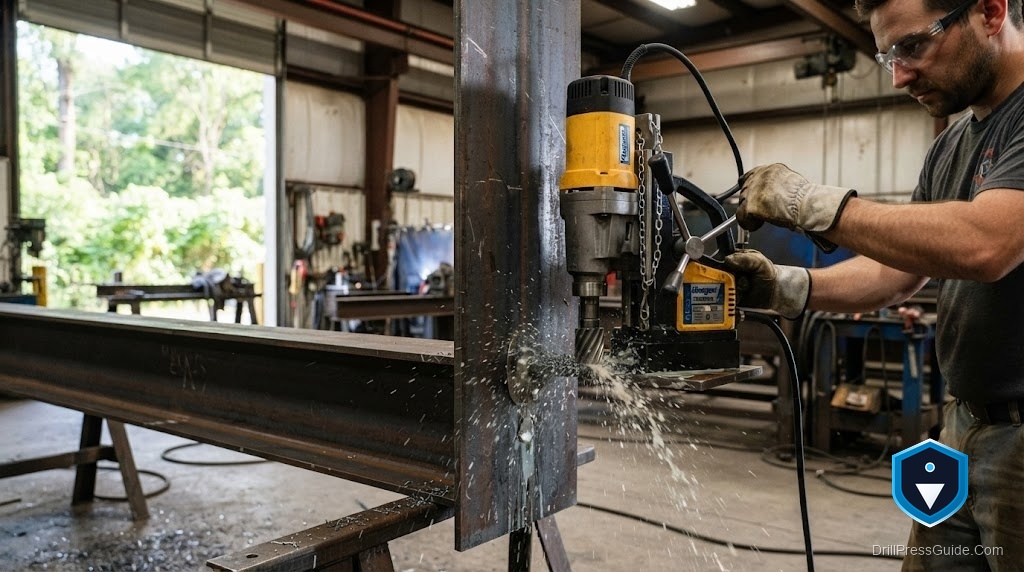
Use a mag drill when the steel cannot come to you. Structural steel erection, bridge and building fabrication, shipbuilding, heavy equipment repair, and railway work all involve drilling holes in members that weigh tons or are already installed. A mag drill goes to the beam, locks on, and drills a clean, accurately placed hole in any orientation, including horizontal and overhead, which a bench press physically cannot do. It also delivers the rigidity for large-diameter holes in thick steel that a portable hand drill cannot manage.
Choosing a magnetic drill
Match the machine to the work. A compact unit like the Hougen HMD904 magnetic drill shows the professional shape: a roughly 1-1/2 inch diameter by 2 inch depth cutting capacity, a two-stage magnet that adds holding power once the motor runs, positive slug ejection, and a lift detector, all built for field steelwork. A newer alternative, the Evolution magnetic drill, offers similar portable capability for fabrication and site work. When choosing, check the cutting diameter and depth capacity, the magnet’s holding force and thickness requirement (magnets need enough steel thickness to grip), the stroke, and whether it takes the cutters you plan to use. The honest caveat is that mag drills are heavy, single-purpose machines: superb on steel, useless on anything a magnet will not hold.
The verdict
A magnetic drill press is the answer when the steel cannot come to the drill. Its electromagnetic base clamps the machine to the workpiece, and annular cutters let it bore large, accurate holes fast and cool in any orientation, which is why fabrication, structural, and field crews rely on it. Choose one by cutting capacity, magnet strength, required steel thickness, and cutter compatibility, and remember it only works on ferrous metal. For a home shop drilling wood and small parts it is the wrong tool; for drilling installed or oversized steel it is irreplaceable.
FAQ
What is a magnetic drill press? A portable drilling machine with an electromagnetic base that clamps it to a steel surface, so it can drill accurate holes in steel that cannot come to a bench press.
How does the magnet hold enough to drill? The electromagnet generates strong holding force against flat steel, and many machines boost that force when the motor runs. It only grips ferrous metal.
What are annular cutters? Hollow cutters that remove material only at the rim, cutting a ring and ejecting a solid slug. They cut faster and cooler than twist bits with far less force.
When should I use a mag drill instead of a regular drill press? When the steel is too large, heavy, or fixed to bring to a press, especially on vertical or overhead surfaces, as in structural steel and field fabrication.
Does it work on aluminum or stainless? The magnet only grips ferrous metal like steel and iron, so it cannot clamp to aluminum. Cutting stainless depends on the cutter and machine.
What should I check when buying one? Cutting diameter and depth capacity, magnet holding force, the steel thickness it needs to grip, the stroke, and whether it takes your cutters.
References
- Hougen, HMD904 Magnetic Drill product specifications: https://hougen.com/product-hmd904-magnetic-drill/
- Woodcraft, drill press shop knowledge guide (drill press types and uses): https://www.woodcraft.com/blogs/shop-knowledge-guides/drill-press-table