Getting Better Results from a Magnetic Base Drill Press Vise

The phrase “magnetic base drill press vise” points at one of the most genuinely useful tools in metalwork, and also at a common mix-up worth clearing first. What most people mean, and what earns its keep, is a magnetic drill: a portable machine whose electromagnetic base clamps to steel so you can drill where a fixed press cannot reach. Understanding how that magnet holds, and the habits that keep it holding, is what separates clean, safe holes in structural steel from a scary moment on a beam.
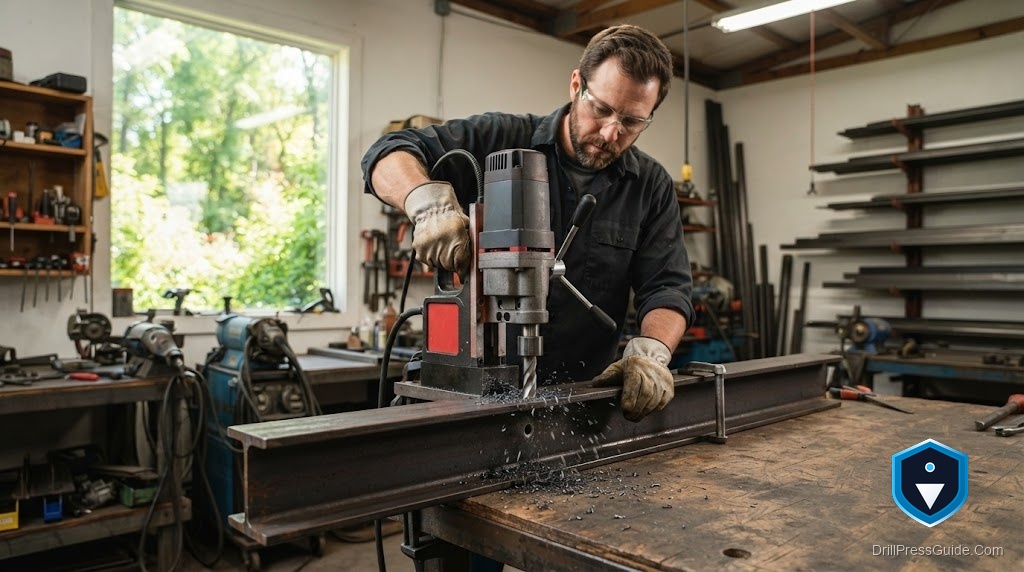
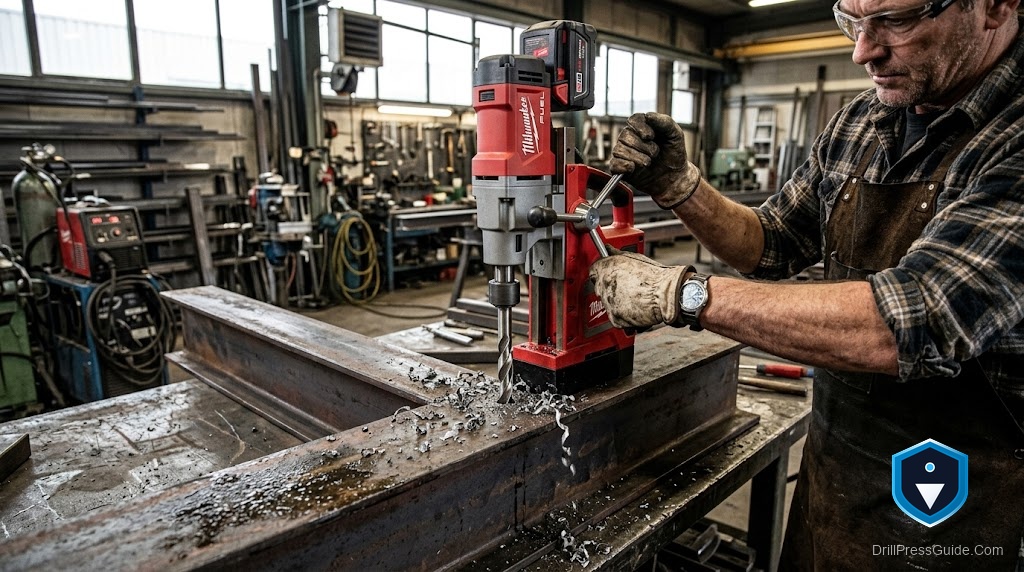
A magnetic base drill, sometimes loosely called a magnetic base drill press vise, is a portable drill with an electromagnetic base that grips ferrous stock, letting you drill in place on beams, plates, and columns. It typically runs an annular cutter or twist bit and holds by magnetism alone, so the strength of that grip is everything.
Short answer: get better results by clamping the magnet only to clean, flat, thick-enough steel, using the safety strap, feeding steadily so the magnet is not overloaded, and keeping cutting fluid off the magnet contact. The magnet’s grip is the whole game, so protect it.
How the magnet holds, and when it does not
The electromagnet grips hardest on clean, flat, thick ferrous steel. Its hold weakens on thin material, paint, rust, scale, curved surfaces, or a gap under the base, because any of those reduces magnetic contact. A machine like the Milwaukee compact electromagnetic drill or the VEVOR 1680W magnetic drill relies on full, clean contact to develop its rated holding force. So the first habit is preparation: clean the spot to bare, flat metal so the magnet gets its full grip.
Thin stock is the classic trap. Below a certain thickness the magnet cannot develop full force, and the Hougen guidance for magnetic drills and annular cutters is worth following on minimum material and setup.
Habits that keep it safe and accurate
- Clean, flat contact. Grind off rust, scale, and paint; remove chips so the base sits flat.
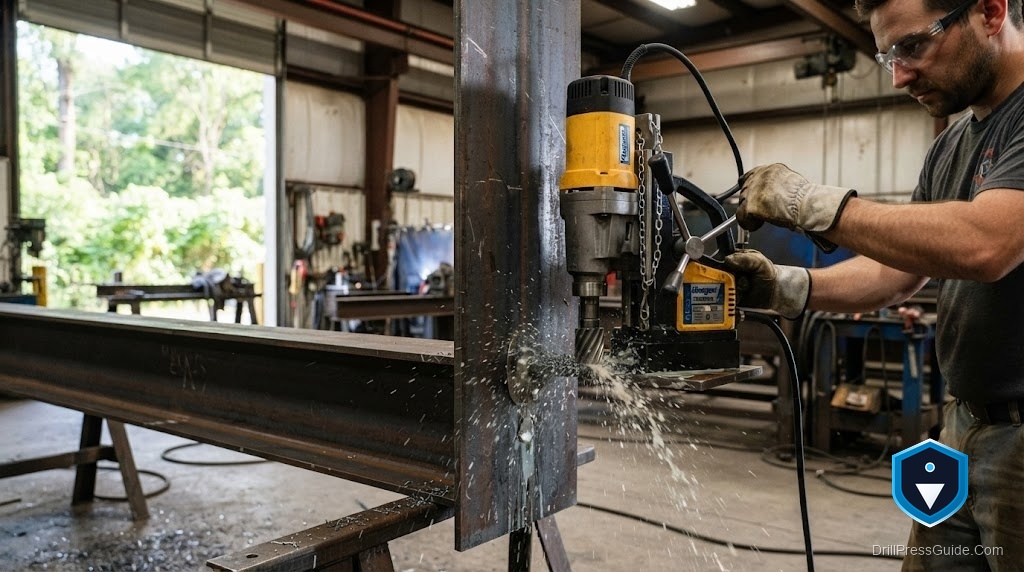
- Use the safety strap. Always chain or strap the machine, especially on vertical or overhead work, in case the magnet loses grip.
- Feed steadily. Let the annular cutter or bit cut at its pace; forcing it can break the magnet’s hold.
- Protect the magnet. Keep cutting fluid and swarf off the magnet contact face, and manage a drip loop so fluid does not run into the machine.
Those habits are what turn rated holding force into real holding force on the job.
Annular cutter versus a twist bit
Against a twist bit, an annular cutter wins on speed and clean holes in steel, cutting only the rim rather than the whole hole, which loads the magnet less. A twist bit removes all the material and demands more thrust, stressing the grip on larger holes. For structural steel, the annular cutter is usually the better partner for a magnetic drill. You can compare a magnetic drill press with a set of annular cutters.
The honest limitation
A magnetic drill holds by magnetism only, so it is only as safe as the steel and the contact allow. On thin, rusty, painted, or curved stock, or with a gap under the base, the grip can fail, and a machine coming loose under power is dangerous. Never rely on the magnet alone: use the strap, prepare the surface, and respect the machine’s minimum material thickness. This is a tool for solid ferrous steel, not aluminum, stainless with poor magnetics, or thin sheet.
Setting it up
- Clean the spot to bare, flat, thick-enough ferrous steel.
- Place the base, engage the magnet, and confirm a firm grip with no gap.
- Fit the safety strap or chain, especially on vertical or overhead work.
- Fit the annular cutter or bit, set the pilot, and feed steadily with fluid kept off the magnet face.
- Wear eye protection, manage hot chips and swarf, and keep clear of the rotating cutter, per OSHA and CCOHS.
Who should read this
If you drill structural steel, beams, plates, columns, in place, a magnetic drill is the right tool, used with clean contact and the safety strap. If your work is thin sheet, non-ferrous metal, or small bench parts, a fixed drill press with a vise serves better; the magnet needs solid steel to hold.
Bottom line
A magnetic base drill earns its place by drilling clean holes in steel right where the steel is, and its whole safety rests on the magnet’s grip. Prepare clean, flat, thick contact, always use the safety strap, feed steadily, and keep fluid off the magnet. Respect its limits on thin or non-ferrous stock and it is a superb, portable tool.
- The magnet grips hardest on clean, flat, thick ferrous steel; prep the surface.
- Always use the safety strap and feed steadily so the grip is not overloaded.
- It needs solid steel; thin, rusty, curved, or non-ferrous stock is unsafe.
FAQ
What is a magnetic base drill? A portable drill whose electromagnetic base clamps to ferrous steel, so you can drill in place on beams, plates, and columns where a fixed press cannot reach.
What weakens the magnet’s grip? Thin material, rust, scale, paint, curved surfaces, or a gap under the base. Clean, flat, thick steel gives the strongest hold.
Do I really need the safety strap? Yes. The machine holds by magnetism only, so strap or chain it, especially on vertical or overhead work, in case the grip fails.
Annular cutter or twist bit? An annular cutter cuts faster and cleaner and loads the magnet less. A twist bit demands more thrust and stresses the grip on larger holes.
Can I use it on aluminum or thin sheet? No. The magnet needs solid ferrous steel of sufficient thickness. Non-ferrous or thin stock will not hold the machine safely.
Why keep cutting fluid off the magnet? Fluid on the contact face and inside the machine reduces grip and risks the motor. Keep fluid off the magnet and manage a drip loop.
References
- Milwaukee Compact Electromagnetic Drill Press Manual: https://documents.milwaukeetool.com/58-14-4270d7.pdf
- Milwaukee 1-5/8-Inch Magnetic Drill Kit: https://www.milwaukeetool.com/products/details/1-5-8-magnetic-drill-kit/4274-21
- VEVOR 1680W Magnetic Drill Manual: https://www.vevor.com/diy-ideas/product/vevor-magnetic-drill-1680w-magnetic-drill-press-with-2-inch-boring-diameter-annular-cutter-machine-2900-lbs-manual/
- Hougen Magnetic Drill and Annular Cutter Guide: https://www.hougen.com/downloads/Hougen_Mag_Drill_%26_Annular_Cutter_Guide.pdf