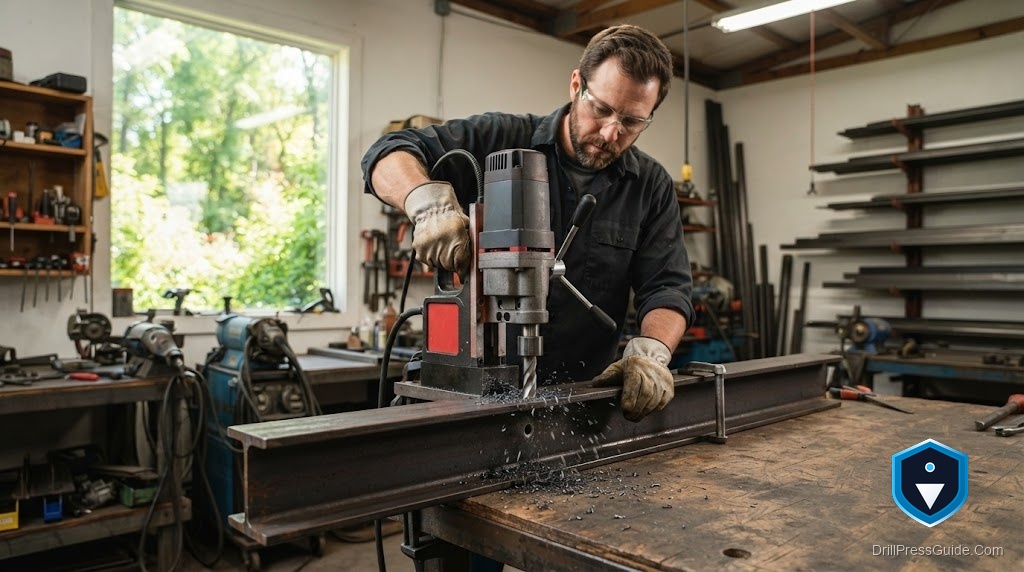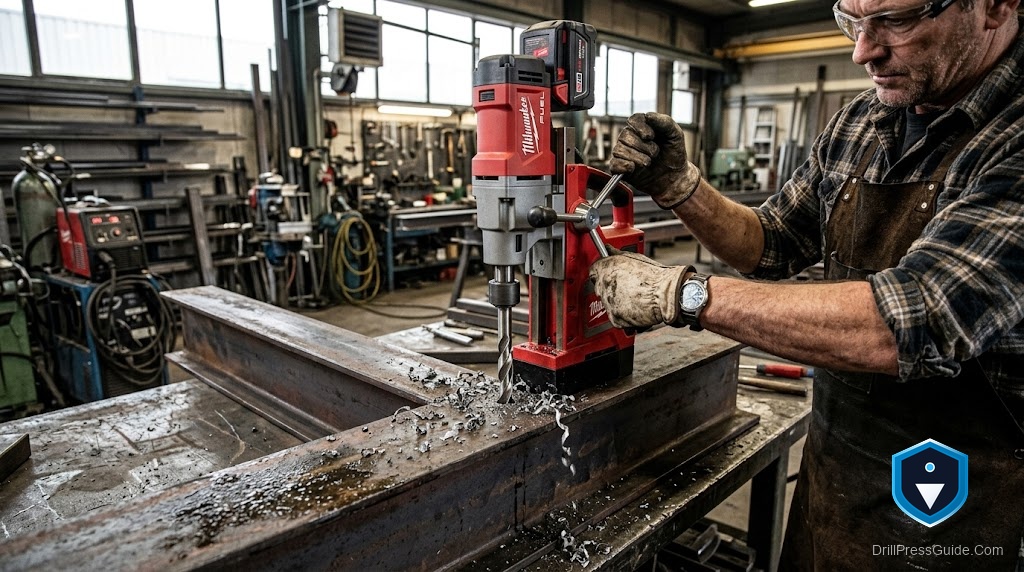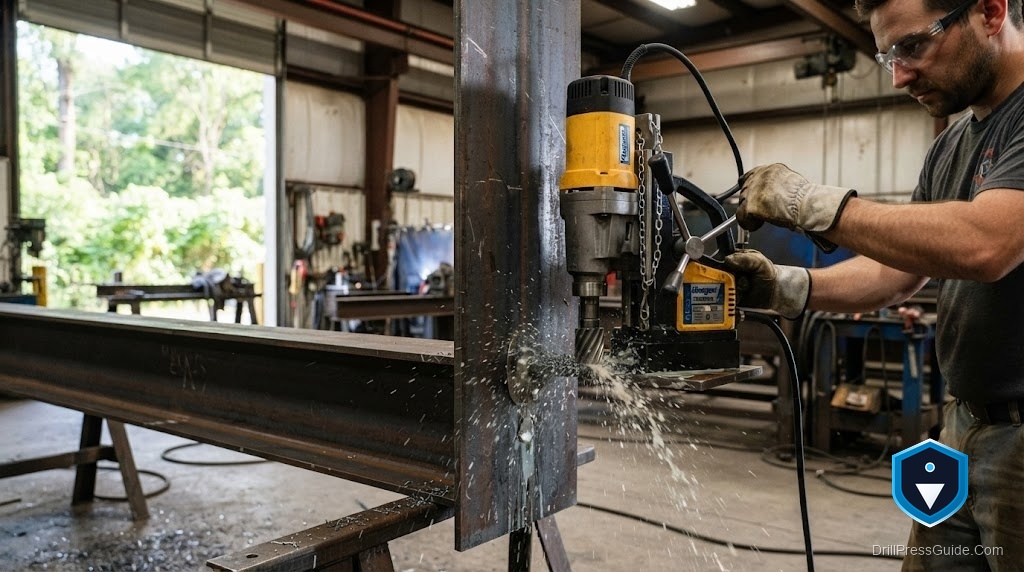
Magswitch Drill Press Vise Mount: What to Measure Before You Buy
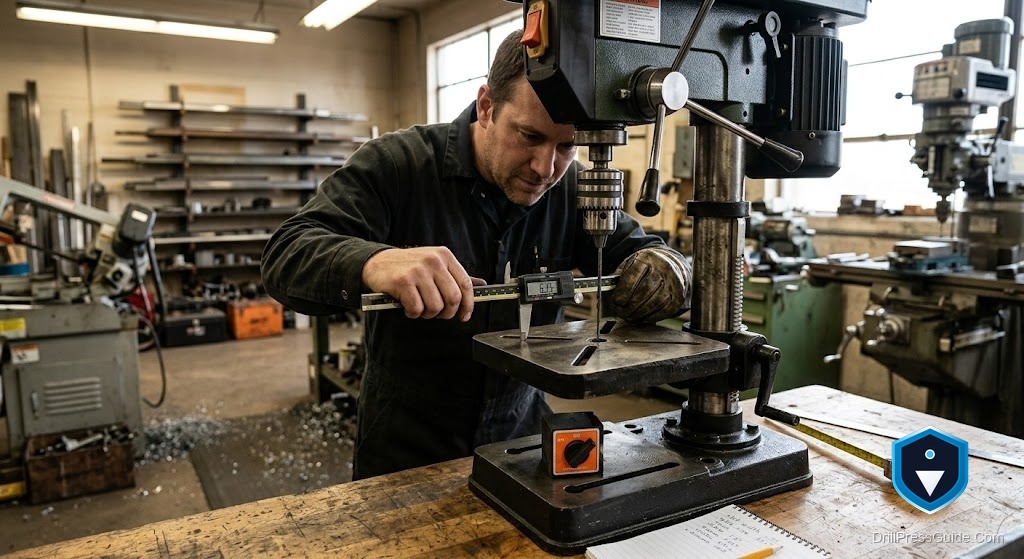
The idea sounds almost too good: flip a lever and a magnet locks your vise to a steel table with hundreds of pounds of grip, no bolts, no drilling the table, no fumbling with T-nuts. A Magswitch-style drill press vise mount promises exactly that, switchable magnetic holding that sets and releases in a second. It is genuinely clever. It also only works if your table and your work meet a few conditions, and those are worth checking before you spend.
A switchable magnetic mount uses a rotating magnet you turn on and off with a lever, clamping an accessory to a ferrous surface without fasteners. On a drill press it can anchor a vise or a fixture to a cast-iron table for quick, boltless secure clamping. When the conditions are right, it is the fastest hold on the bench.
Short answer: a magnetic vise mount works when your drill press table is solid ferrous cast iron, flat, and clean, and when the magnet’s rated pull comfortably exceeds the forces of your drilling. Aluminum tables, slotted or painted surfaces, and heavy sideways cutting loads are where it falls short.
What has to be true for the magnet to hold
Magnetic holding depends on three things, and all three have to line up.
First, the surface must be ferrous. Cast-iron drill press tables work; aluminum and stainless do not hold a magnet at all. Second, the contact must be flat and clean. Paint, rust, or a slot under the magnet cuts the effective pull sharply, because the magnet grips through metal-to-metal contact. Third, the rated pull must beat the load. A bit that grabs pushes and twists, and a magnet resists a straight pull far better than a peeling, sideways one.
The honest limitation: magnetic mounts resist lift better than they resist twist. A drilling operation that tries to spin the fixture can break a magnet loose more easily than the pull rating suggests. For heavy or grabby cuts, a bolted mount is still the safer anchor.
Measure and check before you buy
- Table material. Confirm it is cast iron or steel, not aluminum. A magnet on aluminum simply will not hold.
- Flat contact area. Find a flat, slot-free patch large enough for the magnet’s base to sit fully. Slots and ribs steal grip.
- Rated pull versus your work. Choose a rating well above your drilling forces, with margin for grabby bits.
- Fixture interface. Check how the vise or fixture attaches to the magnet, and that the stack does not raise the work out of your spindle travel.
Magnetic mount versus bolting down
Against a bolt-down mounting kit, the magnetic mount wins big on speed and on not drilling your table, and it loses on ultimate security under twisting loads. Bolts do not care about surface finish or slots; a magnet does. For light, fast repositioning on a clean cast table, the magnet shines; for heavy metal drilling, bolts win.
Against a quick locking clamp, the magnet is faster to place anywhere on the table but depends on the surface, while the clamp needs an edge or slot but does not care about material. You can look at magnetic base for drill press options and compare them to a traditional drill press vise mounting kit before deciding.
Setting it up so it holds
- Wipe the table and the magnet base clean; even swarf under the base cuts grip.
- Place the magnet over a flat, solid area of cast iron, away from slots and edges.
- Switch it on, then try to slide and lift the fixture by hand to confirm it is locked.
- Keep cuts light and let the bit do the work; do not force a grabby cut against a magnetic hold.
- Wear eye protection and keep the work supported, per CCOHS and OSHA practice.
Who should skip it
If your drill press table is aluminum, heavily slotted, or you routinely take heavy twisting cuts in steel, skip the magnet and bolt your vise down. If you own a clean cast-iron table and want fast, boltless repositioning for light and medium work, a switchable magnetic mount is a genuine time-saver.
Bottom line
A Magswitch-style vise mount is a fast, boltless way to anchor a fixture, and it lives entirely on the quality of the contact. Confirm your table is flat, clean cast iron, size the pull well above your loads, and keep cuts light. Meet those conditions and it is a joy; miss them and a bolt-down kit is the honest choice.
- Magnetic mounts need flat, clean, ferrous cast iron to hold.
- They resist lift better than twist, so keep grabby cuts off them.
- Size the rated pull well above your drilling loads.
FAQ
Will a magnetic vise mount work on any drill press table? Only on ferrous cast-iron or steel tables. Aluminum tables will not hold a magnet at all.
Do slots in the table affect the hold? Yes. A slot or rib under the magnet reduces contact and cuts grip. Place the magnet over a flat, solid area.
Is a magnet as secure as bolts? For light work on a clean table, it is convenient and strong. Bolts are more secure under heavy twisting loads, so match the method to the cut.
How much pull do I need? More than your drilling forces, with margin. Magnets resist a straight pull better than a sideways twist, so leave headroom.
Can rust or paint hurt the hold? Yes. Both reduce metal-to-metal contact. Clean the surface for full grip.
Do I still clamp the workpiece? Yes. The magnet anchors the fixture; the workpiece still needs to be held in the vise, per OSHA and CCOHS guidance.
References
- CCOHS, Metalworking Machines - Drill Presses: https://www.ccohs.ca/oshanswers/safety_haz/metalworking/drillpresses.html
- OSHA Woodworking eTool, Drill Press: https://www.osha.gov/etools/woodworking/production/machines-tools/drill-press
- TEKTON 4-Inch Drill Press Vise Manual: https://media.tekton.com/manuals/manual_53994.pdf