Milwaukee Electro Magnetic Drill Press: Models, Capacity, and Parts Support Explained
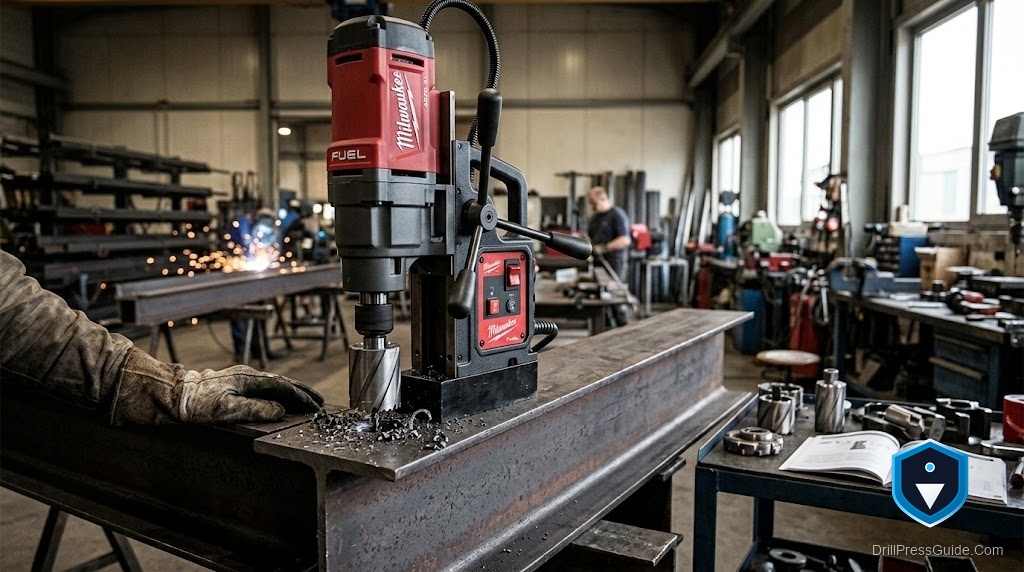
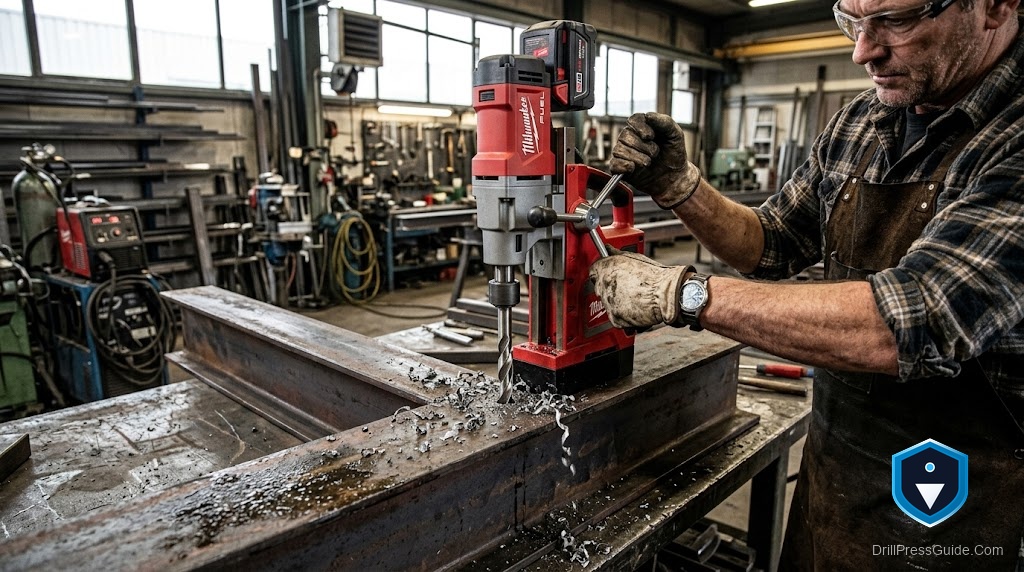
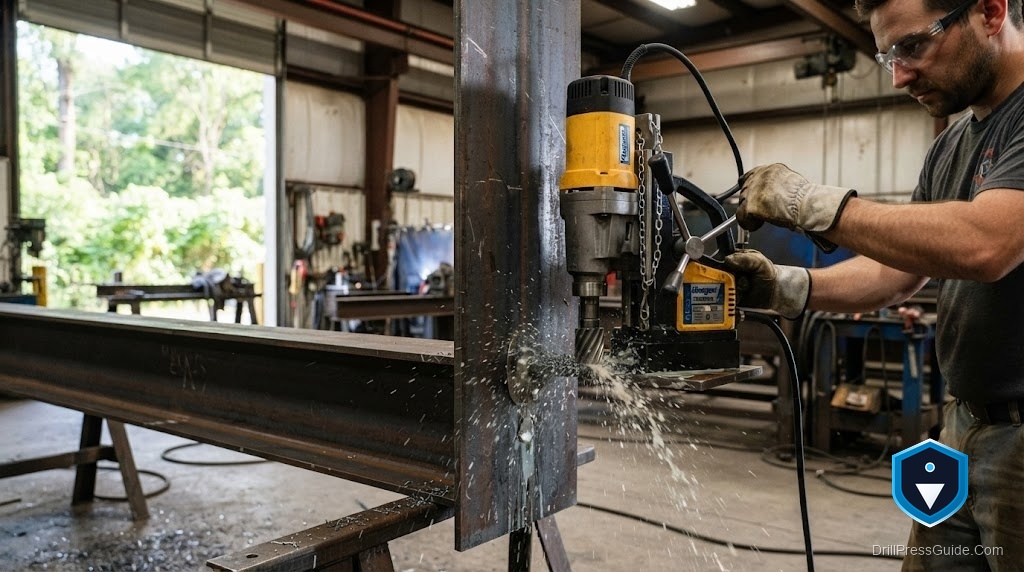
When a steel fabricator says “drill press” and means something they can carry up a ladder, they are usually talking about a Milwaukee electromagnetic drill. These are not the belt-and-column machines of a woodshop; they are portable mag drills that clamp themselves to steel with an electromagnet and bore big, clean holes on site. Milwaukee has built them for decades, and the range, the capacity ratings, and the parts support all reward a little understanding before you buy. Here is the honest picture.
What a Milwaukee electromagnetic drill press is
An electromagnetic drill press uses an electromagnet base to grip a ferrous (steel or iron) workpiece, holding the whole tool firmly in place while the motor feeds a cutter through the metal. Instead of a chuck spinning small twist bits, most mag drills run annular cutters (hollow cutters that remove only a ring of material) on a 3/4-inch Weldon-shank arbor, though a chuck adapter lets you run twist bits too. Milwaukee’s line includes corded units built around motors in the 1680-watt copper class turning at speeds around 500 RPM, and increasingly cordless models for places without power. A pilot pin ejects the slug, cutting fluid keeps the cutter cool, and a safety strap backs up the magnet.
The short answer to “which Milwaukee mag drill?” is this: match the cutter capacity and magnet strength to the thickness and size of steel you drill, decide corded versus cordless by where you work, and confirm parts support before you buy a used one.
Understanding capacity
Mag drill capacity is rated a few ways, and reading them correctly saves disappointment:
- Cutter diameter. The largest annular cutter the tool will drive, often around 3/4-inch to well over an inch depending on the model.
- Depth of cut. How thick a plate the cutter can go through in one pass, set by the cutter length and the stroke.
- Magnet holding force and plate thickness. The electromagnet needs enough clean, flat, ferrous steel (usually a minimum plate thickness) to hold safely. On thin or curved stock, holding drops, which is where the safety strap and good judgment matter.
Match these to your real work. Occasional 1/2-inch to 3/4-inch holes in structural steel ask far less of the tool than repeated large holes in thick plate.
Corded versus cordless, and features that matter
Corded Milwaukee mag drills give sustained power for heavy, repeated cutting. Cordless models trade some of that for going where no outlet reaches, which is a real advantage on structural and field work. Beyond that, look for features that improve safety and control: a two-speed gearbox to match RPM to cutter size, lift-off or magnet-status detection that warns if the magnet loses grip, a partial-magnet mode for positioning, and a comfortable feed handle you can move to either side.
Parts and support
Milwaukee documents its mag drills by model number (owners reference numbers like the 4203 base and its relatives), and that number is the key to everything: the manual, the parts diagram, the correct arbor and chuck adapter, brushes, feed components, and magnet parts. The consumables (annular cutters, pilot pins, cutting fluid) are standard Weldon-shank items widely available. Before buying used, read the model number, confirm the magnet still holds full force on clean plate, and check that parts are still listed. A mag drill with a weak magnet is a safety problem, not a bargain.
The verdict
A Milwaukee electromagnetic drill press is the right tool when you need to bore accurate holes in steel that is too big or too fixed to bring to a bench. Choose by cutter capacity, depth of cut, and magnet holding force matched to your real work, pick corded for sustained heavy cutting or cordless for field access, and lean on Milwaukee’s model-number parts support to keep it running. Always respect the magnet: clean flat ferrous stock, the safety strap, and cutting fluid are not optional. Read the model number, confirm the magnet holds, and match consumables by the Weldon shank.
Takeaways:
- A mag drill grips steel with an electromagnet and bores with annular cutters on a 3/4-inch Weldon arbor.
- Judge capacity by cutter diameter, depth of cut, and magnet holding force on a minimum plate thickness.
- Corded suits sustained heavy cutting; cordless suits field work without power.
- Two-speed gearboxes, lift-off detection, and partial-magnet modes improve safety and control.
- Milwaukee documents parts by model number; confirm the magnet holds full force before buying used.
Tooling and consumables
Run a Milwaukee mag drill safely with the right supplies. Keep a set of annular cutters with a 3/4-inch Weldon shank and spare mag drill pilot pins, use proper cutting fluid for drilling steel to protect the cutters, and add a drill chuck adapter with a Weldon shank to run twist bits. A magnetic base coolant bottle helps feed fluid to the cut. Confirm shank size and model fit before ordering.
FAQ
What is a Milwaukee electromagnetic drill press? It is a portable mag drill that clamps to steel with an electromagnet and bores holes with annular cutters, used for on-site and structural steelwork rather than benchtop drilling.
What cutters does a Milwaukee mag drill use? Mostly annular cutters on a 3/4-inch Weldon-shank arbor. A chuck adapter lets you run standard twist bits when needed.
How much steel thickness does the magnet need to hold safely? The electromagnet needs enough clean, flat, ferrous plate (a model-specific minimum thickness) to hold full force. On thin or curved stock, holding drops, so use the safety strap and good judgment.
Should I get a corded or cordless Milwaukee mag drill? Corded for sustained heavy cutting with steady power; cordless for field and structural work where no outlet reaches.
How do I find parts for a Milwaukee mag drill? Read the model number (owners reference numbers like the 4203) and pull the matching manual and parts diagram from Milwaukee.
Is a used Milwaukee mag drill safe to buy? Only if the magnet still holds full force on clean plate and parts are still listed. A weak magnet is a safety hazard, not a bargain.
Can a mag drill run regular twist bits? Yes, with a chuck adapter on the Weldon arbor, though annular cutters are what these tools are built around.
References
- Milwaukee Tool, magnetic drills: https://www.milwaukeetool.com/
- Milwaukee Tool, service and parts: https://www.milwaukeetool.com/Support