DeWalt Magnetic Drill Press: How the Range Breaks Down
When a job means drilling clean holes in structural steel out in the field, a magnetic drill is the tool that goes to the work instead of the other way around. DeWalt is a name most tradespeople already trust for cordless and corded tools, and its magnetic drills bring that same reputation to steel fabrication and erection. But “DeWalt magnetic drill press” covers more than one machine, from the popular two-speed corded unit to a cordless option, and knowing how the range breaks down is the difference between the right tool and a frustrating mismatch. Here is the breakdown.
What a DeWalt magnetic drill press is
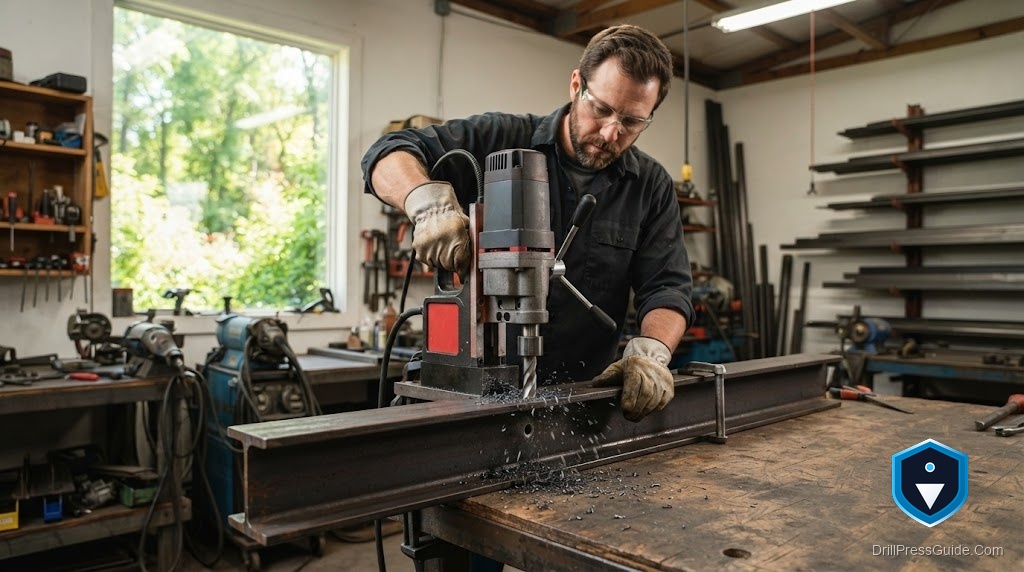
A DeWalt magnetic drill (a mag drill) holds itself to ferrous steel with an electromagnetic base, which grips hard when powered and releases when switched off. That electromagnet lets the tool drill horizontally, vertically, or overhead, clamping right to a beam or plate. DeWalt’s mag drills are built to run annular cutters, hollow cutters that remove only the ring around the hole and cut faster in thick steel than a twist drill, on a 3/4-inch Weldon arbor, with a chuck adapter available for ordinary twist drills. Better units add a two-speed gearbox, lift-off detection, a partial magnet mode for positioning, and a safety strap. The electromagnet is the heart of the tool, and matching the machine to your holes is how you choose within the range.
How the range breaks down
DeWalt’s magnetic drills sort along a few clear lines:
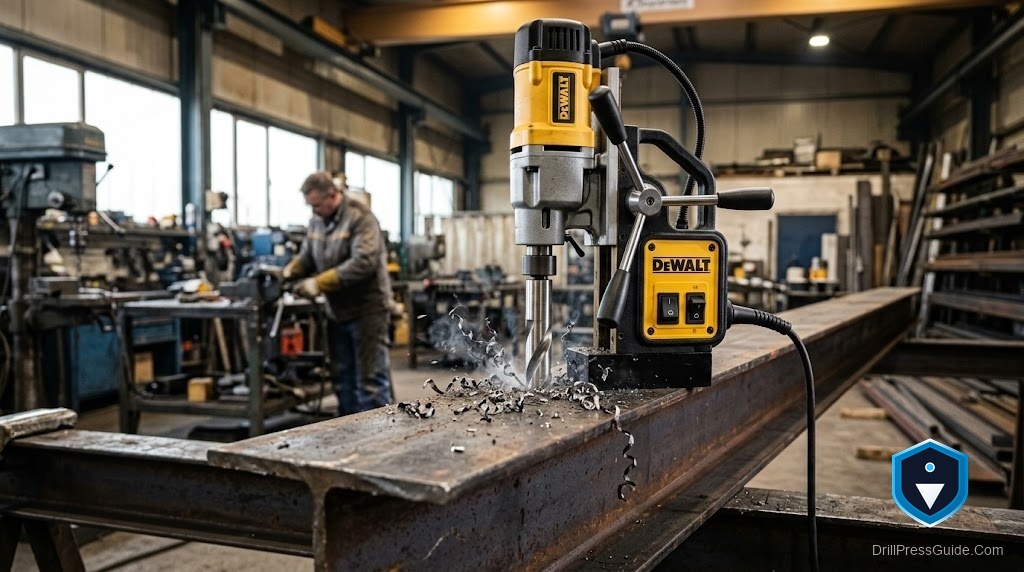
- The DWE1622K (two-speed corded). The best-known DeWalt mag drill, a 10-amp, two-speed machine that takes cutters up to about 2 inches in diameter. The two-speed gearbox lets you match speed to cutter size, and it is the mainstream choice for structural steel work.
- The D21620K. An earlier corded mag drill in the lineup, still found in service, aimed at similar structural drilling.
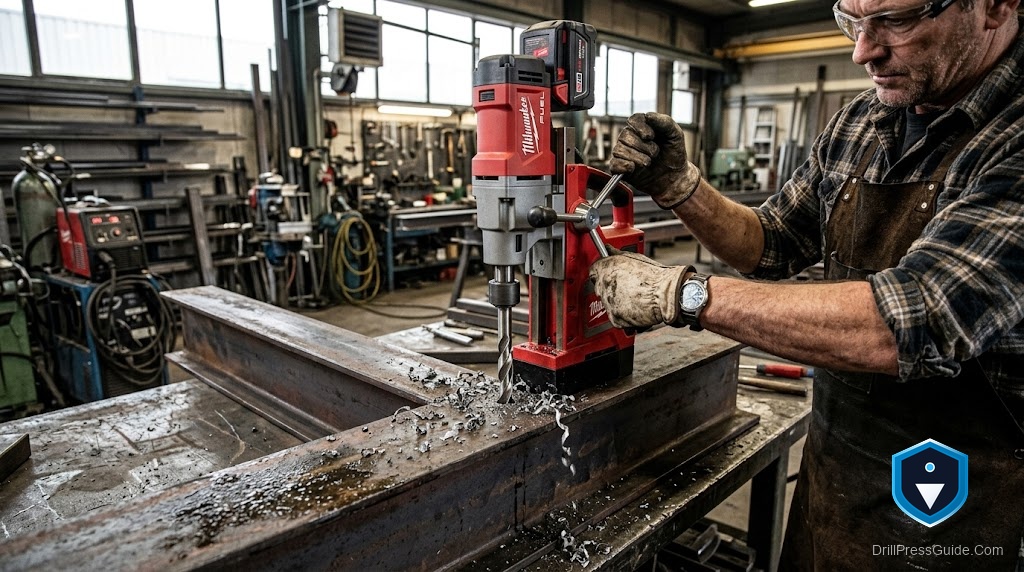
- Cordless options. DeWalt offers battery-powered magnetic drilling for work away from power, trading runtime for cord-free freedom on the iron.
- By capacity and speed. Across the range, machines differ by motor draw, cutter diameter, and whether they have one speed or a two-speed gearbox for larger cutters.
The practical takeaway: pick the DWE1622K class for mainstream two-speed corded work, a cordless unit when there is no power at height, and always size the machine to the largest cutter you actually run.
Where DeWalt mag drills fit
Let me be direct about the fit. A DeWalt magnetic drill is built for the ironworker, steel erector, and fabricator who drills real holes in real steel, on beams, plate, and columns, often in positions no bench press could ever reach. The DWE1622K in particular has earned a following because the two-speed gearbox and roughly 2-inch cutter capacity cover most structural work, and the DeWalt build holds up on site. What these are not is a woodworking or benchtop tool, so if you searched hoping for a bench drill press, a mag drill is the wrong category. For steel in place, though, it is exactly right.
Keeping the magnet holding true
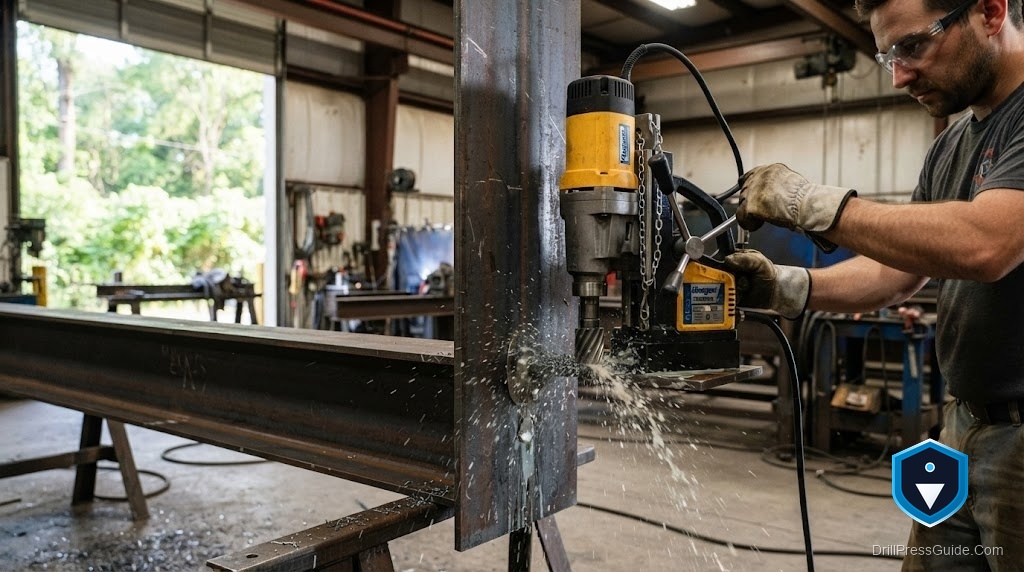
The most common mag-drill complaint is the tool wobbling or not holding, and it almost always traces to the base-to-steel interface. Clean paint, rust, mill scale, and debris off the steel and the magnet face, and make sure the base and workpiece meet flat with no gap, because a gap kills holding force. Always fit the safety strap regardless, since even a strong magnet can release if power drops. Run cutting fluid with a drip loop so fluid does not track into the tool, match speed to cutter diameter (large cutters slow, near 500 RPM; smaller ones faster), and let the cutter and its pilot pin do the work rather than forcing the feed.
Tooling and accessories
A DeWalt mag drill earns its keep with the right cutters. Stock a set of annular cutters with a 3/4-inch Weldon shank, keep magnetic drill cutting fluid on hand, and add a chuck adapter for twist drills so the tool doubles for ordinary bits. Keep a spare annular cutter pilot pin, and you can find the machine listed as the DeWalt DWE1622K magnetic drill. Confirm your tool’s arbor and shank size before ordering cutters.
The verdict
The DeWalt magnetic drill press range is the answer when you drill steel in place, and choosing within it is straightforward: the two-speed DWE1622K class for mainstream corded structural work, the D21620K where it still serves, and a cordless unit when there is no power at height. Match the machine to the largest annular cutter you run, keep the magnet holding true by cleaning the steel and the magnet face and ensuring flat, gap-free contact, and always use the safety strap. Run cutters with fluid at the right speed and let the pilot pin do the work. Chosen and used that way, a DeWalt mag drill does what a bench press simply cannot. For woodworking or bench drilling, a standard drill press is the right tool instead.
Takeaways:
- A DeWalt magnetic drill clamps to steel with an electromagnet and drills in place, even overhead.
- The DWE1622K is the mainstream two-speed corded unit (10 amp, cutters to about 2 inches); the D21620K and cordless options round out the range.
- Match the machine to your largest cutter and the way you work (corded versus cordless).
- Wobble almost always traces to the base-to-steel interface; clean it, ensure flat contact, and always use the safety strap.
FAQ
What are the DeWalt DWE1622K specs? A 10-amp, two-speed corded magnetic drill that takes annular cutters up to about 2 inches in diameter on a 3/4-inch Weldon arbor, with a two-speed gearbox to match speed to cutter size.
Does DeWalt make a cordless magnetic drill press? Yes, DeWalt offers battery-powered magnetic drilling for work away from power, trading runtime for cord-free freedom on the steel.
Is a DeWalt magnetic drill a bench drill press? No. It is a portable mag drill for steel, not a woodworking or benchtop press. If you need bench drilling, choose a standard drill press.
Why does my DeWalt mag drill wobble or not hold? Almost always the base-to-steel interface. Clean paint, rust, mill scale, and debris off the steel and magnet face, ensure flat gap-free contact, and always use the safety strap.
What cutters does it use? Annular cutters on a 3/4-inch Weldon arbor, which cut faster and cleaner in thick steel than twist drills. A chuck adapter runs ordinary twist bits.
What speed should I run? Match speed to cutter diameter: large cutters slow (near 500 RPM), smaller ones faster. The two-speed gearbox on the DWE1622K helps. Use cutting fluid.
What is the difference between the DWE1622K and D21620K? Both are corded DeWalt mag drills for structural steel. The DWE1622K is the current two-speed unit; the D21620K is an earlier model still found in service. Match either to your cutter sizes.
References
- DeWalt, magnetic drill press product line and specifications: https://www.dewalt.com/products/power-tools/drills/magnetic-drill-presses
- DeWalt, DWE1622K manuals, parts, and support: https://www.dewalt.com/support
- Hougen, annular cutter and magnetic drill usage guidance: https://www.hougen.com/