The Mag Drill Press: Drilling Where You Cannot Bring the Work
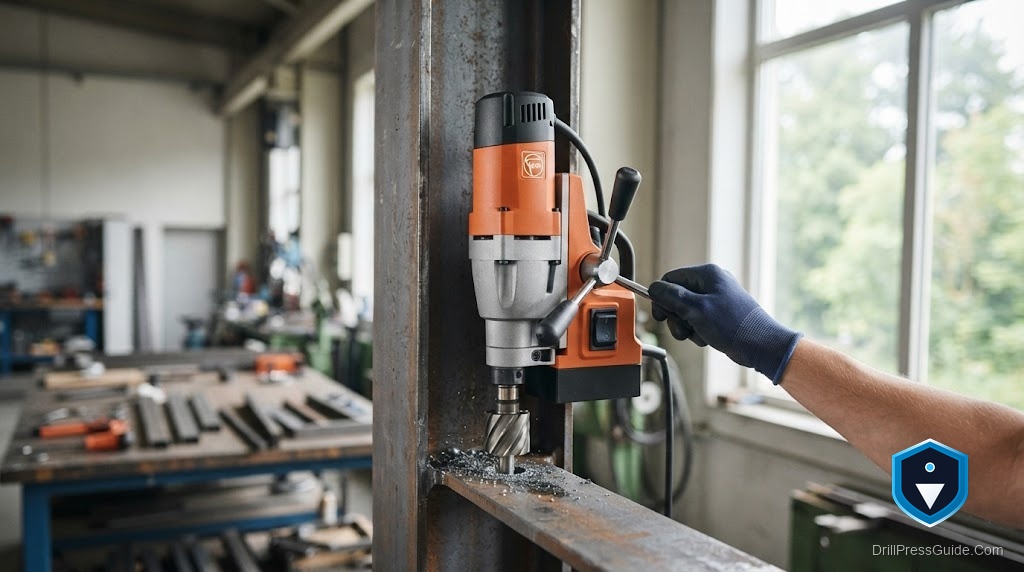
A drill press assumes you can bring the work to the machine. But a great deal of drilling happens on things that cannot be moved: a steel beam already erected, a ship’s hull, a bridge, a large weldment bolted in place. For that world there is the mag drill, a portable drilling machine that clamps itself to the steel with a magnet and brings the drill to the work. It is a different animal from a benchtop drill press, and understanding what a mag drill is, how it differs from a drill press, and when you need one clears up a lot of confusion for anyone searching for a mag drill press. This guide explains it.
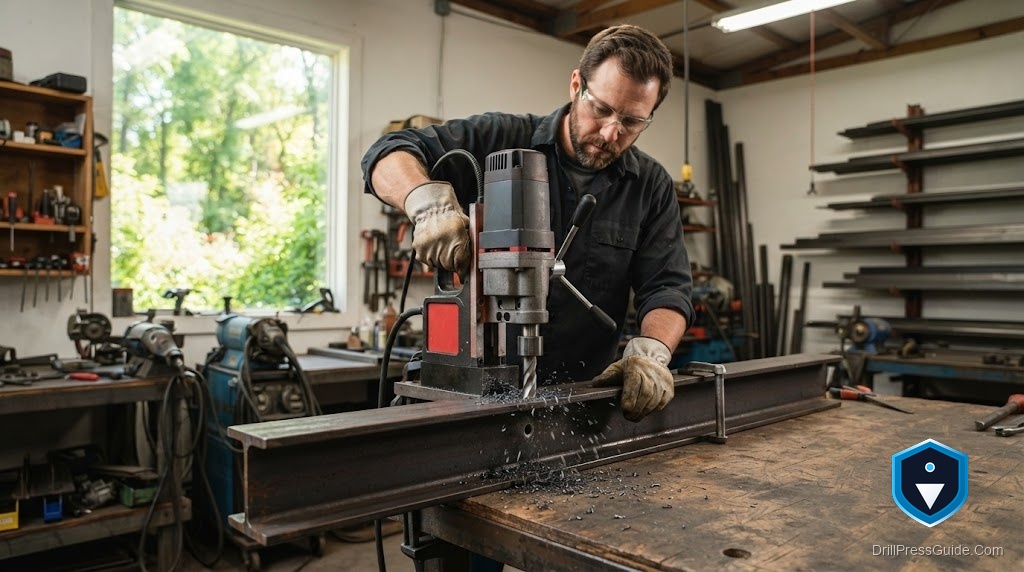
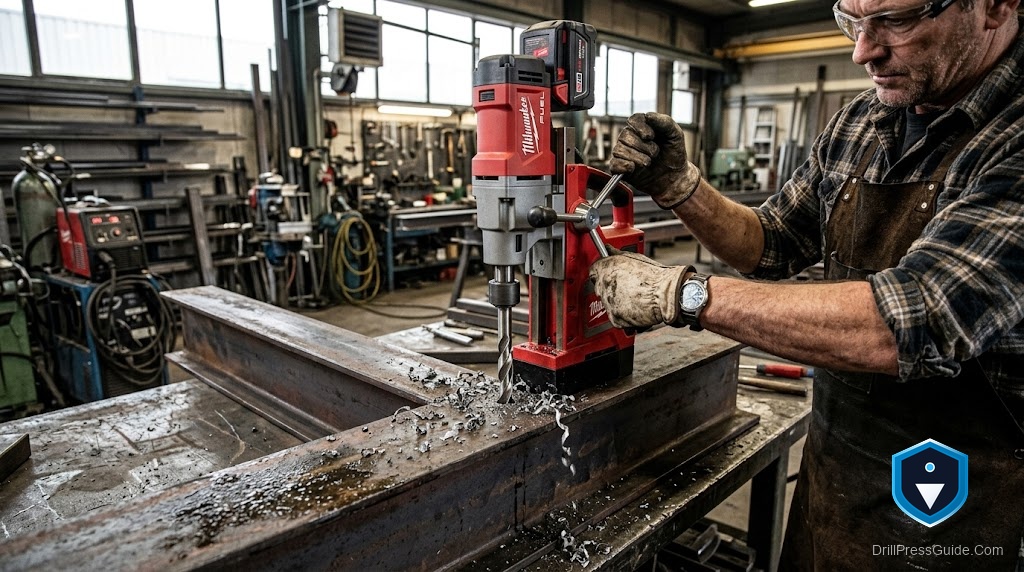
A mag drill (magnetic drill, sometimes searched as a mag drill press) is a portable drilling machine with a powerful electromagnetic base that grips a ferrous steel surface, holding the drill firmly against the work in any orientation, vertical, overhead, or on a wall. Rather than the work coming to a fixed machine, the machine clamps to the work. Mag drills are built for drilling large, accurate holes in structural steel on site, and they most often run annular cutters, the hollow cutters that make big holes efficiently, though they also take twist bits.
How a mag drill differs from a drill press
The two machines solve opposite problems, which is the key thing to understand. A drill press is a fixed machine you bring the work to, mounted on a bench or floor, ideal for work you can carry to it. A mag drill is a portable machine you bring to the work, clamping to steel you cannot move and drilling it in place, even overhead. That difference drives everything else: the mag drill’s electromagnetic base replaces the drill press’s heavy stationary frame, holding the cutting forces by clamping to the workpiece itself rather than by sheer mass on a bench. So they are not competitors; they serve different situations.
When you need a mag drill
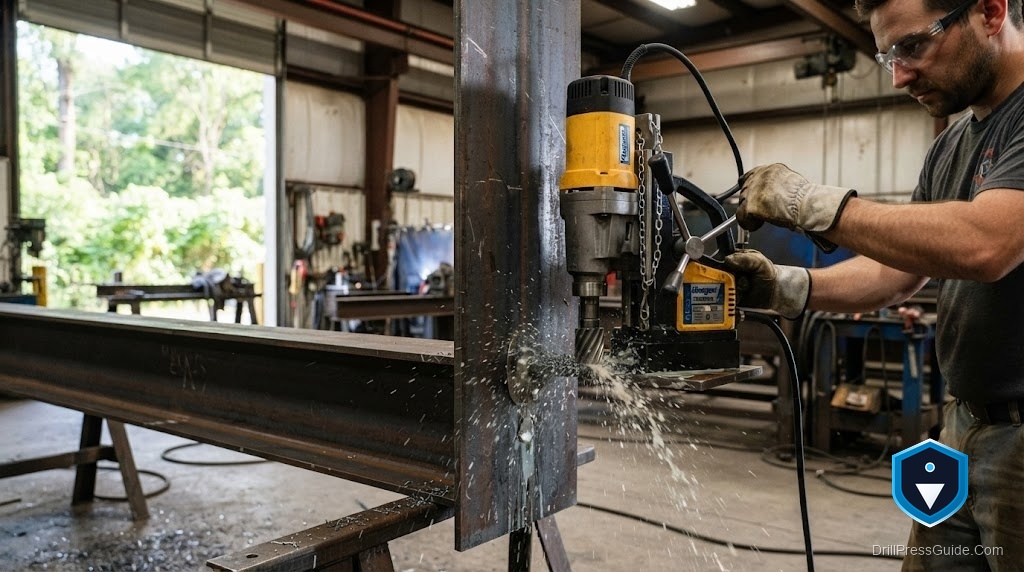
You reach for a mag drill when the work cannot come to a drill press. That means drilling steel that is fixed in place, erected beams, columns, large fabrications, ships, bridges, where carrying the piece to a drill press is impossible. It means drilling in awkward orientations, vertical faces or overhead, where the magnet holds the drill that no drill press could reach. And it means large holes in structural steel on site, using annular cutters for speed. If the work fits on a drill press table, the drill press is simpler and cheaper; the mag drill is specifically for the work that does not.
What makes a mag drill work
A few features define the machine and its safe use. The magnet must be strong and seated on clean, flat, thick ferrous steel, since its holding force is what resists the cutting torque, and it will not grip stainless, aluminum, thin, painted, or uneven surfaces reliably. The cutter is usually an annular cutter on the proper arbor, run at the correct low speed with cutting fluid, drilling large holes efficiently. And a safety chain or strap is used for overhead and vertical work, because if power is lost the magnet releases, and the chain keeps the machine from falling. These are the things that separate safe mag drilling from a dangerous mistake.
Using a mag drill safely
Because the machine holds itself by magnetism, safe technique centers on that grip. Set the magnet only on clean, flat, sufficiently thick steel, clearing paint, scale, and debris so it seats fully, since a partial grip can let go under load. Always use the safety chain for anything not drilling straight down onto a solid base. Run the correct low speed for the annular cutter and material, feed steadily, and use plenty of cutting fluid to clear the cut and cool the teeth. Keep clear of the ejecting slug and chips, wear eye protection, and never assume the magnet holds on a marginal surface. Respect the grip, and the mag drill is a safe, capable tool; take it for granted, and it is dangerous.
Conclusion
The mag drill solves the problem a drill press cannot: drilling steel that cannot be moved. Where a drill press is a fixed machine you bring the work to, a mag drill is a portable machine that clamps itself to the steel with a powerful magnet and drills in place, even overhead, most often with annular cutters for large holes. You need one when the work is fixed, awkwardly oriented, or too big to carry to a bench. Its safety rests entirely on the magnet’s grip, so seat it on clean, flat, thick steel, use the safety chain, and run the cutter correctly. Understood as the drill-press complement it is, the mag drill covers the on-site steel drilling no bench machine can reach.
Three takeaways: a mag drill is a portable machine that clamps to steel with a magnet and drills work you cannot bring to a drill press; you need one for fixed, awkwardly oriented, or large structural steel, usually with annular cutters; and its safety depends on seating the magnet on clean flat thick steel and using a safety chain.
Frequently Asked Questions
What is a mag drill press? A mag drill, or magnetic drill, is a portable drilling machine with a powerful electromagnetic base that clamps to ferrous steel and holds the drill against the work in any orientation. It brings the drill to work you cannot move.
How is a mag drill different from a drill press? A drill press is a fixed machine you bring the work to; a mag drill is portable and clamps to the work itself, even on a wall or overhead. The magnet replaces the drill press’s stationary frame by gripping the workpiece.
When do I need a mag drill instead of a drill press? When the work cannot come to a drill press: erected beams and columns, large fabrications, ships, bridges, and drilling in vertical or overhead orientations. If the work fits on a drill press table, the drill press is simpler.
What surfaces will a mag drill hold on? Clean, flat, sufficiently thick ferrous steel, where the magnet can seat fully and resist the cutting torque. It will not grip stainless, aluminum, thin, painted, or uneven surfaces reliably, so the surface must be prepared.
Do mag drills use special cutters? Most often annular cutters, the hollow cutters that make large holes efficiently, on the proper arbor at low speed with cutting fluid. They can also run twist bits, but annular cutters are what make them so effective in structural steel.
How do I use a mag drill safely? Seat the magnet on clean, flat, thick steel, always use the safety chain for vertical and overhead work (the magnet releases if power is lost), run the correct low speed with cutting fluid, and keep clear of the ejecting slug and chips.
References
- VintageMachinery.org, machine tool references and literature. http://vintagemachinery.org
- Jacobs Chuck Manufacturing, Mounting and Removing Chucks. http://www.jacobschuck.com/uploads/ueditor/file/20200604/1591240204146153.pdf