Home Depot Magnetic Drill Press: Models and Alternatives to Compare
When a job calls for drilling steel that will not come to a bench, a beam in place, a bolted plate, a standing column, the tool you need is a magnetic drill, and a big-box store like Home Depot is a common first place to look. You can see the machine, handle it, and often take it home the same day. That is useful, but a retailer’s shelf is one selection from a specialized market, and magnetic drills are a category where the right choice depends heavily on matching the machine to the steel you cut. Knowing how to compare is what keeps you safe and productive.
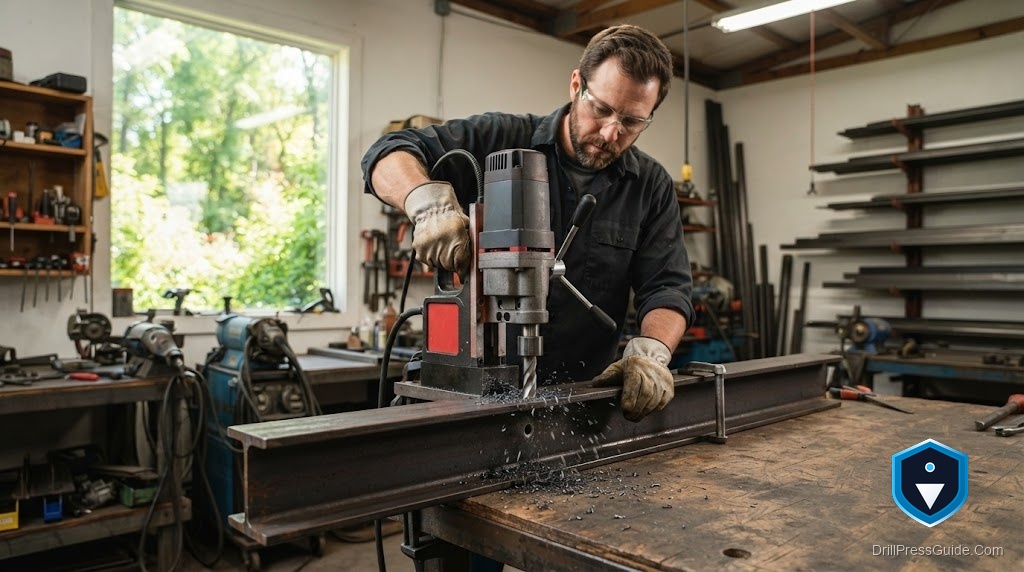
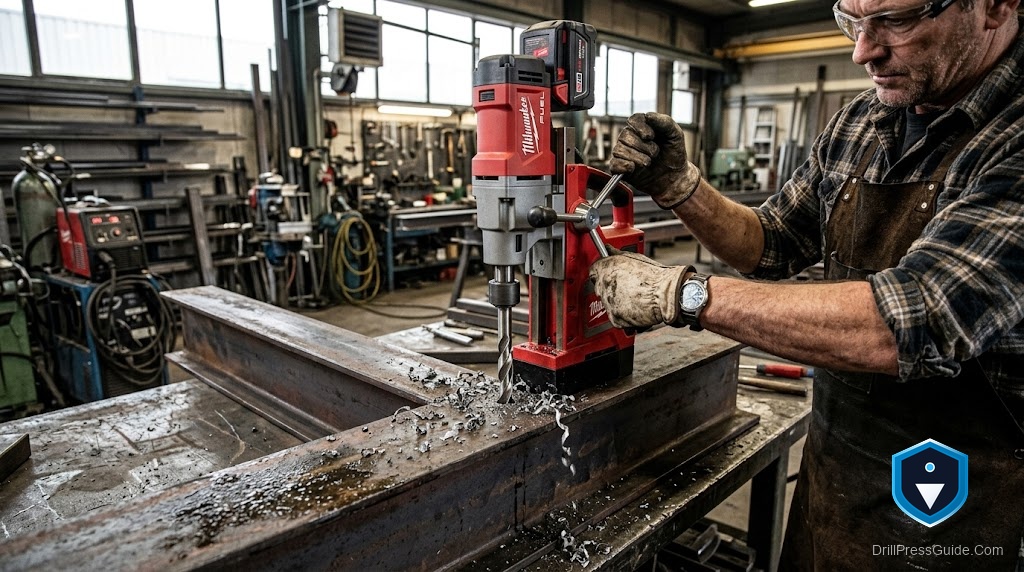
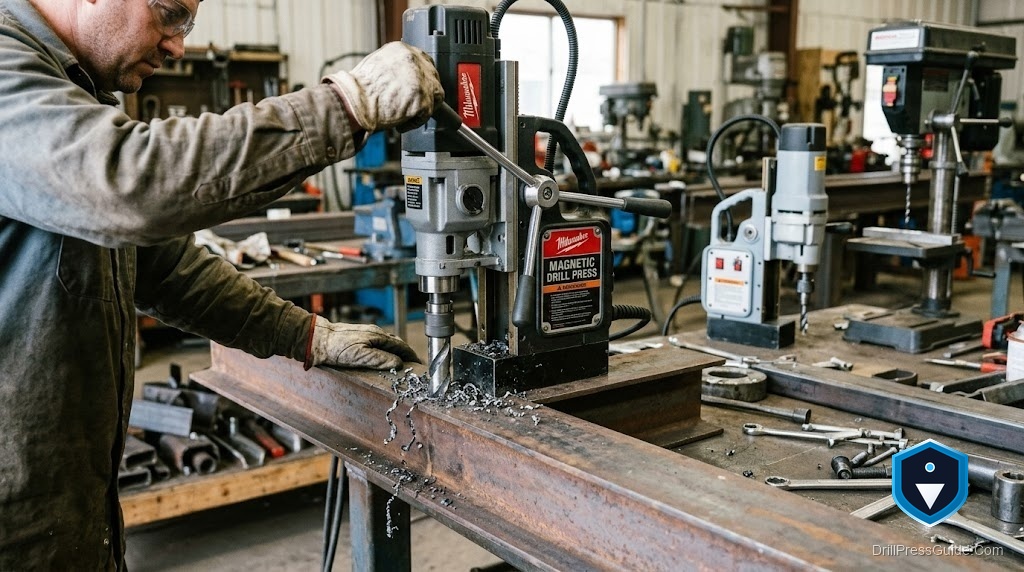
A magnetic drill press, or mag drill, is a portable drilling machine with an electromagnet in its base that clamps to ferrous steel when powered, then feeds a cutter through the metal while the magnet holds it locked in place. Home Depot and similar retailers stock a rotating selection of these machines, which makes them a convenient starting point but a limited view of a specialized field where holding force, motor power, and cutter type vary widely.
Short answer: treat any retailer, including Home Depot, as one place to compare, not the whole market. Judge every mag drill by the specs that decide safety and capability, magnet holding force against your cutter size, motor power, stroke, gearing, and a genuine safety chain, and choose the machine that matches your steel work, wherever it is sold.
Why the retailer shelf is only a slice
Being able to see and lift a mag drill in person is a real benefit, since these are tools you must handle safely. But the store carries whatever brands and models it chose to stock, and that selection changes and does not represent the specialized mag-drill market, where dedicated tool suppliers offer a far wider range of holding forces, motor sizes, and cutter systems. Deciding only on what is displayed lets the retailer’s buying choices make yours. The fix is to learn the specs that matter for magnetic drilling and use them to compare in-store machines against the wider field.
The specs that decide safety and capability
Magnet holding force, in pounds, is the first number, and it must comfortably exceed the forces your largest cutter generates, because the magnet is what keeps the tool, and you, safe. Motor power sets how hard and long it cuts. Stroke, the vertical travel, limits cutter length. A two-speed gearbox matters if you run both small twist bits and large annular cutters, since big cutters need low RPM. Most mag drills use annular cutters on a 3/4-inch Weldon arbor and accept a chuck adapter with a pilot pin for twist bits. A real safety chain and lift-off protection are non-negotiable, because the magnet’s grip depends on power and clean contact, and the chain is the backup if it ever fails.
How to compare and choose
Start with your steel: the thickness, the largest hole diameter, and whether the surfaces are clean, flat, and thick enough for a magnet to hold fully. That defines the holding force, motor power, and cutter capacity you need. Then compare candidates, in-store and from specialized suppliers, on those specs, and weigh seeing a machine in person against the wider choice available elsewhere. Do not under-buy holding force to save money, because an underpowered magnet challenged by a big cutter is a safety problem, not just an inconvenience. The right mag drill is the one whose holding force and power clearly suit your heaviest routine cut, bought wherever that machine is.
Using a magnetic drill safely
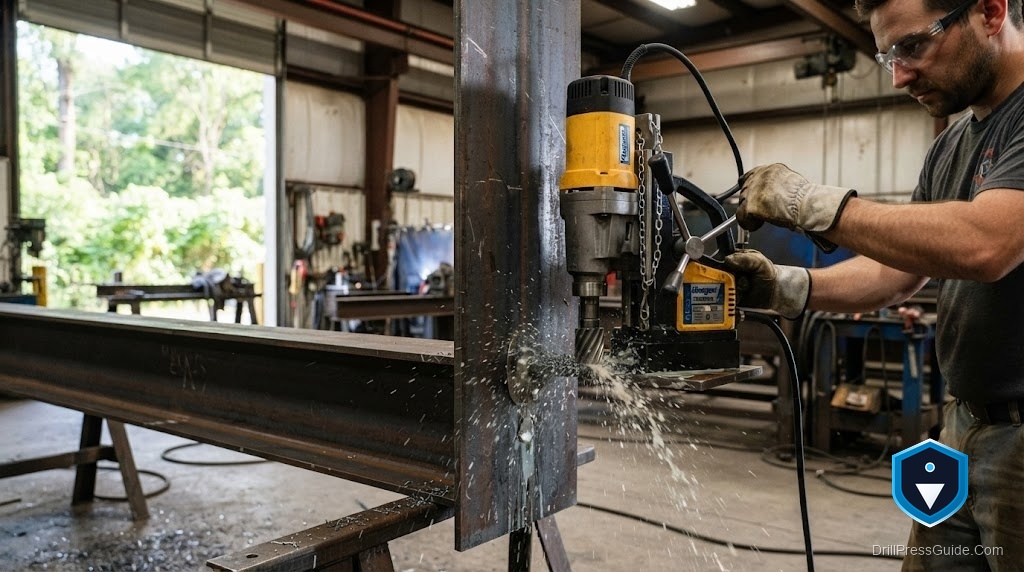
Wherever you buy it, the safe-use rules are the same. Grind or clean the contact area to bare, flat steel, because paint, rust, and scale rob the magnet of grip. Position the base, energize the magnet, then physically tug the machine to confirm it is locked before starting the motor. Fit the safety chain every time. Load an annular cutter with its pilot pin, or a chuck adapter for twist bits, feed steadily with cutting fluid, and ease off at breakthrough so the slug ejects cleanly. Never drill steel too thin, dirty, or curved for a full hold, and treat vertical and overhead work as the hardest test of the magnet. Retract, then switch off the magnet, in that order.
Conclusion
Shopping a magnetic drill press at Home Depot is a reasonable first step, as long as it stays a step. The shelf offers a valuable hands-on look at a convenient slice of a specialized market, not all of it, so learn the specs that decide safety and capability, holding force against cutter size, motor power, stroke, gearing, and a real safety chain, and use them to compare in-store machines against dedicated suppliers. Let your actual steel work set the holding force and power you need, never under-buy the magnet, and follow the same safe-use routine regardless of where the machine comes from. The goal is the right mag drill for your steel, not just the one on display.
Frequently asked questions
Is Home Depot a good place to buy a magnetic drill? It is a reasonable starting point because you can handle the machine in person. Compare what is on the shelf against specialized suppliers, since a retailer stocks only a slice of the mag-drill market.
What is the most important spec on a mag drill? Magnet holding force, which must comfortably exceed the forces your largest cutter generates. The magnet, backed by a safety chain, is the entire safety story of the tool.
What cutters do magnetic drills use? Most use annular cutters on a 3/4-inch Weldon arbor and accept a chuck adapter with a pilot pin for twist bits. Match the cutter capacity to your largest hole.
Can a mag drill work on thin or painted steel? Poorly. The magnet needs clean, flat, thick ferrous steel to hold fully. Grind the contact area to bare metal and avoid stock too thin or curved for a solid grip.
Why do I need a safety chain? Because the magnet’s grip depends on continuous power and clean contact, either of which can fail. The chain mechanically secures the tool if the magnet lets go, protecting you and anyone below.
Should I buy from a specialized supplier instead? Often a specialized tool supplier offers a wider range of holding forces, motor sizes, and cutter systems. Compare on the same specs and buy the machine that best matches your steel work.
References
- OSHA, portable power tool and machine safety guidance, osha.gov
- American Institute of Steel Construction, steel drilling references, aisc.org