Electro Magnetic Drill Press: Capacity, Setup, and Everyday Use
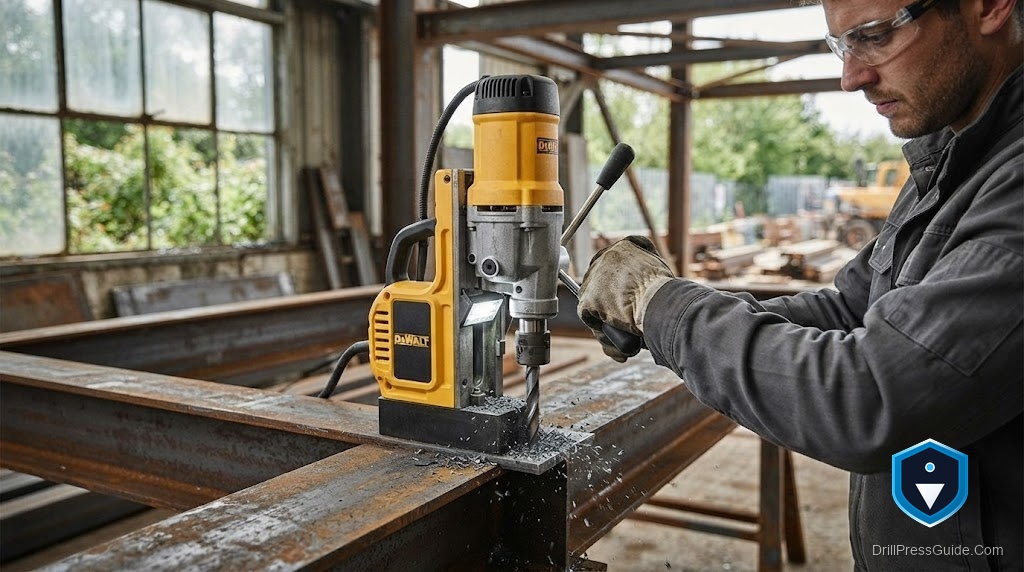
There is a moment on any steel job when the work simply will not come to you. The beam is welded in place, the plate is bolted to a frame, the column is standing where it will stand forever. A benchtop drill press is useless here. What you need is a machine that goes to the steel and clamps itself there, and that is exactly what an electro magnetic drill press does. Understanding how it holds, and what makes it safe, is the difference between a clean hole and a tool that tears loose under load.
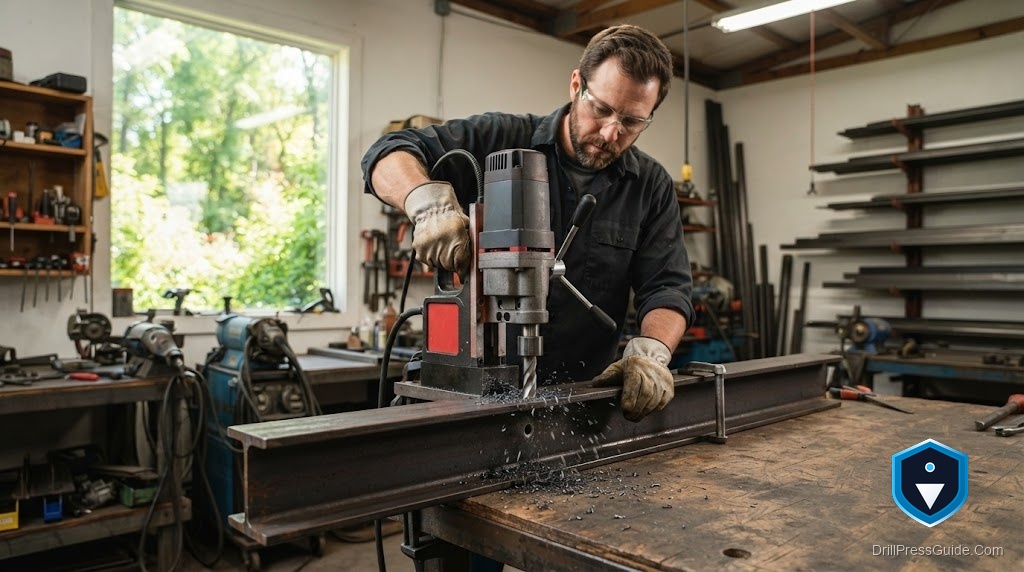
An electro magnetic drill press, usually called a magnetic drill or mag drill, is a portable drilling machine with an electromagnet in its base that clamps to steel when powered, then feeds a cutter through the metal while the magnet holds it locked in place. Unlike a permanent-magnet clamp, the electromagnet grips only while it has power, which shapes both how you use it and how you stay safe with it.
Short answer: an electro magnetic drill press is the tool for drilling steel that cannot be moved to a bench, and its magnet holding force is the spec that matters most. Choose one whose holding force comfortably exceeds your cutting load, with adequate motor power, stroke, and a safety chain, because the magnet, and its backup, are the entire safety story.
How the electromagnet changes the job
The electromagnet clamps hard to clean, flat, ferrous steel the instant it is energized, and releases when it is switched off. That on-off grip is convenient, you can reposition quickly, but it also means the hold depends on continuous power and on good contact. A power interruption, or a magnet challenged by paint, rust, thin stock, or a curved surface, reduces the grip that keeps the tool safe. This is why holding force compared to the cutting forces, plus a mechanical safety chain, is non-negotiable: the chain is what saves the tool and everyone below it if the magnet ever lets go.
The specs that decide capacity and safety
Magnet holding force in pounds tells you how hard it clamps; compare it against the diameter of cutter you intend to run, since a larger cutter tries harder to twist the tool loose. Motor power sets how hard and how long it can cut. Stroke, the vertical travel, limits how long a cutter fits. A two-speed gearbox helps if you run both small twist bits and large annular cutters, because big cutters need low RPM. Most mag drills accept annular cutters on a 3/4-inch Weldon arbor and take a chuck adapter with a pilot pin for twist bits. Lift-off protection and a genuine safety chain are the features that keep budget corners from becoming accidents.
Setting up on the steel
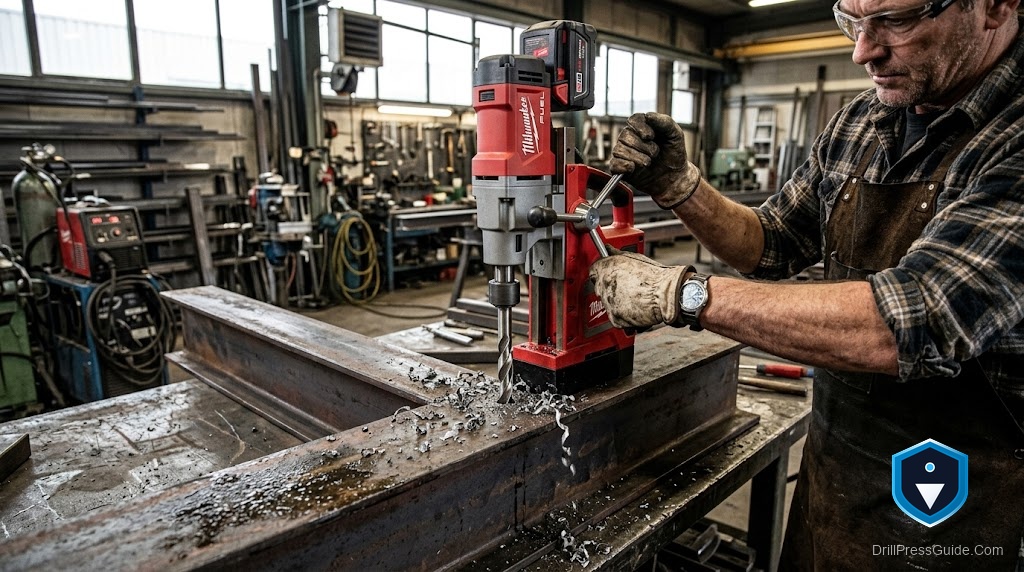
Grind or clean the contact patch to bare, flat metal, because paint, rust, and scale rob the magnet of grip. Position the base so the cutter lands on your mark, energize the magnet, then physically tug the machine hard to confirm it is truly locked before starting the motor. Fit the safety chain or strap every time, without exception. Load an annular cutter with its pilot pin, or fit a chuck adapter for twist bits, and set up cutting fluid to feed the cut. Only when the magnet is proven solid and the chain is on should the motor run.
Cutting cleanly and safely
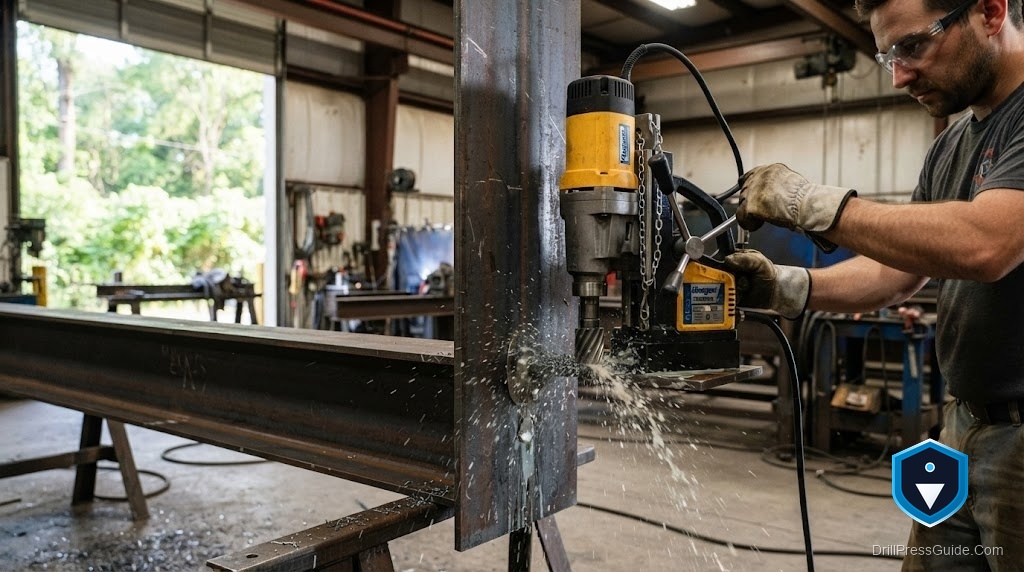
Start the cutter and feed steadily; annular cutters like a consistent, moderate feed rather than forcing. Keep cutting fluid flowing to clear chips and cool the edge, which also extends cutter life. Ease off the feed at breakthrough so the slug ejects cleanly and the cutter does not grab. Never drill on steel too thin, dirty, or curved for the magnet to fully hold, and treat vertical and overhead work as the hardest test of the tool, demanding the strongest hold and the most caution. When the cut is done, retract, then switch off the magnet, in that order.
Conclusion
An electro magnetic drill press is the machine that makes in-place steel drilling possible, and its electromagnet is both its greatest strength and the whole of its safety story. Because the grip depends on power and clean contact, choose a machine whose holding force clearly exceeds your cutting load, back it with motor power, stroke, and gearing suited to your cutters, and never run it without a safety chain. Clean the steel, confirm the lock by hand, feed steadily with fluid, and respect vertical and overhead work as the real tests of the magnet. Do that, and a mag drill is one of the most capable tools in metalwork; ignore it, and it is a hazard hanging off a beam.
Frequently asked questions
What is an electro magnetic drill press? A portable drilling machine with an electromagnet in its base that clamps to steel when powered, letting you drill steel in place, such as a standing beam or bolted plate.
How is it different from a permanent-magnet drill? An electromagnet grips only while it has power and releases when switched off, which is convenient but means the hold depends on continuous power and clean contact.
What holding force do I need? Enough to comfortably exceed the cutting forces of your largest cutter, with margin. Compare the magnet’s holding force in pounds against your intended hole size, and always use the safety chain.
Can it drill thin or painted steel? Poorly. The magnet needs clean, flat, thick ferrous steel to hold fully. Grind the contact area to bare metal, and avoid stock too thin or curved for a solid grip.
What cutters does it use? Most run annular cutters on a 3/4-inch Weldon arbor and accept a chuck adapter with a pilot pin for twist bits. Use cutting fluid to clear chips and cool the edge.
Why is a safety chain necessary if the magnet holds? Because the magnet’s grip depends on power and contact, and either can fail. The chain mechanically secures the tool if the magnet lets go, protecting the operator and anyone below.
References
- OSHA, portable power tool and machine safety guidance, osha.gov
- American Institute of Steel Construction, steel drilling and fabrication references, aisc.org