Choosing and Using a Black and Decker Magnetic Drill Press
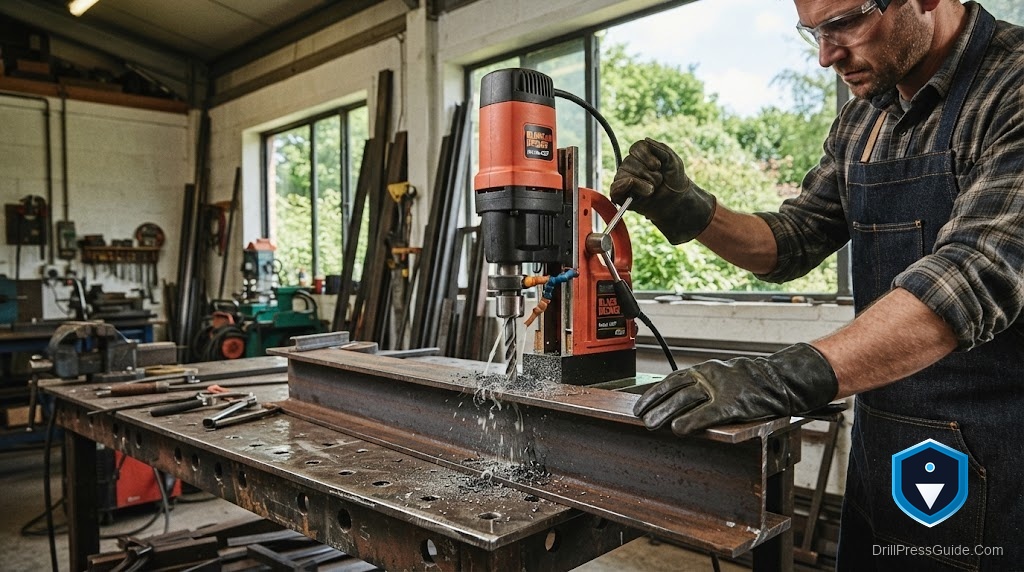
Somewhere in a lot of old toolboxes and estate sales sits a heavy metal case with a Black and Decker magnetic drill inside, models with numbers like 1550, 1551, and 1554 that ironworkers carried for years. That history is exactly why people search for a Black and Decker magnetic drill press today, either to keep an inherited one running or to buy one like the tool they remember. Before you do either, it helps to know what a mag drill actually is, what those old machines can still do, and what a modern buyer should really be comparing.
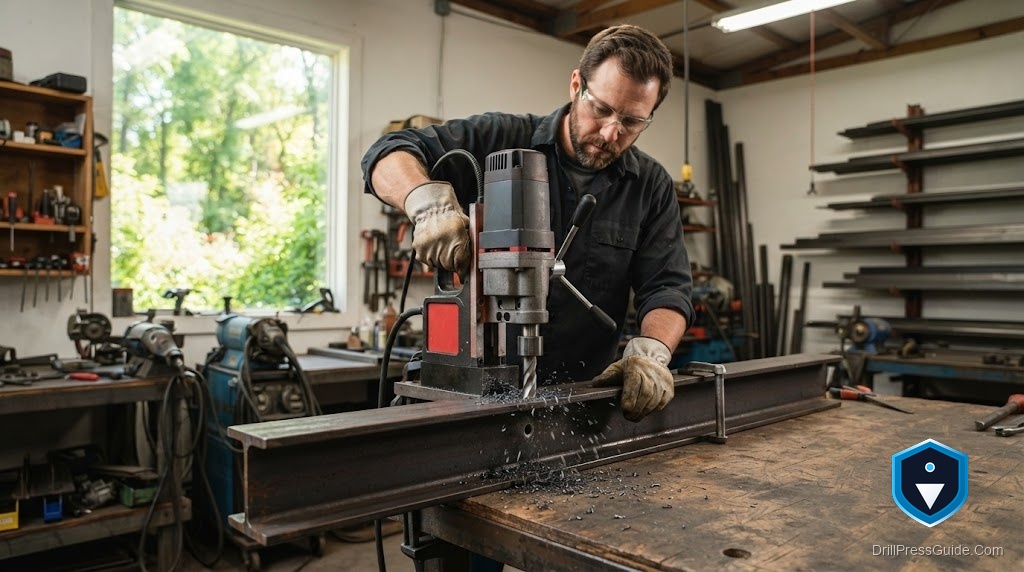
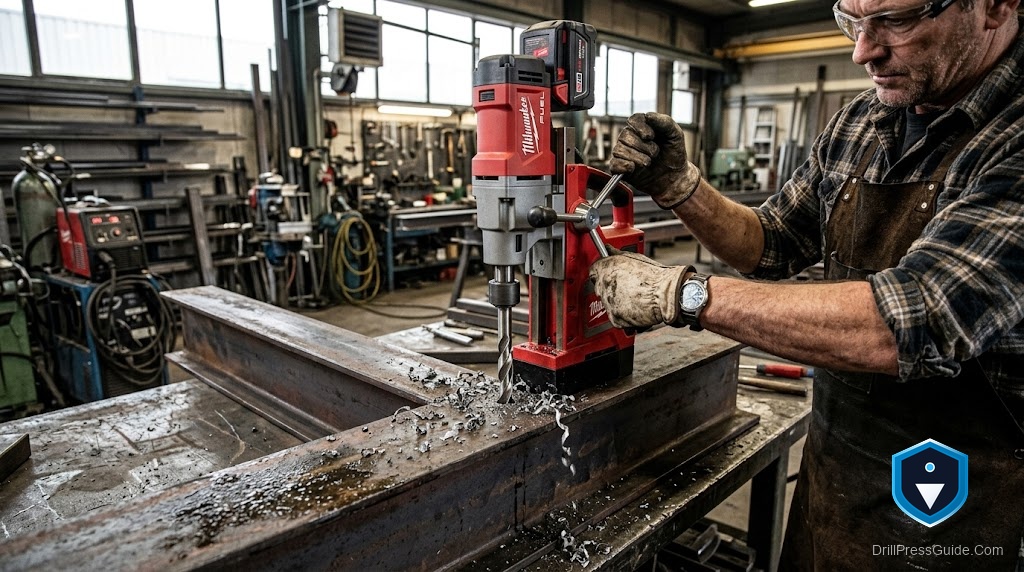
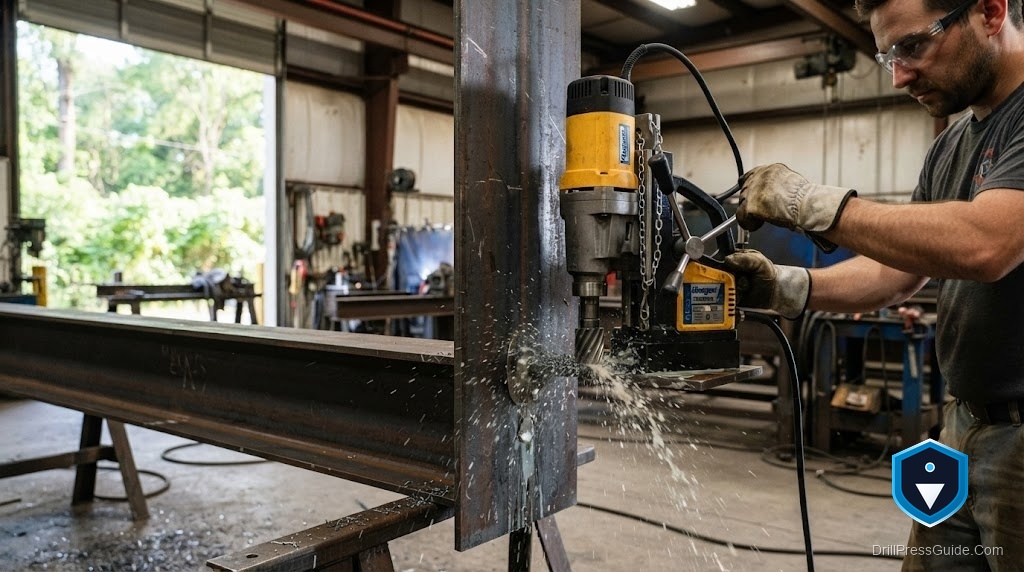
A magnetic drill press, or mag drill, is a portable drilling machine that clamps itself to steel with a powerful magnetic base, then feeds a cutter through the metal while the magnet holds it locked in place. It is the tool for drilling holes in steel that cannot be moved to a bench, beams, plates, and structures already in place. Black and Decker magnetic drills built a strong reputation among tradespeople, largely through older industrial models rather than a current consumer line.
Short answer: if you have an old Black and Decker mag drill, it can still be a capable tool if the motor, magnet, and switch are sound, and parts for those vintage models are found mainly through used channels and specialists. If you are buying today, judge a mag drill on magnet holding force, motor power, stroke, and safety features rather than on a familiar badge, because those specs are what keep the tool safe under load.
What a mag drill does, and why the magnet is everything
The base holds an electromagnet that clamps to clean, flat, ferrous steel with hundreds to thousands of pounds of grip. The motor then drives a cutter, usually an annular cutter on a 3/4-inch Weldon arbor, though a chuck adapter lets you run twist bits with a pilot pin. You feed it down with a lever and keep cutting fluid at the cut. The magnet is the whole safety story: it has to hold harder than the cutting forces try to move it, which is why holding force, and a backup safety strap or chain, matter more than any other spec. A magnet only grips well on clean, flat, thick steel, so paint, rust, thin sheet, and curved surfaces all cut its holding power.
Keeping an old Black and Decker mag drill alive
If you inherited one, check the fundamentals before trusting it. The magnet must clamp hard, so test its grip on clean plate and confirm it does not creep. The motor should run without smoking or bogging, and the switch and cord must be sound, because an intermittent switch on a magnet-held tool is a serious hazard. Parts for these vintage models come mostly from used-equipment sellers and specialists, so match any part by the exact model number. If the magnet is weak or the motor is failing, retire it from overhead and vertical work, where magnet strength is everything, and be honest about whether it is still safe to run.
What a modern buyer should compare
Buying new, ignore nostalgia and read the specs. Magnet holding force in pounds, compared against the cutting capacity, tells you whether it will hold under a grabbing cutter. Motor wattage sets how hard and how long it can cut. Stroke, the vertical travel, limits cutter length. A two-speed gearbox helps if you run both small twist bits and large annular cutters, since big cutters need low RPM. And look for lift-off protection and a real safety chain. These are the features that make a mag drill safe on a beam, and they are where budget machines cut corners. A mag drill that lets go under load is not a deal at any price.
Safe use, old or new
Grind the contact area to bare, clean metal, because paint and rust rob the magnet. Set the magnet and tug the machine hard by hand to confirm it is locked before starting the motor. Always fit the safety strap or chain. Keep cutting fluid flowing to clear chips and cool the cutter. Feed steadily and ease off at breakthrough so the slug ejects cleanly. Never drill on stock too thin or too dirty for the magnet to fully grab, and treat overhead work as the hardest test of the tool, not the place to save money.
Conclusion
A Black and Decker magnetic drill press is really two different things: a respected piece of vintage industrial history and a search that no longer maps neatly to a current product line. If you own one of the old models, keep it running only while the magnet, motor, and switch are genuinely sound, and source parts by model number through specialists. If you are buying now, drop the badge and compare magnet holding force, motor power, stroke, and safety features, because those decide whether the tool holds a beam or falls off one. Respect the magnet, always chain the machine, and the mag drill remains one of the most useful tools in metalwork.
Frequently asked questions
Does Black and Decker still make magnetic drill presses? Black and Decker’s mag drill reputation rests largely on older industrial models. Shoppers today are usually looking at vintage or secondhand units rather than a current consumer line.
Are old Black and Decker mag drills still good? They can be, if the magnet clamps hard and the motor and switch are sound. Retire any unit with a weak magnet or failing motor from overhead and vertical work.
What specs matter most on a magnetic drill press? Magnet holding force, motor wattage, stroke length, and safety features like lift-off protection and a safety chain. Holding force compared to cutting capacity is the key safety number.
Can a mag drill use regular twist bits? Yes, with a chuck adapter and pilot pin fitted to the 3/4-inch Weldon arbor. Annular cutters are the more efficient choice for larger holes.
How thick must the steel be for the magnet to hold? The magnet needs clean, flat, ferrous steel of adequate thickness, generally around 3/8 inch or more. Thin, painted, rusty, or curved stock reduces holding force sharply.
Where do I find parts for a vintage Black and Decker mag drill? Through used-equipment sellers and specialists, matched by the exact model number. Confirm fit before buying, since these models are long out of production.
References
- OSHA, portable power tool and machine safety guidance, osha.gov
- American Institute of Steel Construction, steel drilling and fabrication references, aisc.org