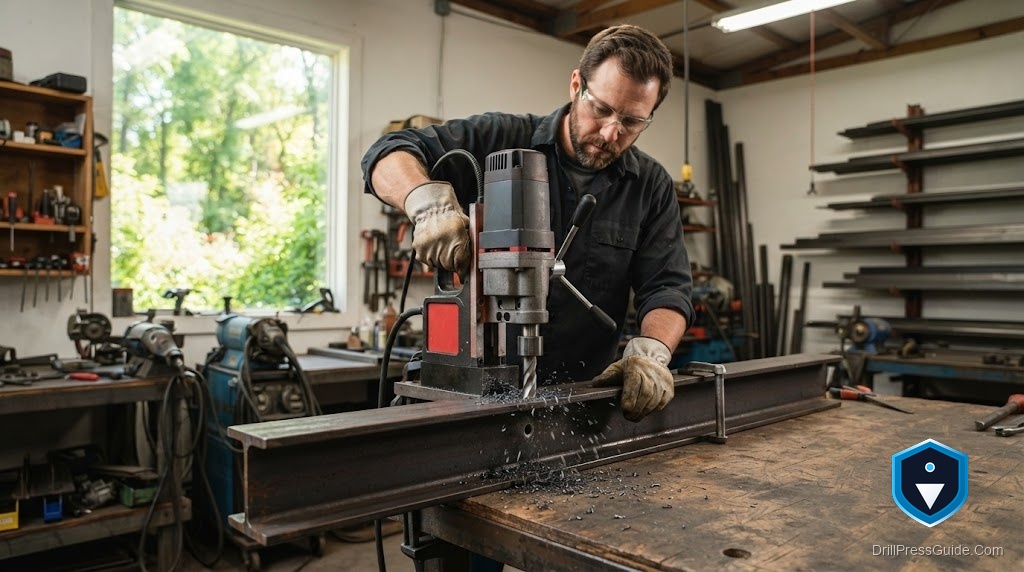
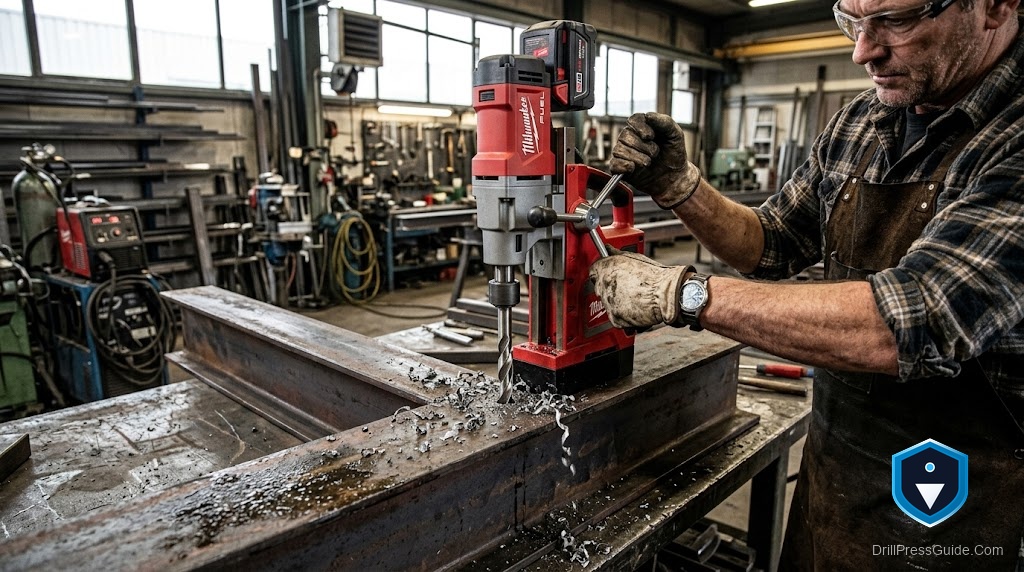
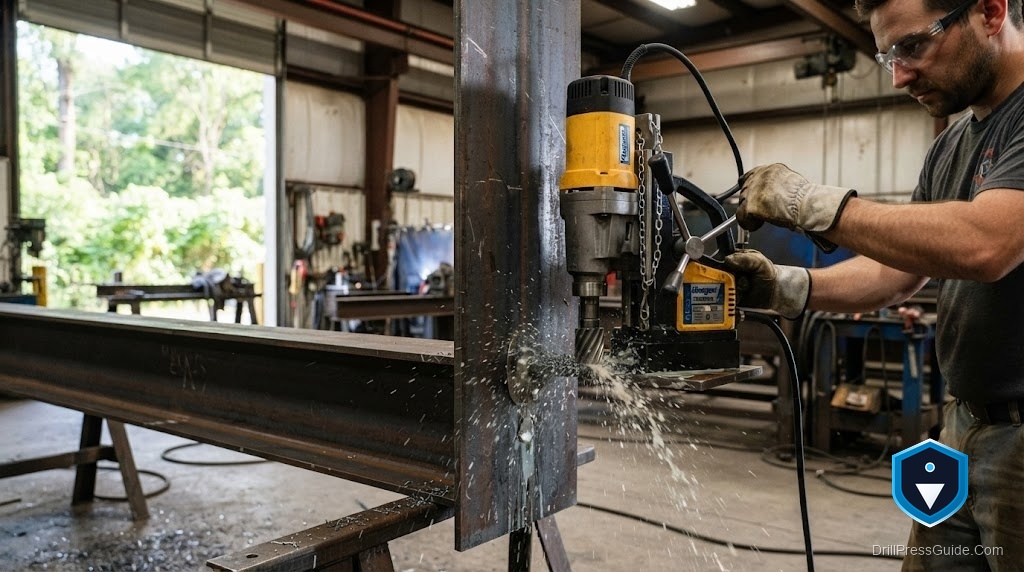
Magnetic Drill Press Guard: Capacity, Setup, and Everyday Use
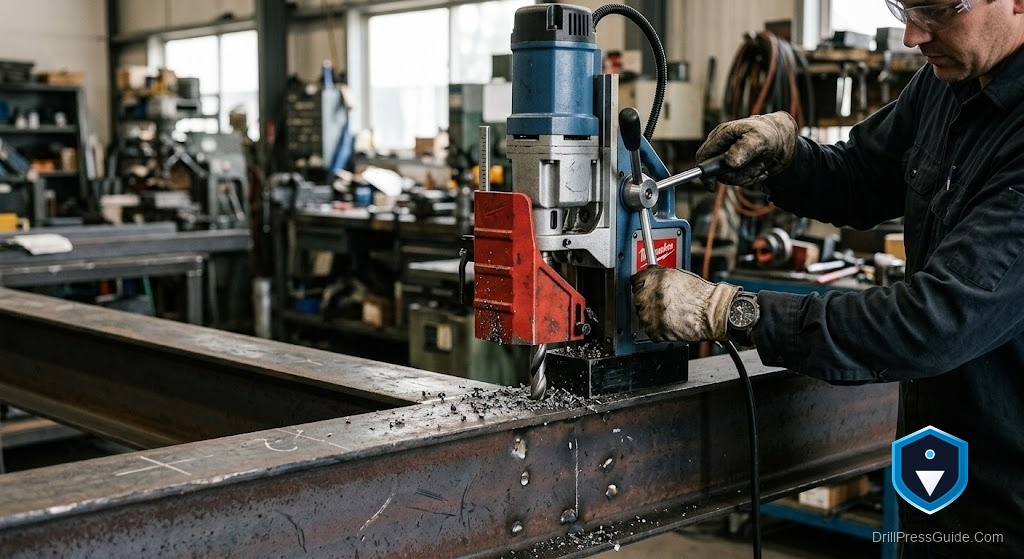
The drill press guard is the accessory nobody wants until the day a chip flicks up at eye level or a sleeve catches near a spinning chuck. Then it becomes the most important thing on the machine. A magnetic-mount guard is the version that makes protection easy, because it clamps to the machine without drilling and bolting, and it flips out of the way when you need to change a bit. If you run a drill press around others, or you just value your eyes, this is a small part that does a big job.
A magnetic drill press guard, more precisely a drill press safety guard, is a clear shield mounted near the chuck that stands between the operator and the point of operation, catching flying chips and coolant and keeping hands and clothing away from the rotating chuck. Many clamp to the column, and the convenient designs flip up so you can reach the bit without removing the guard.
Short answer: yes, fit a guard, and choose it by the diameter of your machine’s column and by how easily it flips up. A guard that fits your column and moves out of the way in a second is a guard you will actually leave on the machine, which is the only kind that protects you.
What the guard is actually protecting you from
The hazard on a drill press is the point of operation, the spinning chuck and bit. Two things go wrong there. Chips, and coolant on metal work, come off fast and sharp, straight toward your face. And a rotating chuck grabs loose sleeves, gloves, long hair, or a hand that strays too close, with no warning and no mercy. A clear shield across the front stops the chips and puts a physical barrier between you and the chuck. It is simple, and it works, which is why machine-guarding rules treat the point of operation as the thing that must be covered.
Fit is decided by the column diameter
Most drill press guards clamp around the round column, so the single most important spec is the column diameter they fit. Measure your column with calipers or a tape before buying. Benchtop and smaller floor machines usually fall in a 2 to 4 inch column range, while big industrial floor drills have thicker columns that need a larger clamp. A guard sized for the wrong column either will not close around it or will not clamp tight, and a guard that will not clamp tight is a guard that rattles loose and gets removed.
Options that fit common machines
For most benchtop and mid-size floor drill presses, the ATS DPG-ES1 drill press guard fits 2.0 to 4.0 inch columns and uses a clear shield that flips up for bit changes, which is the feature that keeps it in service instead of in a drawer. It clamps directly to the round column and is made for the point-of-operation coverage that shop safety rules call for.
If you run a large floor drill with a thick column, that smaller clamp will not close, and you want the ATS DPG-ES2 guard that fits 4.0 to 6.5 inch columns instead. Same flip-up shield idea, bigger clamp for a bigger machine. A simpler, lighter alternative for standard columns is this flip-up drill press guard for 2.0 to 4.0 inch columns. The honest trade among them is build and clamp quality: the heavier guards hold position better under vibration, while a lighter one saves a little and needs a firmer initial clamp to stay put. Measure your column, then buy the one that brackets your size.
Setting it up and using it
Clamp the guard to the column at a height where the shield covers the chuck and bit when the quill is down, then check that it does not interfere with the table or your normal travel. Position it so you can still see the work through the clear panel. Keep the flip-up habit: raise the shield to change bits, drop it before you start the motor. Do not defeat it by leaving it flipped up all session, because a guard that is never down is a guard that never protects anyone. Pair it with eye protection rather than treating it as a replacement, and keep sleeves rolled and gloves off near the chuck.
Conclusion
A drill press guard is a small part that stands between your face and a stream of sharp chips, and between a loose sleeve and a spinning chuck. Buy it by your column diameter first, then favor a flip-up design you will actually keep down, because convenience is what keeps a guard on the machine. The ATS DPG-ES1 covers most benchtop and mid-size machines, the DPG-ES2 handles thick industrial columns, and a lighter flip-up guard suits a standard column on a budget. Fit it, use it every time, and keep your safety glasses on underneath. The cheapest insurance in the shop is the shield you leave in the down position.
Frequently asked questions
What does a drill press guard protect against? It shields you from flying chips and coolant at the point of operation and puts a barrier between you and the rotating chuck, which can grab sleeves, gloves, and hair.
How do I know which guard fits my drill press? Measure the column diameter. Most guards clamp to the round column, and they are sold by the column size range they fit, such as 2 to 4 inches or 4 to 6.5 inches.
Does a flip-up shield really matter? Yes. A guard that flips up for bit changes gets left on the machine, while one you have to remove tends to end up in a drawer, protecting no one.
Can a guard replace safety glasses? No. A guard reduces flying-chip and contact hazards, but you should still wear eye protection. Use them together.
Will a guard fit both benchtop and floor drill presses? If the column diameter is within the guard’s range. Benchtop and mid-size floor machines often share a 2 to 4 inch range, while large industrial columns need a bigger clamp.
Why do people remove their drill press guards? Usually because a poorly fitting guard rattles or blocks the work, or a non-flip design is annoying to move. The fix is a properly sized flip-up guard that clamps tight.
References
- OSHA, Machine Guarding eTool: Drill Presses and point of operation guarding, osha.gov
- OSHA, 29 CFR 1910.212 General requirements for all machines, osha.gov