Magnetic Base Drill Press at Harbor Freight: What to Know Before You Go
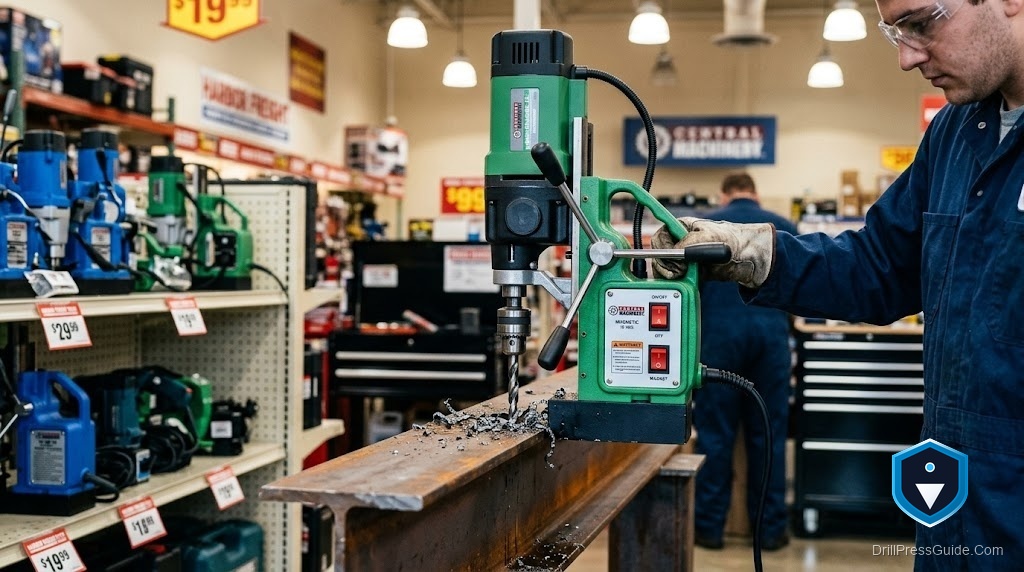
Harbor Freight is where a lot of shop tools start their life, so it is natural to walk in expecting to find a magnetic base drill press on the shelf next to the bench grinders and the drill presses. The reality is a little more specific than that, and knowing what a magnetic drill actually is, and what to check before buying one from anywhere, will save you from bringing home a tool that cannot safely do the job you bought it for. A mag drill is one of those tools where the wrong choice is not just disappointing, it is dangerous.
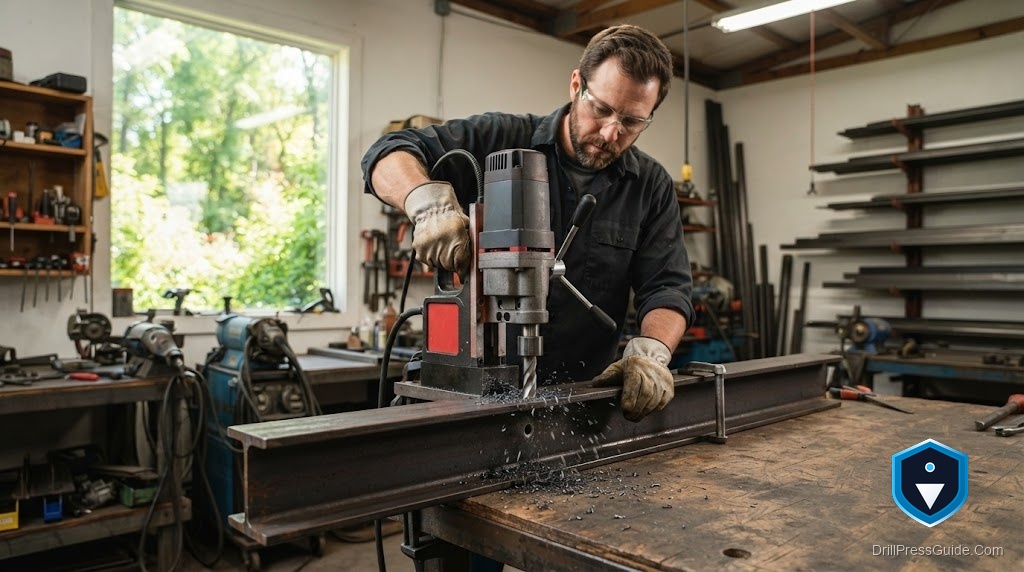
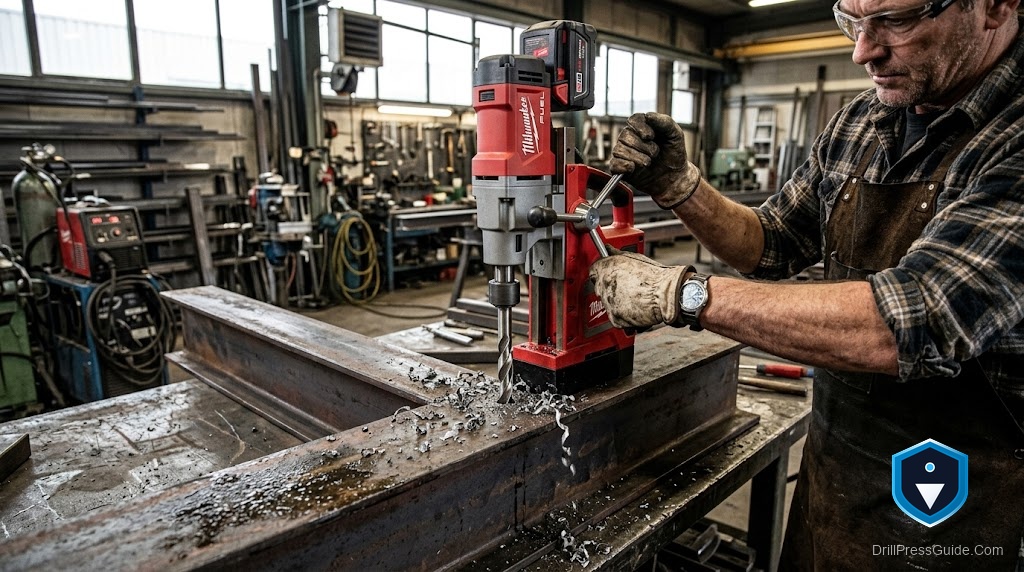
A magnetic base drill press, usually called a magnetic drill or mag drill, is a portable drilling machine that clamps itself to steel with a powerful electromagnetic base, then feeds a cutter through the metal while the magnet holds it locked in place. It is built for drilling steel that cannot come to a bench, beams, plates, columns, and structures already standing, which is a completely different job from a benchtop drill press that sits in one spot.
Short answer: mag drills are a specialty tool, and availability at any single retailer, including Harbor Freight, changes over time, so check current stock directly rather than assuming. Far more important than where you buy is what you buy: judge a mag drill on magnet holding force, motor power, stroke, and safety features, because those are what keep the tool from tearing loose under cutting force. A cheap mag drill that lets go on a vertical beam is not a bargain at any price.
Mag drill versus benchtop drill press
People conflate the two because both drill holes, but they solve opposite problems. A benchtop or floor drill press brings the work to the machine; you clamp a part on the table and pull the quill down. A mag drill brings the machine to the work; you carry it up a ladder, clamp it to a steel beam with the magnet, and drill in place. If your holes are in parts small enough to bring to a bench, you want a drill press, not a mag drill. If your holes are in steel that is already bolted or welded into a structure, a mag drill is the only practical tool. Buying the wrong category is the most common and expensive mistake here.
Why the magnet is the entire safety story
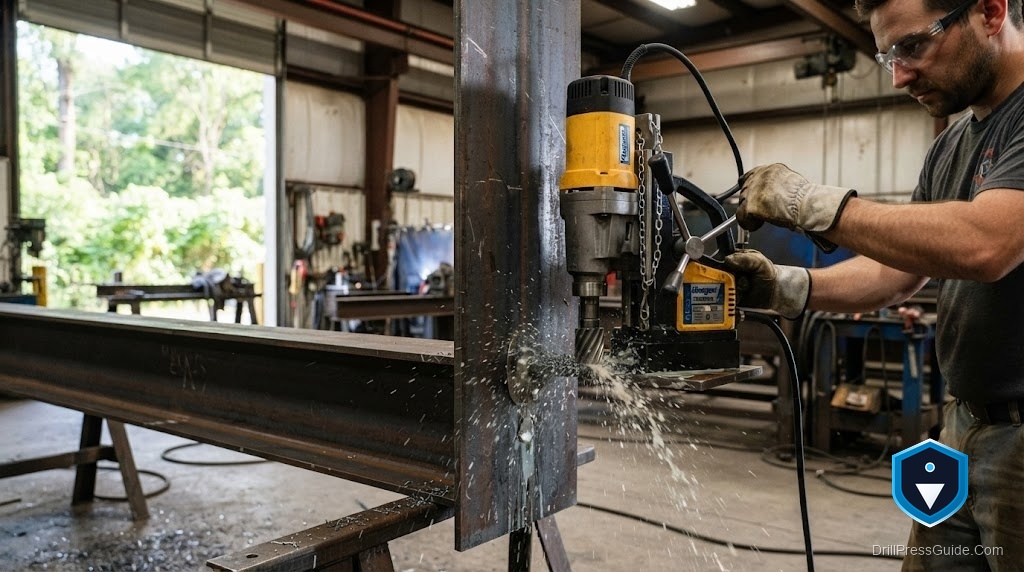
The electromagnetic base clamps to clean, flat, ferrous steel with hundreds to thousands of pounds of grip, and everything about safe operation flows from that grip. The magnet has to hold harder than the cutting forces try to twist the tool loose, which is why holding force compared to cutting capacity is the number that matters most, and why a real safety strap or chain is not optional. A magnet only grips fully on clean, flat, thick steel, so paint, rust, thin sheet, and curved surfaces all cut its holding power. This is the spec cheap machines quietly skimp on, and it is the one you cannot afford to skimp on.
The specs to compare on any mag drill
Magnet holding force in pounds tells you how hard it clamps; compare it against the size of cutter you plan to run. Motor power sets how hard and how long it can cut. Stroke, the vertical travel, limits how long a cutter you can use. A two-speed gearbox helps if you run both small twist bits and large annular cutters, since big cutters need low RPM. Most mag drills accept annular cutters on a 3/4-inch Weldon arbor and can take a chuck adapter with a pilot pin for twist bits. And look for lift-off protection and a safety chain, because those are the features that keep the tool on the steel if power blinks or the magnet is challenged. Compare these across any brand and retailer, and let price be the last filter, not the first.
Buying smart, wherever you shop
Decide the job first: the thickness and type of steel, the hole diameter, and whether you will work flat, vertical, or overhead, because overhead work is the hardest test of magnet strength. Then match a machine whose holding force and motor comfortably exceed that job rather than barely meet it. Check current availability at whatever retailer you prefer, since stock and models rotate. Confirm the cutter system, arbor size, and that it comes with, or can take, a safety chain. And plan for consumables and cutting fluid, because a mag drill runs annular cutters that need fluid to cut cleanly and last. A tool chosen this way will hold a beam safely; a tool chosen on price alone may not.
Conclusion
A magnetic base drill press is a specialty tool for drilling steel in place, and it is worth being precise about both what it is and what makes it safe. Do not assume any single retailer stocks one at a given moment; check current availability directly. Do spend your attention on the specs that keep the tool locked to the steel: magnet holding force against your cutting load, motor power, stroke, gearing, and a genuine safety chain. Match the machine to the real job, especially for vertical and overhead work, and treat price as the final consideration rather than the first. Respect the magnet, always chain the tool, and a mag drill becomes one of the most capable tools in structural metalwork. Cut corners on holding force, and it becomes a hazard hanging off a beam.
Frequently asked questions
Does Harbor Freight sell a magnetic drill press? Mag drills are a specialty tool and retailer stock rotates over time, so check current availability directly rather than assuming. What matters more is choosing a machine with adequate magnet holding force and safety features.
What is the difference between a mag drill and a drill press? A drill press brings the work to a fixed machine on a bench or floor. A mag drill clamps to steel with a magnet and drills the work in place, such as on a standing beam.
What holding force does a magnetic drill need? Enough to exceed the cutting forces of your largest cutter with margin to spare. Compare the magnet’s holding force in pounds against your intended hole size, and always use the safety chain.
Can a magnetic drill work on thin or painted steel? Poorly. The magnet needs clean, flat, thick ferrous steel to hold fully. Paint, rust, thin sheet, and curved surfaces all reduce holding power, so grind to bare metal first.
What cutters does a mag drill use? Most run annular cutters on a 3/4-inch Weldon arbor, and many accept a chuck adapter with a pilot pin for twist bits. Annular cutters with cutting fluid are the efficient choice for larger holes.
Is a mag drill safe to use overhead? Only with sufficient magnet holding force, a secured safety chain, and clean contact steel. Overhead work is the hardest test of the magnet, so it demands the strongest hold and the most care.
References
- OSHA, portable power tool and machine safety guidance, osha.gov
- American Institute of Steel Construction, steel drilling and fabrication references, aisc.org