Cordless Magnetic Drill Press: A Practical Guide for the Workshop
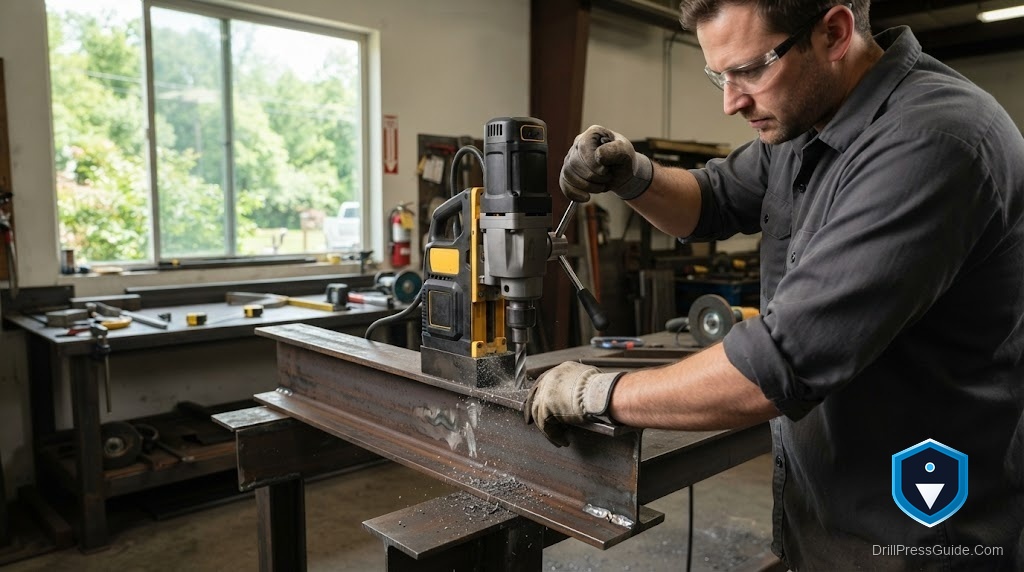
A cordless magnetic drill press is a relatively new category that combines the portability of a mag drill with the convenience of battery power. It is designed for steelworkers, fabricators, and maintenance mechanics who need to drill holes in remote locations, on job sites without reliable power, or in tight spaces where a cord is a hazard. The cordless format eliminates the need for a generator or a long extension cord, but it introduces new limitations in power, runtime, and magnet strength that you need to understand before you buy.
I have used cordless mag drills on construction sites, in maintenance bays, and in situations where the nearest outlet was two hundred feet away and the generator was out of fuel. They are convenient, but they are not a direct replacement for a corded machine. The battery limits the runtime, the motor is smaller, and the magnet is often less powerful than on a corded equivalent. The question is whether the convenience outweighs the trade-offs for the work you do.
What a Cordless Mag Drill Actually Is
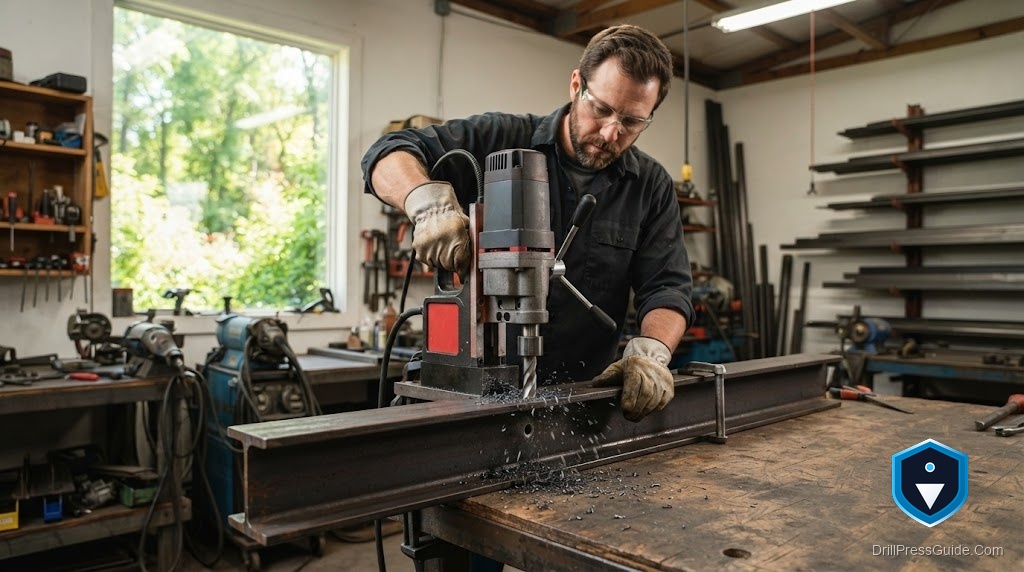
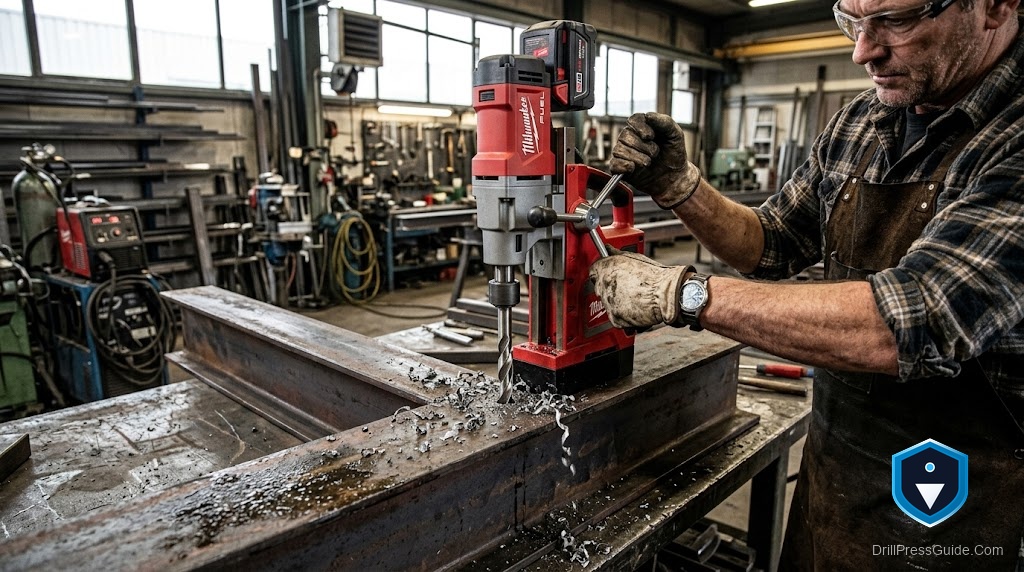
A cordless magnetic drill press is a portable drilling machine that clamps to steel with an electromagnetic or permanent magnet base and is powered by a rechargeable battery pack, usually from a major tool brand like Milwaukee, DeWalt, or Metabo. The battery drives a motor that spins a spindle, which accepts annular cutters or twist drills through a chuck adapter. The machine has a feed handle, a quill, and a depth stop, just like a corded mag drill. But the power source is a battery, not a wall outlet.
The cordless format is designed for mobility. You can carry the machine to the work, clamp it to a steel beam, and drill without running a cord. That saves setup time and eliminates the trip hazard of a long extension cord. It also lets you work in areas where power is not available, such as remote job sites, maintenance tunnels, or outdoor structures.
The Trade-Offs: Power, Runtime, and Magnet Strength
The biggest trade-off is power. A corded mag drill typically has a ten-amp motor or larger. A cordless mag drill has a motor that is limited by the battery voltage and capacity. The result is less torque, slower drilling, and a smaller maximum cutter diameter. A cordless mag drill might handle cutters up to one inch or one and a quarter inches, while a corded machine can handle one and a half inches or more. For most maintenance and fabrication work, that is enough. For heavy steel construction or large-hole drilling, it is not.
Runtime is the second limitation. A large battery might give you twenty to thirty minutes of continuous drilling. That is enough for a few holes, but not for a full day of production work. If you are drilling dozens of holes, you need multiple batteries and a charger. The downtime for battery swaps can offset the convenience of cordless operation. For occasional use, one or two batteries are enough. For daily use, you need a fleet of batteries and a fast charger.
Magnet strength is the third concern. Cordless mag drills often use permanent magnets rather than electromagnets to save battery power. A permanent magnet does not need electricity to hold, which means it will not drop if the battery dies. But the holding force is fixed and may be less than an electromagnet. Some cordless models use a battery-powered electromagnet that is weaker than a corded equivalent. Check the holding force spec before you buy. A thousand pounds of force is the minimum for safe operation. Two thousand pounds is better.
When Cordless Makes Sense
Cordless mag drills shine in maintenance and repair work. If you are a maintenance mechanic who needs to drill a few holes in a steel structure, a piece of equipment, or a vehicle frame, the cordless format saves you from dragging a generator and a corded drill across the shop. You grab the machine, clamp it, drill, and move on. The convenience is real and the time savings add up.
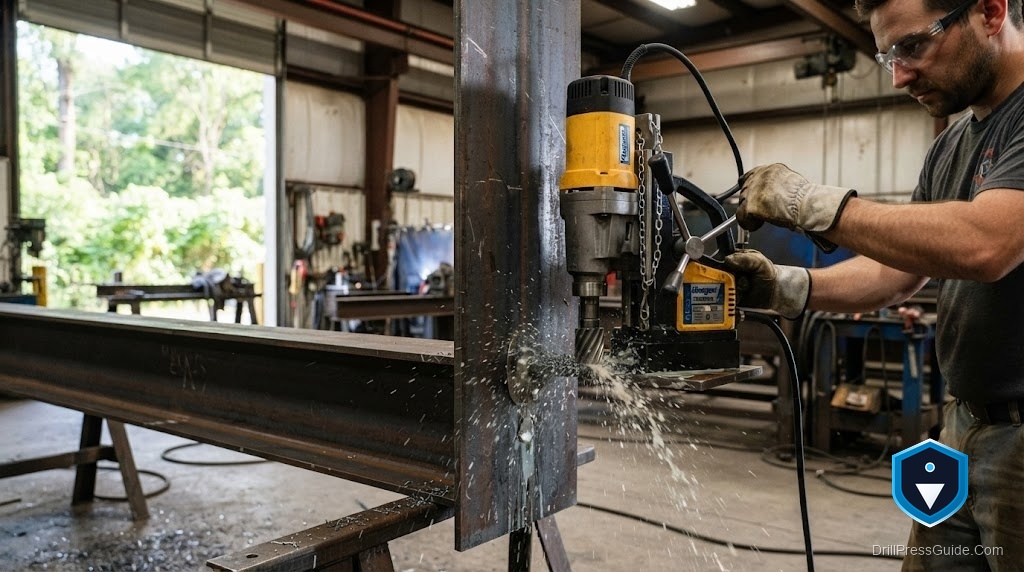
They also make sense for construction sites where power is limited. Steel erection crews, bridge workers, and rail maintenance teams often work in remote locations where generators are the only power source. A cordless mag drill eliminates the generator for small drilling tasks, freeing the generator for welding or other high-power tools.
For fabrication shops with dedicated power, a cordless mag drill is less compelling. The corded machine has more power, more capacity, and no runtime limits. The cordless format is a convenience, not a necessity, in a shop with outlets at every workstation.
Safety and Battery Management
The safety rules for cordless mag drills are the same as for corded machines. Clean the surface before clamping. Test the magnet before drilling. Never stand under the machine. Use cutting fluid. Wear safety glasses. The only difference is battery management.
Monitor the battery level. A dying battery can reduce the motor speed and the magnet force, which increases the risk of the cutter grabbing or the magnet failing. Some machines have a low-battery warning that alerts you before the power drops. Others do not. If your machine does not have a warning, check the battery level before every hole and swap it when it drops below half charge.
Use the right battery for the machine. A battery from the same brand and voltage line is designed to work with the tool. An off-brand battery may not deliver the current the motor needs, which causes overheating and premature failure. It may also void the warranty. Stick with the manufacturer’s batteries and chargers.
Store batteries properly. Lithium-ion batteries lose capacity in extreme heat and cold. Do not leave them in a hot truck or a freezing shop. Store them at room temperature, partially charged, and check them monthly if they are not in use. A dead battery is an expensive paperweight.
Who Should Buy a Cordless Mag Drill
A cordless magnetic drill press is for the maintenance mechanic, the steel erection crew, the bridge worker, and the rail maintenance team who needs to drill holes in steel in locations without reliable power. It is for the fabricator who works in tight spaces where cords are a hazard. It is for the shop that already owns the battery platform and wants to add mag drill capability without buying a new corded machine.
It is not for the production shop that drills dozens of holes a day. The runtime limitations and the reduced power make it slower and less efficient than a corded machine. It is not for the shop that works exclusively at powered workstations. The convenience of cordless is wasted if the outlet is always within arm’s reach.