A Practical Guide to the Milwaukee Magnetic Drill Press Lineup
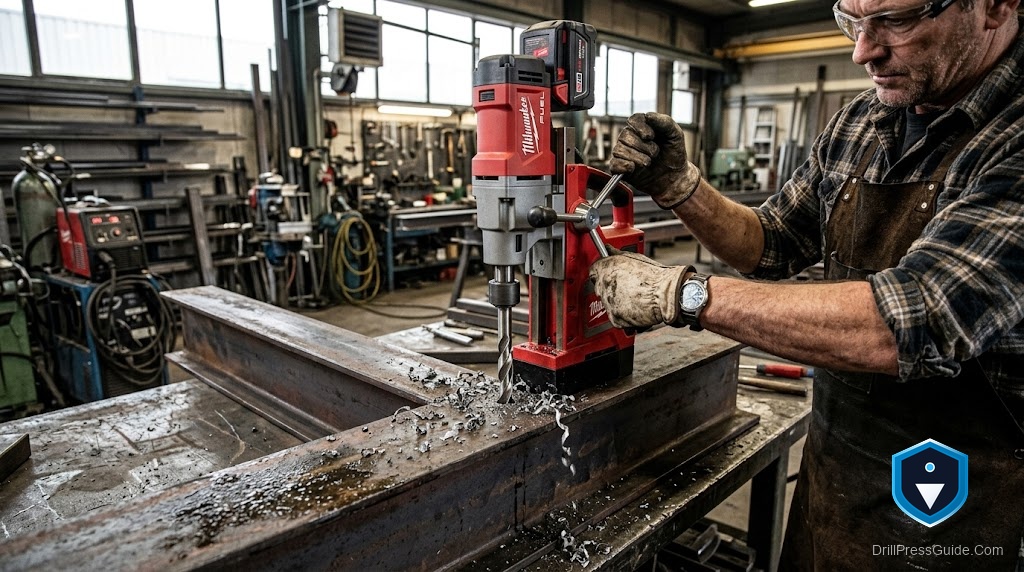
A magnetic drill press is a different animal from the machine bolted to your bench. Instead of bringing the work to the tool, you bring the tool to the work: the whole drill clamps itself to a steel beam or plate with a powerful magnet and cuts a hole right where it stands. Milwaukee has built these for decades, and if you have ever seen an ironworker drilling a structural beam thirty feet up, there is a fair chance a Milwaukee mag drill was doing the work. Here is how the lineup breaks down and how to use one well.
What a magnetic drill press is
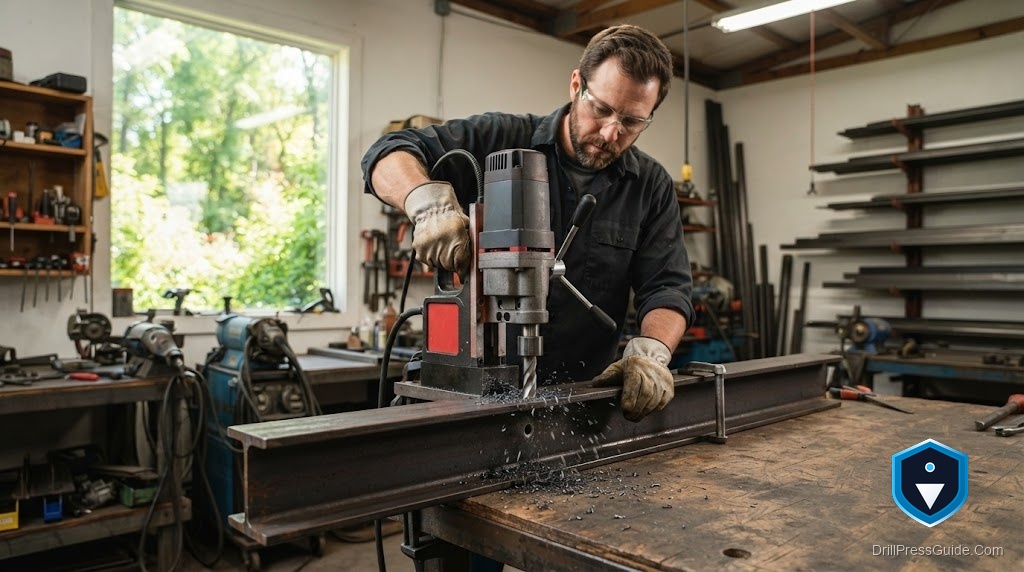
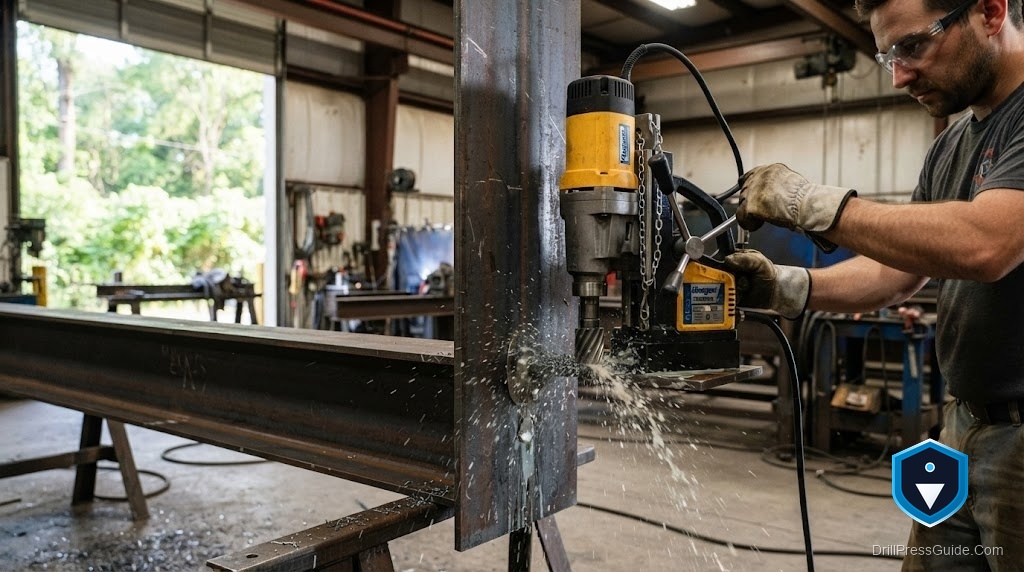
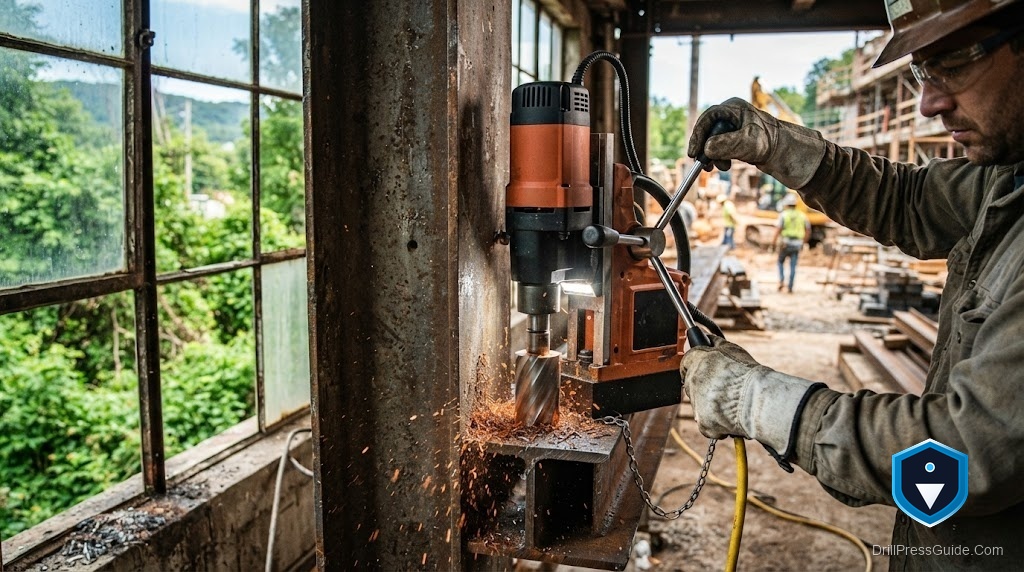
A mag drill holds itself to ferrous stock with an electromagnetic base (or, on some models, a permanent magnet base), then feeds a cutter through the metal using a hand feed. The magic is the magnet: it grips hard enough to let the tool drill horizontally, overhead, or on a vertical face where a normal press could never reach. Most Milwaukee mag drills are built to run annular cutters, hollow cutters that remove only the ring of material around a hole, which is far faster and cleaner in thick steel than a twist drill. A 3/4-inch Weldon arbor is the standard cutter mount, and a chuck adapter lets you run ordinary twist drills too.
How the Milwaukee lineup breaks down
Milwaukee’s magnetic drills split along a few clear lines:
- Base type. Electromagnetic bases (the common choice) grip when powered; permanent magnet models hold without power for specific jobs. The classic 4203 adjustable base paired with a motor unit is a long-running setup, and dedicated units like the 4270-series integrate base and motor.
- Motor and speed. Motors are rated for continuous metal cutting (in the range of a 1680W copper-wound motor on capable models), often with a two-speed gearbox and working speeds down around 500 RPM for large cutters.
- Size and capacity. Models are matched to cutter diameter and steel thickness, so a light unit for smaller holes differs from a heavy one for big structural work.
- Safety features. Better units add a safety strap, lift-off detection, and a partial magnet mode for positioning, all of which matter when the tool is holding itself to steel above your head.
Using one safely and well
A mag drill demands respect. Always fit the safety strap or chain, because a magnet can release if power drops or the surface is uneven, and a falling drill is dangerous. Clean the steel under the magnet so it grips fully, since paint, rust, or debris weakens the hold. Use cutting fluid, run a drip loop so fluid does not track into the tool, and let the annular cutter and its pilot pin do the work at the right speed rather than forcing the feed. Match the speed to the cutter diameter: large cutters want slow speeds near 500 RPM, small ones can run faster.
Tooling and accessories
A mag drill is only as good as its cutters and setup. Stock a set of annular cutters with a 3/4-inch Weldon shank, keep magnetic drill cutting fluid on hand, and add a chuck adapter for twist drills so the tool doubles for ordinary bits. A spare annular cutter pilot pin saves a stalled job. Confirm your tool’s arbor and shank size before ordering cutters.
The verdict
A Milwaukee magnetic drill press is the right tool when the work cannot come to a bench: structural steel, beams, plate, and field fabrication where you drill in place, often horizontally or overhead. Choose the base type (electromagnetic for most work, permanent magnet for specific jobs), match the motor and capacity to your cutter sizes and steel thickness, and favor units with a safety strap and lift-off detection. Run annular cutters with fluid at the right speed, always strap the tool down, and it will drill clean holes in situations a bench press cannot touch. For a home woodworker it is overkill; for a metal fabricator or ironworker, it is essential.
Takeaways:
- A magnetic drill press clamps to ferrous steel with a magnet and drills in place, even horizontally or overhead.
- Milwaukee’s lineup varies by base type (electromagnetic or permanent magnet), motor and speed, capacity, and safety features.
- Annular cutters on a 3/4-inch Weldon arbor are the standard; a chuck adapter runs ordinary twist drills.
- Always use the safety strap, clean the surface, use cutting fluid, and match speed to cutter size.
FAQ
What is a magnetic drill press used for? Drilling holes in steel beams, plate, and structures where the work cannot go on a bench. The magnet holds the tool in place so you can drill horizontally, vertically, or overhead.
How does a Milwaukee mag drill hold on? An electromagnetic base grips ferrous steel when powered (some models use a permanent magnet). Always add the safety strap, since the magnet can release if power drops.
What cutters does it use? Mostly annular cutters on a 3/4-inch Weldon arbor, which cut faster and cleaner in thick steel than twist drills. A chuck adapter lets you run ordinary twist bits.
What speed should I run? Match speed to cutter diameter: large cutters run slow (near 500 RPM), smaller ones faster. Use cutting fluid and let the cutter do the work.
What is the difference between the 4203 and dedicated units? The 4203 is a long-running adjustable base paired with a motor unit, while dedicated models integrate base and motor. Choose based on flexibility versus an all-in-one tool.
Do I need cutting fluid? Yes, for clean cuts and cutter life in steel. Run a drip loop so fluid does not track into the tool.
Is a mag drill useful for woodworking? No. It is a metal-fabrication tool that needs ferrous stock to grip. For wood, use a standard drill press.
References
- Milwaukee Tool, magnetic drill (electromagnetic drill press) product line: https://www.milwaukeetool.com/Products/Power-Tools/Drilling/Magnetic-Drills
- Milwaukee Tool, magnetic drill operator’s manuals and parts: https://www.milwaukeetool.com/Support
- Hougen and annular cutter usage guidance for magnetic drills: https://www.hougen.com/