Floor Drill Press Mobile Base: What to Measure Before You Buy
A floor drill press is a wonderful machine and a miserable thing to move. It is tall, top-heavy, and bolted down by its own weight, which is exactly why a mobile base is such a tempting upgrade for a shop where the press has to share floor space. The catch is that a base you buy without measuring can leave the press wobbling, too tall to use, or perched on casters rated for less than it weighs. A few measurements before you buy turn a tippy afterthought into a stable, roll-away machine.
A mobile base for a floor drill press is a wheeled platform the press sits on, letting you roll a heavy, top-heavy machine and lock it in place to work. Because a floor press carries its weight high, the base must match the machine’s footprint and weight and lock solidly. Measuring first is what keeps it stable.
Short answer: before buying a mobile base, measure your press’s base footprint, its total weight, and the height the base will add, then match a base rated above that weight with locking casters. A floor press is top-heavy, so stability and a firm lock matter most.
Why a floor press needs care on wheels
A floor-standing press stands tall on a narrow base, so its center of gravity is high. Put it on wheels and any looseness or an undersized platform lets it rock, which is unnerving with a spinning spindle. The base must fully support the press’s footprint, carry its weight with margin, and lock so the press does not roll or wobble while you drill. Get that right and rolling the press is safe; get it wrong and you have made a stable machine tippy.
Measure these before buying
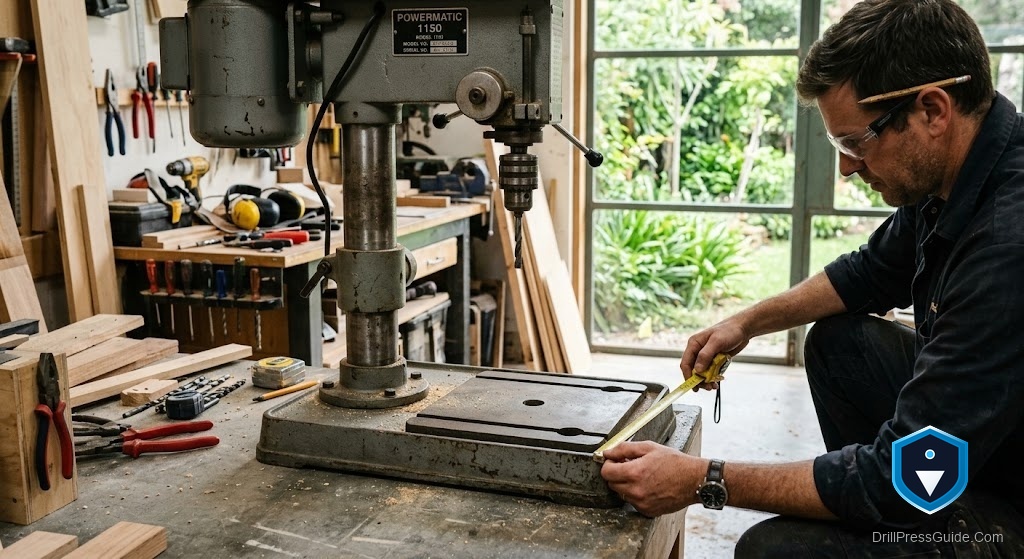
- Footprint. Measure the press base so the mobile base fully supports it.
- Weight. Know the press weight and choose a base rated comfortably above it.
- Added height. The base raises the press; confirm the table and controls stay usable.
- Locking. Choose locking casters or feet that hold the press firm while drilling.
Those four numbers, footprint, weight, added height, and a firm lock, decide whether the base fits and holds.
The honest limitation
A mobile base does not make a top-heavy press less top-heavy. It adds a little height and, if it is flimsy or undersized, a little wobble. On a very tall press, even a good base means you should roll it gently, avoid uneven floors, and always lock it before drilling. If your press is exceptionally tall or heavy, prioritize a wide, heavily rated base over a compact one.
Mobile base versus bolting to the floor
Against bolting the press to the floor, a mobile base wins on flexibility in a shared shop and loses on ultimate stability. A bolted press is rock solid but fixed; a mobile base lets you reclaim floor space but must be locked to match that steadiness. If your press never moves, bolting down is simpler; if it must share space, a well-rated base is the answer. You can compare a mobile base for floor drill press with a universal adjustable mobile base.
Setting it up
- Measure the press footprint, weight, and how much height the base adds.
- Choose a base rated above the press weight that supports the full footprint.
- Assemble it square and set the press on it centered, so the weight sits balanced.
- Lock the casters before every drilling session.
- Roll only on level floors, and keep clear of the chuck, per OSHA and CCOHS.
Who should read this
If your floor press must share space and move occasionally, a properly measured, well-rated mobile base is a genuine convenience. If the press can stay put, bolting it down is steadier and simpler, and you can skip the base.
Bottom line
A mobile base makes a floor drill press movable, but only if you measure first: footprint, weight, added height, and a firm lock. A floor press is top-heavy, so choose a wide base rated above the machine’s weight, set the press centered, and lock the casters before drilling. Measure well and the press rolls where you need it and stands steady where you work.
- A floor press is top-heavy, so the base must support the full footprint and lock firmly.
- Measure footprint, weight, and added height, and choose a base rated above the weight.
- Lock the casters before every session and roll only on level floors.
FAQ
What do I measure before buying a mobile base? The press base footprint, its total weight, and the height the base adds, so the base fits, carries the load, and keeps the press usable.
Is a mobile base safe for a tall floor press? Yes, if it supports the full footprint, is rated above the press weight, and locks firmly. A floor press is top-heavy, so lock it before drilling.
Will the base make the press too tall? It can. The base raises the press, so confirm the table and controls stay at a usable height before buying.
How much weight capacity do I need? More than the press weighs, with margin. An undersized base can wobble or fail; choose one rated comfortably above the machine.
Mobile base or bolt it down? Bolt it down if the press never moves; use a mobile base if it must share shop space. A locked, well-rated base can be very steady.
Can I roll it on any floor? Roll on level, smooth floors and lock the casters to work. Uneven floors make a top-heavy press unstable on wheels.
References
- WEN Drill Press FAQs: https://wenproducts.com/pages/drill-press-faqs
- WEN 4214T 12-Inch Variable-Speed Drill Press: https://wenproducts.com/collections/power-tools/products/wen-4214t-12-in-variable-speed-drill-press
- OSHA Woodworking eTool, Drill Press: https://www.osha.gov/etools/woodworking/production/machines-tools/drill-press
- CCOHS, Metalworking Machines - Drill Presses: https://www.ccohs.ca/oshanswers/safety_haz/metalworking/drillpresses.html