Delta Floor Drill Press 17-900: What Owners Should Check Before Buying or Repairing
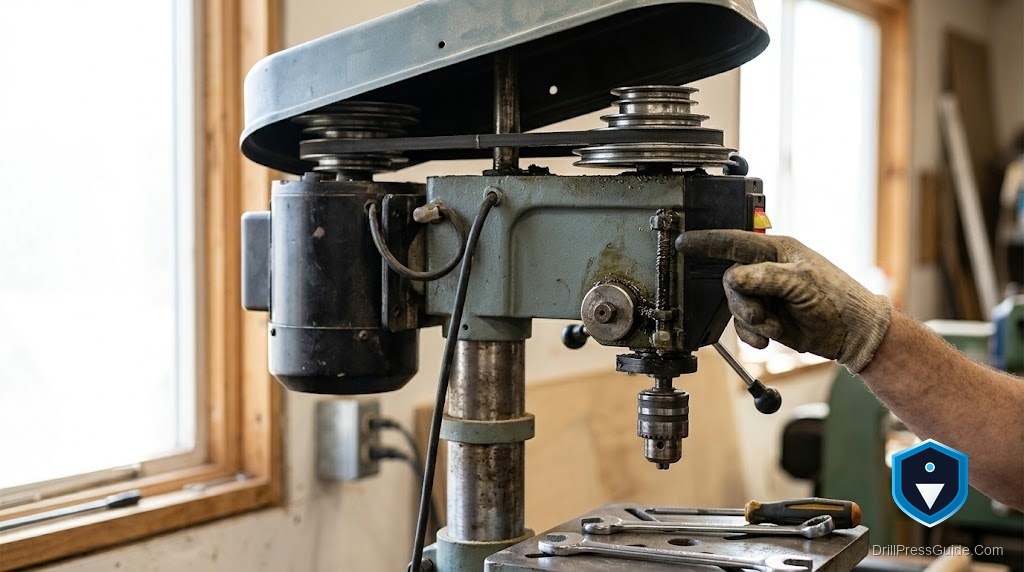
The Delta 17-900 is a floor-standing drill press from Delta’s mid-century production line — a 16-1/2-inch swing machine built on a cast-iron column base with a multi-speed belt-driven spindle, a cast-iron table, and the kind of construction that makes these machines collectable on the used market. Delta was one of the defining American woodworking machinery brands, and the 17-900 (along with its close relatives in the same family) is one of the machines that built that reputation. Whether you are considering buying one or repairing one you already own, knowing what to inspect and where the repair path leads is the practical question.
The Delta 17-900 is a floor-standing, 16-1/2-inch (some sources note it as 15-inch) swing machine. Key specifications across documented examples include a multi-step belt-driven spindle producing a range of speeds (typically 12 speeds or several belt combinations covering approximately 500 to 3,100 RPM), a JT33 taper spindle with a 5/8-inch keyed chuck, a cast-iron table with T-slots, a cast-iron head and column base, and a 1/2 HP or 3/4 HP induction motor. The quill travel is typically 3-3/4 inches. This is a well-regarded machine for both wood and light metal work.
Straight answer: before buying a used Delta 17-900, inspect the quill bearings, the column casting for cracks, the table lock mechanism, and the belt and motor condition. A machine with clean castings, smooth quill action, and a functional table lock is worth repairing for most wear items. Cracked castings or seized bearings require more involved assessment.
What to check before buying
1. Quill and bearings
Extend the quill by hand (power off) and feel for roughness, binding, or play. Smooth action with no lateral play is ideal. Roughness or lateral play indicates bearing wear; the bearings are replaceable if the quill itself is undamaged.
2. Column casting integrity
Inspect the cast-iron column base, table bracket, and head casting for cracks. Hairline cracks in non-structural areas can sometimes be welded or pinned; major structural cracks in the column or head are typically a pass.
3. Table lock and tilt mechanism
The table lock clamps the table to the column bracket and allows height adjustment. Make sure it clamps firmly and that the table does not creep downward after locking. Table tilt (for angle drilling) should lock solidly at any angle.
4. Belt and pulleys
Inspect the belt for cracking, glazing, or fraying. Inspect the pulleys for wear and alignment. Belt replacement is inexpensive and is the expected repair on any vintage machine; it is not a disqualifier.
5. Motor
A 1/2 HP or 3/4 HP induction motor that runs smoothly and reaches speed quickly is fine. Capacitor-start motors (single-phase) may have a failed start capacitor — a relatively easy fix. Motors that run hot, hum without starting, or smell burned require more investigation.
Repair path
Belt: Measure the old belt’s section and outside circumference, then match to a standard FHP V-belt. The belt is the most common consumable replacement on these machines.
Chuck: A 5/8-inch keyed chuck with JT33 arbor is a direct fit on JT33 spindles. A universal ratcheting chuck key covers a lost key.
Table accessory: A Palmgren 3-inch drill press vise with T-slot compatible lugs fits the standard cast-iron table slot pattern for secure workholding.
Bearings and motor parts: Source through bearing suppliers (by OD/ID/width measurement) and motor supply houses (check motor nameplate for frame size and RPM). Delta Machinery (deltamachinery.com) carries some parts; used-donor sourcing on eBay supplements what is not in current stock.
The honest flaws
Two honest flaws. First, at 3-3/4 inches of quill travel, the 17-900 is not a machine for deep-hole operations without repositioning; that is typical of the class. Second, the parts ecosystem is used-market dependent for structural components; current Delta stock is limited on vintage models. Neither is a reason to avoid a well-maintained example.
Conclusion: a worthy cast-iron floor press with a clear inspection checklist
The Delta 17-900 is one of the better vintage floor presses on the used market. Its cast-iron construction and quality bearing fits are genuine advantages that most current consumer machines do not match.
- Check quill, column casting, table lock, belt, and motor before buying.
- Belt and chuck are universal by measurement; bearings by OD/ID/width.
- JT33 spindle taper; 5/8-inch keyed chuck; approximately 500–3,100 RPM range.
- Parts via deltamachinery.com and used-donor sourcing.
FAQ
What is the Delta 17-900? A floor-standing multi-speed belt-driven drill press from Delta’s mid-century production line, 15–16-1/2-inch swing.
What spindle taper does it use? JT33 on most versions. Confirm from the machine’s nameplate.
What is the quill travel? Typically 3-3/4 inches.
Where do I find parts? deltamachinery.com for current stock; eBay and VintageMachinery.org for vintage sourcing.
What is the most important pre-purchase check? Quill bearing condition: smooth extension with no lateral play. Rough or sloppy quill action is the most significant indicator of needed repair.
Is a worn belt a deal-breaker? No. Belt replacement is inexpensive and expected on any vintage machine. It is not a disqualifier unless the pulleys themselves are damaged.
References
- Delta Machinery, parts and documentation: https://www.deltamachinery.com
- VintageMachinery.org, Delta drill press production history: https://www.vintagemachinery.org
- eReplacementParts, Delta drill press parts: https://www.ereplacementparts.com/parts/power-tool/drill/drill-press/delta/