Baileigh DP-15VSF Floor Drill Press: What the Variable Speed Really Buys You
Most floor drill presses ask you to stop, open a cover, and move a belt every time you change speed. The Baileigh DP-15VSF does not, and that single difference is why serious metal and wood shops keep this machine on their short list. When people look up the baileigh dp-15vsf floor drill press they are usually weighing whether a shop-grade variable-speed floor press justifies its place over a simpler unit. I went through Baileigh’s specs, the manual, and how the machine is used to answer that plainly.
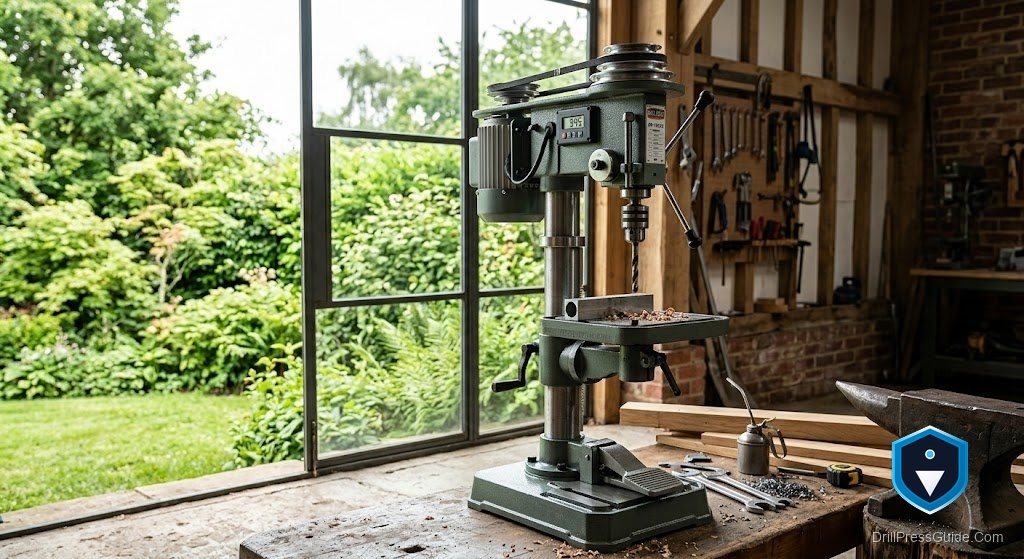
The DP-15VSF is a 15 inch floor-standing drill press with a variable-speed drive, meaning you set the spindle speed with a control rather than by swapping a belt across pulleys. It is built for shops that drill a mix of materials and want to change RPM without stopping.
Here is the direct answer. If you run a working shop that drills metal and wood across many bit sizes, the DP-15VSF is worth it, because on-the-fly speed control and a rigid 15 inch floor build save real time and hold accuracy. If you are a hobbyist who drills mostly wood at a couple of speeds, this is more machine and more outlay than you need, and a benchtop or stepped-pulley floor press will serve you well.
What variable speed means on a floor press
On a standard floor press, the speeds are fixed steps set by which pulleys the belt rides. Changing speed means stopping the machine, opening the cover, and moving the belt.
A variable-speed drive lets you dial the spindle speed through a range while the machine runs. You match RPM to the exact bit and material without ever stopping, which matters when a job mixes large and small holes in different metals.
On a floor press that difference compounds, because floor machines are used for heavier, more varied work than benchtop units. The time saved and the ability to fine-tune speed for metal are the core of what the DP-15VSF sells.
Baileigh DP-15VSF specs that matter
The working numbers come from Baileigh’s product documentation.
| Spec | Baileigh DP-15VSF |
|---|---|
| Swing | 15 in |
| Type | Floor standing |
| Speed control | Variable speed |
| Spindle taper | MT2 |
| Chuck | Keyed, to 5/8 in |
| Spindle travel | Mid-size floor-press range |
| Table | Cast iron, tilts for angled work |
| Build | Cast iron head and column for rigidity |
The 15 inch swing reaches the center of a 15 inch circle, and the MT2 taper accepts a wide range of tooling, including larger chucks and taper-shank bits. The cast-iron head and column are what keep the spindle steady when drilling metal.
Living with the DP-15VSF
Shops that own these value the same things. Variable speed removes the belt-change chore, the rigid cast build keeps holes accurate in steel, and the MT2 taper opens up serious tooling options.
Verdict: as a shop-grade floor press, the DP-15VSF earns its place for anyone who drills metal and wood in volume and needs to change speed often. It is built to work, not just to sit in a hobby corner.
Honest flaw: variable-speed drives add a mechanism that must be maintained and, on most such systems, adjusted only while the motor runs, so it demands better habits than a plain belt press. It is also a heavy, floor-standing machine that needs space and anchoring, and it is more complex than a stepped-pulley press of the same swing.
Who should skip this: hobbyists who drill mostly wood at one or two speeds, and anyone tight on floor space. The variable-speed drive and floor build are wasted if you never change speed and never drill heavy stock.
You can view the DP-15VSF on Baileigh’s site: https://www.baileigh.com/drill-press-dp-15vsf
Variable speed is the reason, so weigh your work
Strip the DP-15VSF to its core and the variable-speed drive is what separates it from plainer 15 inch floor presses. The swing, the MT2 taper, and the cast build you can find elsewhere.
So the honest question is how often you change speed. A shop that drills a steel bracket, then a small pilot hole, then a large bit in aluminum benefits every few minutes from dialing RPM without stopping. A woodworker who sets one speed and drills shelf pins all day will barely touch the control.
That is the whole decision. Buy the DP-15VSF for the variable speed and the rigidity if your work is varied and heavy, and pass on it if your work is narrow and light, where the feature sits idle.
Setup, tooling, and safe operation
Anchor it first. A floor press this heavy should be bolted to the floor so it cannot rock or tip, especially when drilling with large bits that can grab. Baileigh’s manual and OSHA’s guidance both treat a secured machine as the baseline.
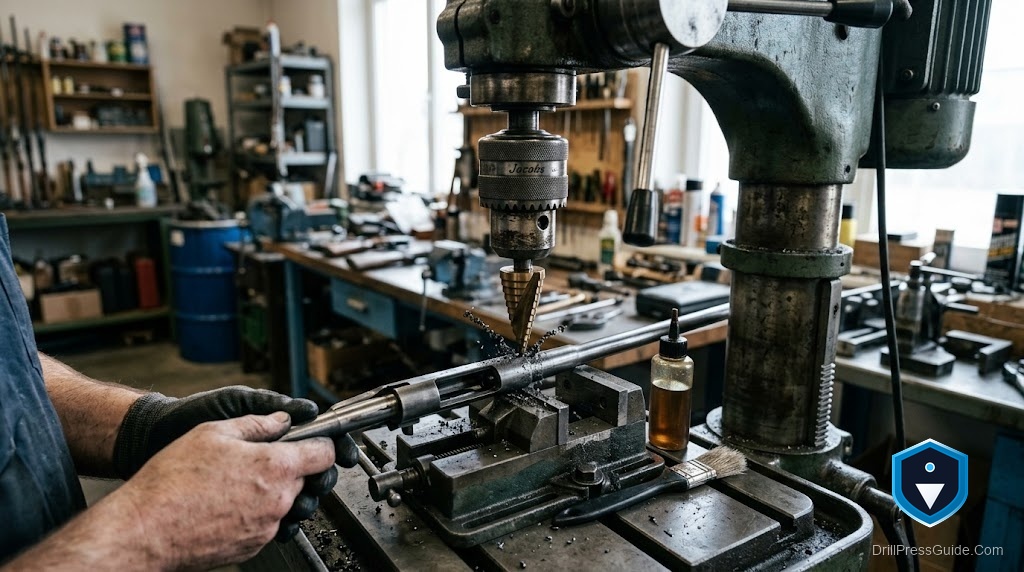
Use the MT2 taper to your advantage. It accepts larger keyed chucks and taper-shank drills, so you can run bigger holes in metal than a small benchtop press allows. Match speed to material with the variable-speed control, slower for large bits and steel, faster for small bits, and use cutting fluid on metal to protect the bit and finish.
Run it safely. Clamp the workpiece so it cannot spin, never wear gloves near the spindle, and clear chips with a brush rather than your hand. CCOHS is explicit that unclamped work and gloves are the two most common causes of drill press injuries, and a powerful floor press raises those stakes.
The verdict
The Baileigh DP-15VSF is a shop-grade 15 inch floor press whose variable-speed drive is genuinely valuable, but only for shops whose work justifies it.
- Best for working shops: on-the-fly speed control saves time whenever you switch materials and bit sizes.
- Built to drill metal: the cast-iron head and column and the MT2 taper keep holes accurate and open up serious tooling.
- Demands care and space: the variable-speed drive needs good habits, and the machine needs floor room and anchoring.
- Skip it if: you drill mostly wood at a couple of speeds or are short on space, where a benchtop or stepped-pulley press fits better.
FAQ
What does variable speed do on the DP-15VSF? It lets you set the spindle speed through a range while the machine runs, instead of stopping to move a belt across pulleys. You can match RPM to each bit and material without interrupting the work.
What size work does the 15 inch swing handle? The 15 inch swing reaches the center of a 15 inch circle, which covers large brackets, panels, and metal stock. Combined with the MT2 taper, it suits heavier and more varied work than a benchtop press.
What tooling does the MT2 taper accept? The MT2 spindle taper takes a range of tooling, including larger keyed chucks and taper-shank drill bits, so you can run bigger holes in metal than a small-taper benchtop press allows.
Is the DP-15VSF good for drilling metal? Yes. The cast-iron head and column give it the rigidity to keep holes accurate in steel, and variable speed lets you dial in the slow RPM that metal drilling needs. Use cutting fluid for the best results.
Does the variable-speed drive need special care? Yes. Variable-speed drives add a mechanism that must be maintained, and most such systems should be adjusted only while the motor runs. It rewards better habits than a plain belt-change press.
Do I need to bolt it to the floor? Yes. It is a heavy floor-standing press, and anchoring it to the floor keeps it from rocking or tipping, especially when large bits grab. Secured mounting is a safety baseline, not an option.
Is this machine overkill for a hobbyist? For someone who drills mostly wood at one or two speeds, yes. The variable-speed drive and floor build are wasted if you rarely change speed or drill heavy stock, and a benchtop or stepped-pulley press is a better value.
References
- Baileigh DP-15VSF Drill Press, product page: https://www.baileigh.com/drill-press-dp-15vsf
- OSHA Woodworking eTool, Drill Press: https://www.osha.gov/etools/woodworking/production/machines-tools/drill-press
- CCOHS, Metalworking Machines, Drill Presses: https://www.ccohs.ca/oshanswers/safety_haz/metalworking/drillpresses.html