A Practical Guide to the Delta Floor Drill Press Lineup
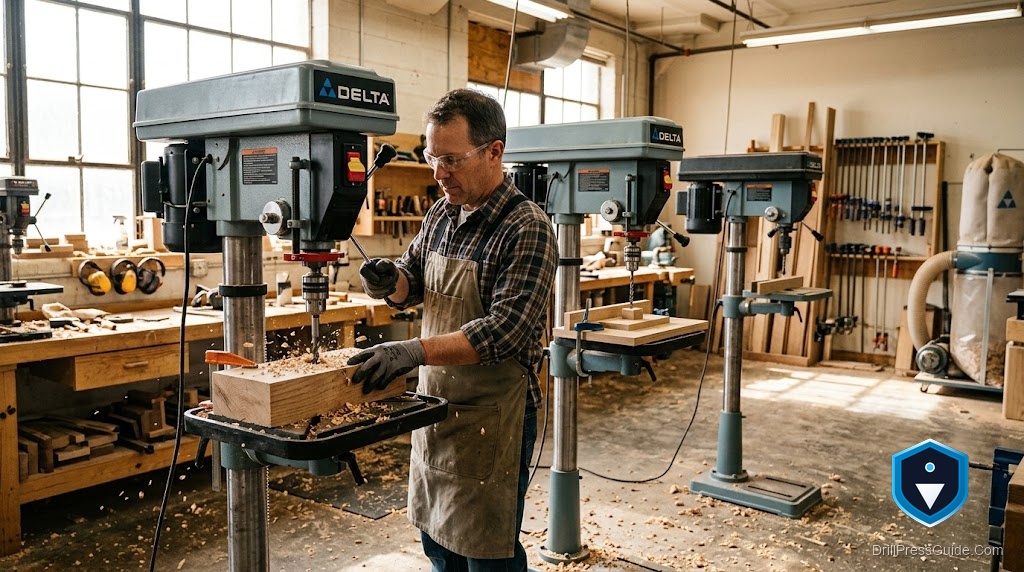
Delta is one of the most respected names in stationary shop machinery, and its floor drill presses are the kind of tools that outlast their owners. Search the lineup and you find machines like the 16-1/2-inch floor presses and the 17-965, full-height cast-iron presses built for serious woodworking and light metal. Whether you are buying new-old-stock, shopping used, or keeping one you already own, the useful thing is to understand how the floor lineup breaks down, what these machines do well, and how to support them. Here is that practical guide.
What a Delta floor drill press is
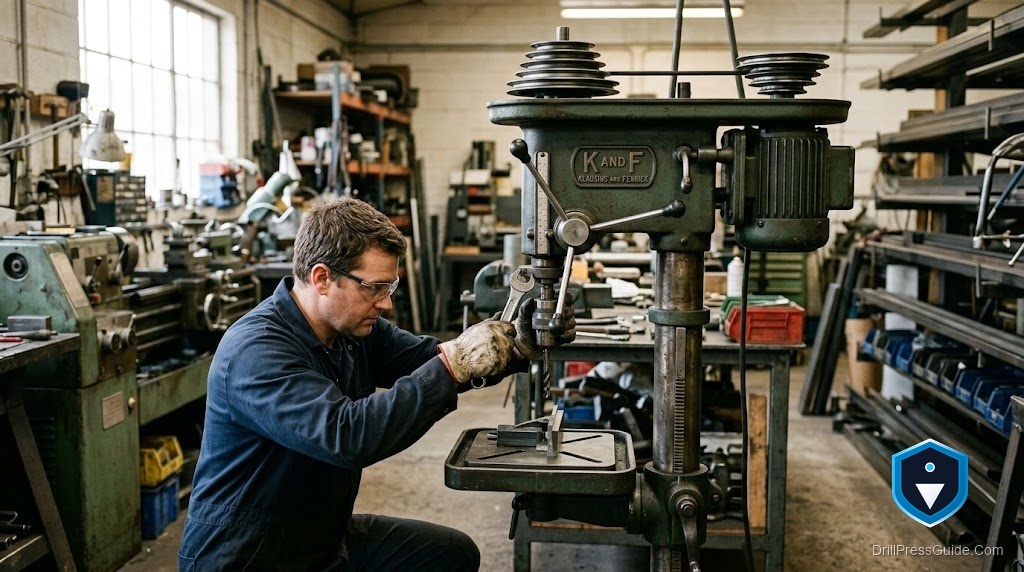
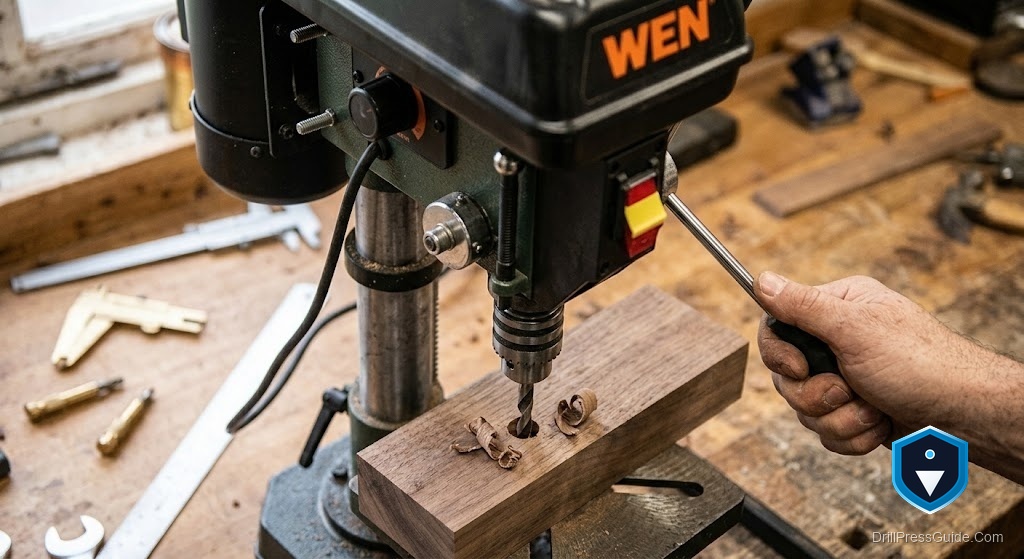
A Delta floor drill press is a full-height stationary machine built on the standard layout: an induction motor driving a stepped-pulley belt for multiple spindle speeds, a spindle with a keyed chuck, a quill with a return spring and travel for drilling, and a cast table that raises, tilts, and locks on a floor-length column. “Floor” means the column runs to the ground, giving more swing, more spindle travel, and greater rigidity than a benchtop unit. Delta machines are known for solid castings and serviceable design, and the lineup includes models such as the 16-1/2-inch floor presses and the 17-965. The chuck typically rides on a Morse-taper spindle, and the machines cover both boring in wood and drilling metal.
How the lineup breaks down
Delta’s floor presses sort mainly by swing:
- 14-inch floor models. The smaller end of the floor lineup, giving floor-press rigidity in a more compact machine.
- 16-1/2-inch floor presses. A popular mid-size, with generous swing for wide work and a broad speed range.
- The 17-965 and 17-inch class. Larger machines with more swing and capability, anchoring the serious end of the lineup.
Across the range, judge the specific machine by swing (spindle centerline to column, doubled), the number of spindle speeds, spindle travel, and motor rating. Read the model number (for example 17-965) off the plate, since it is the key to the manual and parts.
Where a Delta floor press fits
Let me be direct about the fit. A Delta floor press is an excellent choice for a serious woodworking or mixed shop that wants a main press to keep for decades: real swing for wide work, a broad speed range, and the rigidity a floor machine gives over a benchtop unit. Delta’s build quality and long parts history mean a sound example runs true for years and is worth restoring. What it is not is a heavy industrial metalworking machine for continuous production steel, so match it to serious woodworking and light-to-medium metal. Within that lane, a Delta floor press is about as good as a home or light-commercial shop needs.
Support and common service points
Because Delta has such a long history, support runs through Delta Machinery’s parts and manual service plus the wider parts-diagram and vintage-machine resources, and the failure points are standard: the V-belt and belt tension, the chuck and chuck key, the spindle return spring, ball bearings, the switch toggle, and the table clamp handle, raising handle, bracket, and alignment pin. Note the full model number, follow the manual’s grounding instructions and motor specifications, avoid undersized extension cords, and match the chuck by taper. A tired Delta floor press usually needs only routine parts to run like new.
Tooling and replacement parts
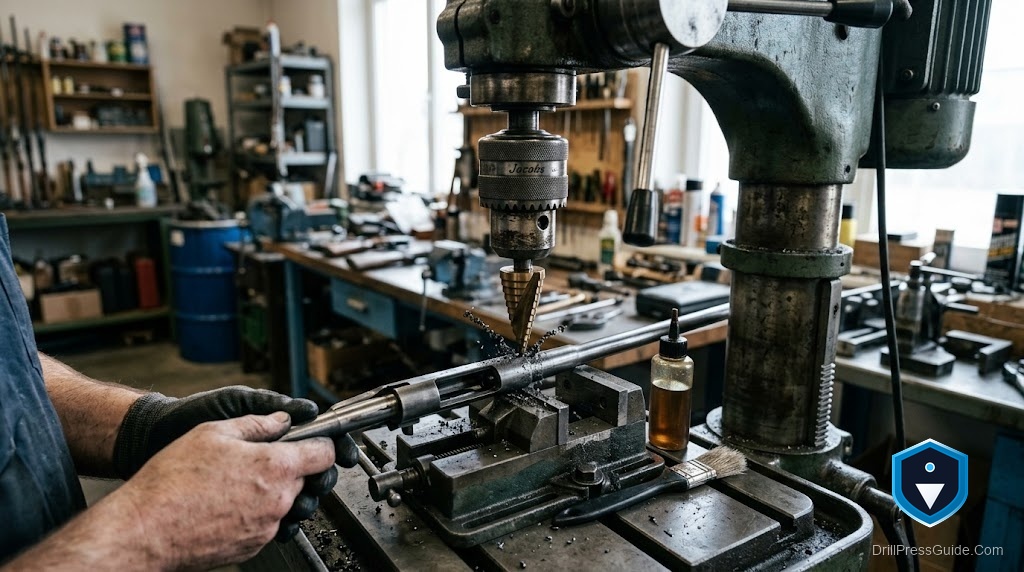
Keep a Delta floor press running with standard tooling. Fit a quality keyed drill chuck with the matching MT2 arbor if the original wears, keep a fresh drill press V-belt on the shelf, and fix a weak return with a drill press quill return spring. Add a solid drill press machine vise and keep a spare drill press chuck key. Confirm the taper by dropping the chuck before ordering an arbor, and match model-specific parts by the full number.
The verdict
The Delta floor drill press lineup is a set of full-height, cast-iron machines that make superb long-term main presses for a serious woodworking or mixed shop, and choosing within it is about swing: a 14-inch floor model for compact floor-press capability, a 16-1/2-inch press for generous mid-size swing, or the 17-965 and 17-inch class for the most capability. Match swing, spindle speeds, travel, and motor to your work, read the model number off the plate for parts, and lean on Delta’s long parts history and the vintage-machine community. Fit a good chuck, belt, and return spring, follow the grounding and motor instructions, and a Delta floor press runs true for decades. For heavy industrial production steel, a dedicated metalworking machine is the right tool instead.
Takeaways:
- Delta floor drill presses are full-height cast-iron machines giving more swing, travel, and rigidity than benchtop units.
- The lineup sorts by swing: 14-inch, 16-1/2-inch, and the 17-965 / 17-inch class.
- They excel as long-term main presses for serious woodworking and light-to-medium metal, not heavy industrial steel.
- Support runs through Delta by model number; service points are standard (belt, chuck, return spring, bearings, switch, table hardware).
FAQ
What Delta floor drill press models are there? The lineup includes 14-inch floor models, popular 16-1/2-inch presses, and the larger 17-965 and 17-inch class. Read the model number off the plate to identify yours.
Is a Delta floor drill press good? Yes. Delta floor presses are known for solid castings, serviceable design, and long parts history, making them excellent long-term main presses for a serious shop.
What is the Delta 17-965? A large Delta floor drill press in the 17-inch class, giving generous swing and capability for serious woodworking and light-to-medium metal work.
Where do I get Delta floor drill press parts? Through Delta Machinery’s parts and manual service by model number, plus the wider parts-diagram and vintage-machine resources. Service points are standard components.
What are common Delta floor press service points? The V-belt and tension, the chuck and key, the spindle return spring, ball bearings, the switch toggle, and the table clamp handle, raising handle, bracket, and alignment pin.
Can a Delta floor press drill metal? Yes, light-to-medium metal at appropriate speeds, as well as boring in wood. It is not built for heavy industrial continuous steel production.
What chuck and taper does it use? A keyed chuck on a Morse taper (often MT2). Confirm the taper by removing the chuck before ordering a replacement arbor.
References
- Delta Machinery, floor drill press product line, manuals, and parts: https://www.deltamachinery.com/
- Delta Machinery, drill press parts lookup by model number: https://www.deltamachinery.com/support
- VintageMachinery.org, Delta drill press manuals and identification: http://vintagemachinery.org/mfgindex/detail.aspx?id=207