Illinois Industrial Tool Drill Press: What It Is, Where It Fits, and What to Check
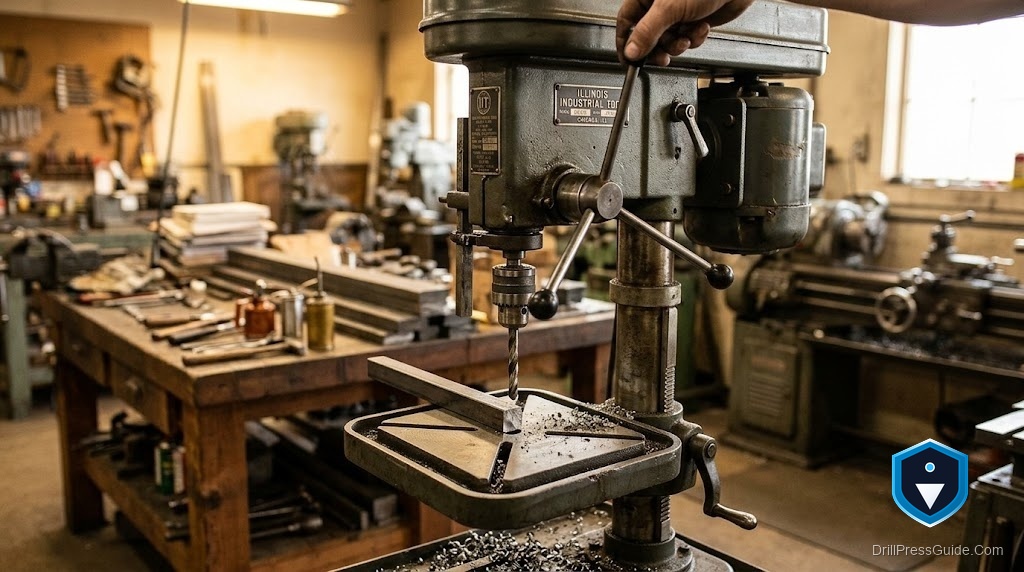
A drill press wearing the Illinois Industrial Tool name raises the same practical questions as any tool sold under a brand you do not see every day: what is it, who stands behind it, and how would I keep it running? These are fair questions, and the answer, as with most drilling equipment, lies less in the badge and more in the machine itself. Whether you are eyeing one used or setting up one you already have, knowing what to check turns uncertainty into a confident decision.
An Illinois Industrial Tool drill press is a stationary drilling machine sold under the Illinois Industrial Tool name, typically a bench or floor model aimed at general shop drilling. As with many brands in this segment, the machine may be produced by or for the company under its name, so the badge indicates a seller and a market position, and the machine’s actual condition and specifications determine its quality and how you maintain it.
Short answer: judge the machine, not the badge. An Illinois Industrial Tool drill press is worth having if the spindle runs true, the motor is sound, and the wear parts are standard or available. Inspect the spindle, quill, motor, table, and column, confirm the specs match your work, and treat the brand as background rather than a guarantee.
Why the machine matters more than the name
In the broad middle of the drill-press market, many machines are built to similar patterns and sold under various brand names, so the label alone rarely tells you the quality of a specific unit. That has a practical upside: maintenance usually relies on standard components matched by measurement rather than a brand-only parts catalog. So instead of trying to decode the brand, measure the machine, its spindle taper, its dimensions, and the condition of its moving parts decide both whether it is a good buy and how you will keep it going.
The checks that decide quality
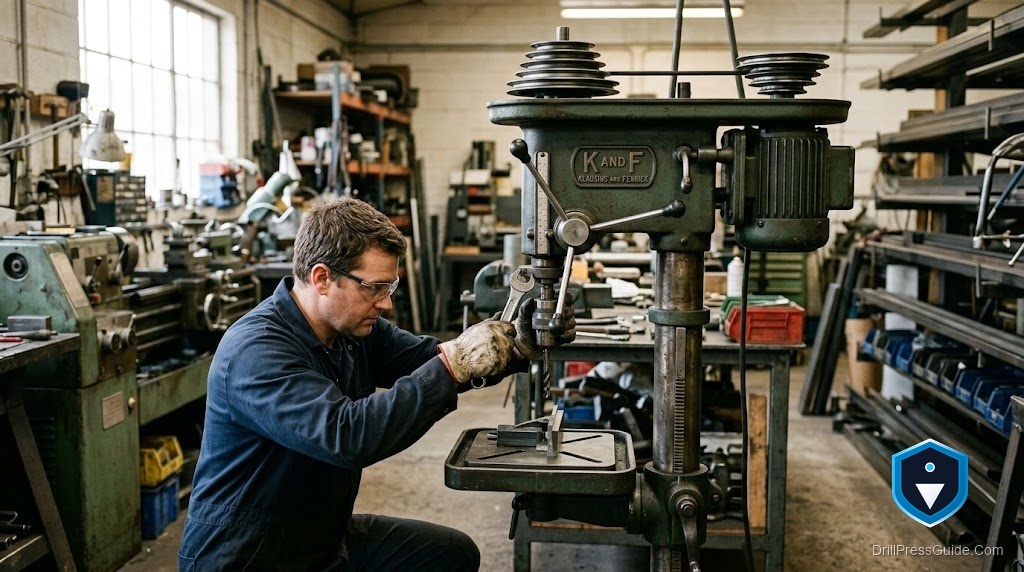
Spindle runout comes first. Chuck a straight bit, spin it, and watch for wobble that signals worn bearings or a bent spindle, the costliest fault. Pull the quill through its travel and feel for smoothness and side play. The motor should start and run without smoke, without humming while failing to turn, and without bogging under a light load, with a sound switch and cord. The table should raise, lower, tilt if designed to, and lock without slop, and the column should be free of deep rust or scoring that would keep the head from clamping square. Spin the pulleys and inspect the belt. A machine that clears these deserves consideration; one that fails at the spindle usually does not.
Matching specs to your work
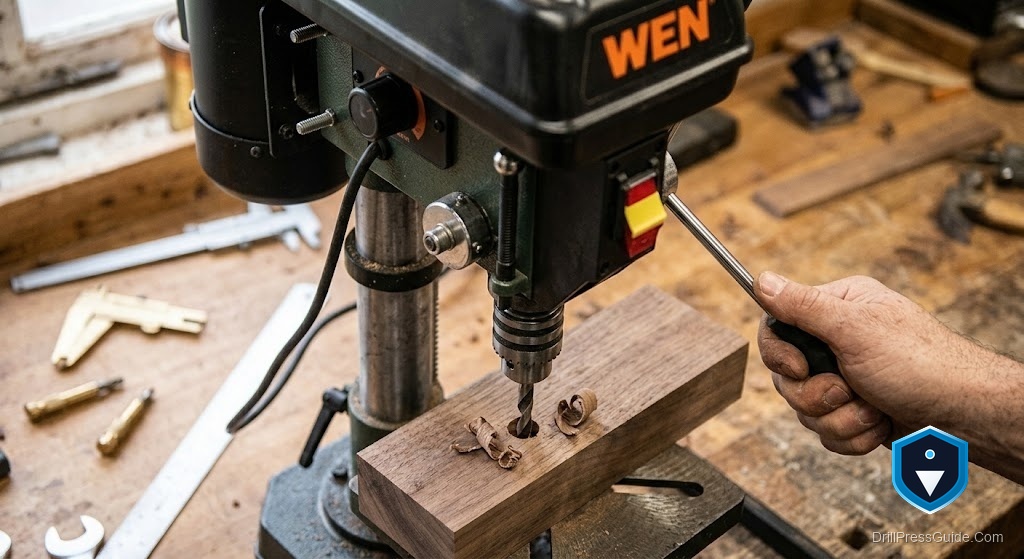
Beyond condition, confirm the machine fits what you drill. Swing sets the widest piece you can center, spindle travel the depth in one plunge, chuck capacity the largest bit, and the speed range and how you change it, belt steps or a dial, how easily you match RPM to bit size. Motor amperage predicts how it holds speed under load. A general shop machine like this suits woodworking and light-to-moderate metal work well; for heavy, repeated steel drilling, confirm the motor and rigidity are genuinely up to it. Buy for the work you actually do, not the work you imagine.
Keeping one running
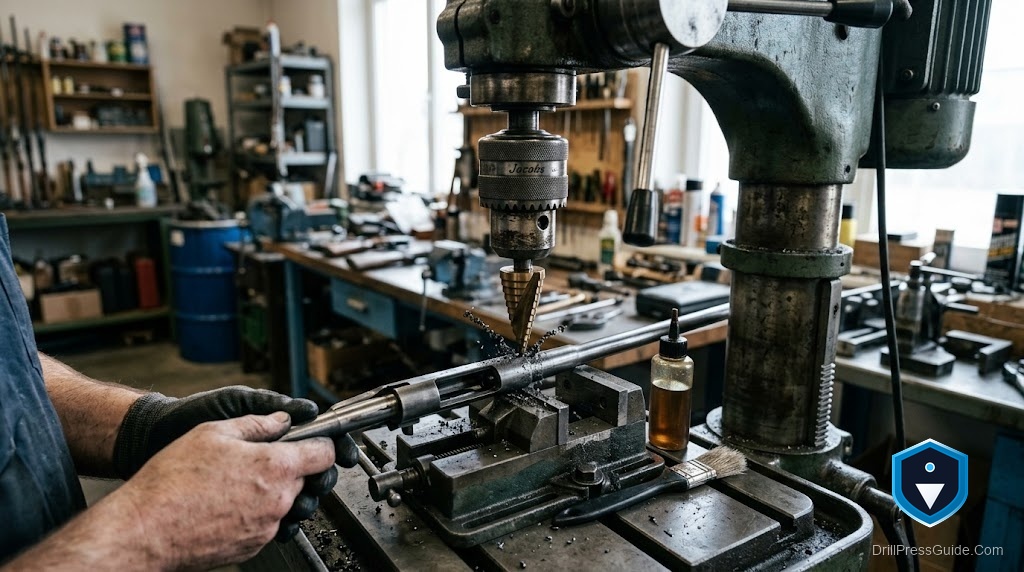
Rely on standard parts. Bearings match by the code on the race at any bearing supplier. Belts match by length and profile. A chuck matches by capacity and the spindle taper, often a Morse or Jacobs taper, so confirm the taper before ordering. Switches, cords, and springs match by rating and size. Anything truly specific to the machine, a casting or a proprietary feed part, usually comes from a used donor machine or a machine shop. Most wear items are standard and inexpensive, which makes these general-market machines practical to maintain as long as the core, spindle and casting, is sound.
Conclusion
An Illinois Industrial Tool drill press is a judge-the-machine purchase. Because it sits in the general market where machines are built to common patterns and sold under various names, the badge tells you little, while the spindle, quill, motor, table, and column tell you everything. Check runout and quill travel first, then the motor and the rest, confirm the swing, travel, chuck, and speed range fit your work, and plan to maintain it with standard parts matched by measurement. A sound machine of this type is a practical, maintainable shop tool; a worn-out core is a project a new press would beat. Buy the condition, not the label.
Frequently asked questions
Who makes Illinois Industrial Tool drill presses? They are sold under the Illinois Industrial Tool name in the general drill-press market, where machines are often built to common patterns. The badge reflects a seller more than a single unique factory.
Are these good drill presses? Quality depends on the specific machine. Judge the spindle, motor, and wear parts and confirm the specs fit your work, rather than assuming anything from the name.
What should I check before buying one used? Spindle runout and quill play first, then the motor, table, column, and belt. Worn spindle bearings or a bent spindle are the costliest faults to repair.
How do I find replacement parts? Match standard parts by measurement: bearings by the code on the race, belts by length and profile, and a chuck by capacity and spindle taper. Proprietary parts usually need a donor machine.
What work is this kind of machine best for? General shop drilling, woodworking, and light-to-moderate metal work. For heavy, repeated steel drilling, confirm the motor amperage and rigidity are genuinely up to the task.
What spindle taper do these use? Commonly a Morse or Jacobs taper depending on the model. Confirm the exact taper before buying a chuck or arbor, since a mismatch will not run true.
References
- Vintage Machinery, general machine documentation, vintagemachinery.org
- OSHA, Machine Guarding eTool: Drill Presses, osha.gov