Understanding a Heavy Duty Drill Press Machine Before You Buy or Set One Up
“Heavy duty” is one of those phrases stamped on everything from real industrial iron to lightweight machines hoping to sound tougher than they are. When it comes to a drill press, the label alone means nothing; what makes a machine genuinely heavy duty is measurable, and knowing what those measures are keeps you from paying for a word instead of a capability. Whether you are drilling thick steel daily or just want a machine that will not flinch at a big Forstner bit, the specs tell the real story.
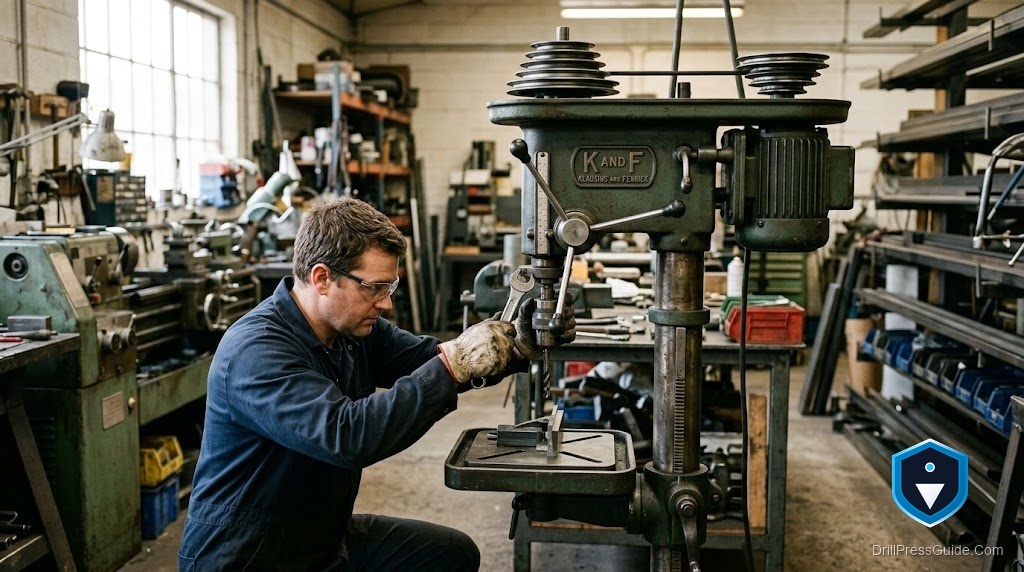
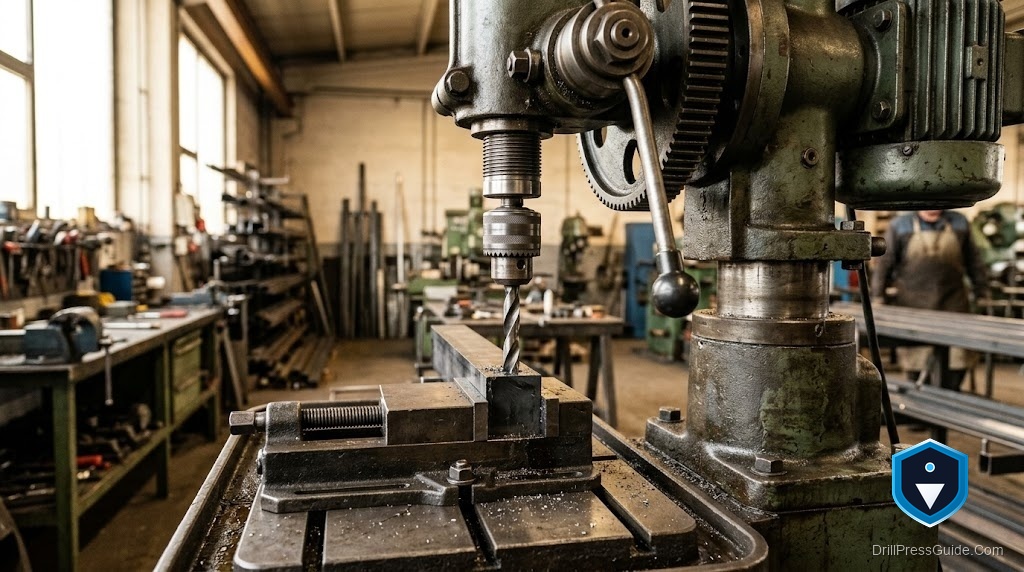
A heavy duty drill press machine is a stationary drilling machine built for demanding, repeated drilling, characterized by a rigid cast iron frame, a strong motor, ample spindle travel, and a sturdy spindle and bearings that resist flex under load. The term describes capability, sustained power and rigidity for large bits and hard materials, rather than any single size or style, so both large benchtop and floor machines can qualify if the fundamentals are there.
Short answer: judge “heavy duty” by the numbers, not the label. Look for a strong amperage-rated motor, generous spindle travel, a large chuck capacity, a rigid cast iron frame with a solid table, and quality bearings. A machine with those genuinely handles heavy work; one that only wears the label on the box does not.
What actually makes a machine heavy duty
Rigidity is the foundation. A heavy cast iron frame and column resist the flex and vibration that make holes wander and cause chatter under a big bit, which is why real heavy-duty machines are heavy. Motor power comes next, read by amperage rather than an inflated horsepower figure, because a strong motor holds speed when a large bit or dense metal loads it down. Spindle travel and a substantial spindle with good bearings let the machine drill deep and stay true under thrust. Chuck capacity caps the largest bit you can run. Together these define capability; a machine missing any of them will disappoint on heavy work no matter what the label claims.
Matching the machine to real work
Be specific about what “heavy” means for you. Drilling large-diameter holes, working thick steel, running hole saws, or drilling all day are the tasks that demand genuine heavy-duty capability, and they reward motor power, rigidity, and travel. Occasional holes in wood and light metal do not require an industrial machine, and buying one for that is spending on capacity you will not use. Define your largest routine hole, your hardest material, and your drilling frequency, and let those set how much machine you actually need. Over-buying wastes money and space; under-buying leaves you fighting a machine that bogs and flexes.
A capable machine to consider
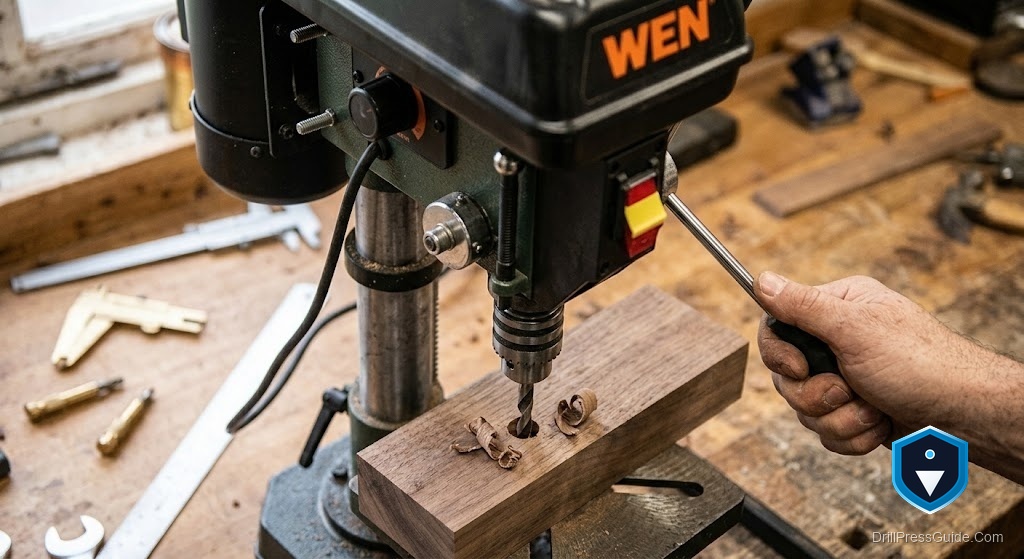
For a home or small shop that wants real capability without a full floor machine, the WEN 4214T 12-inch variable speed drill press is a strong benchtop option, with variable speed from 580 to 3200 RPM, 3-1/8 inches of spindle travel, a 5/8-inch chuck, and a cast iron table, so it handles large bits and mixed materials well. Its honest caveats are an 85-pound two-person lift and a laser most owners ignore. For genuinely industrial demands, thick steel all day, a full floor machine with a larger motor and more travel is the better fit, and there the deciding specs are the same: motor amperage, rigidity, travel, and chuck capacity. Compare any candidate on those numbers rather than on the words on the carton.
Setting up and using it
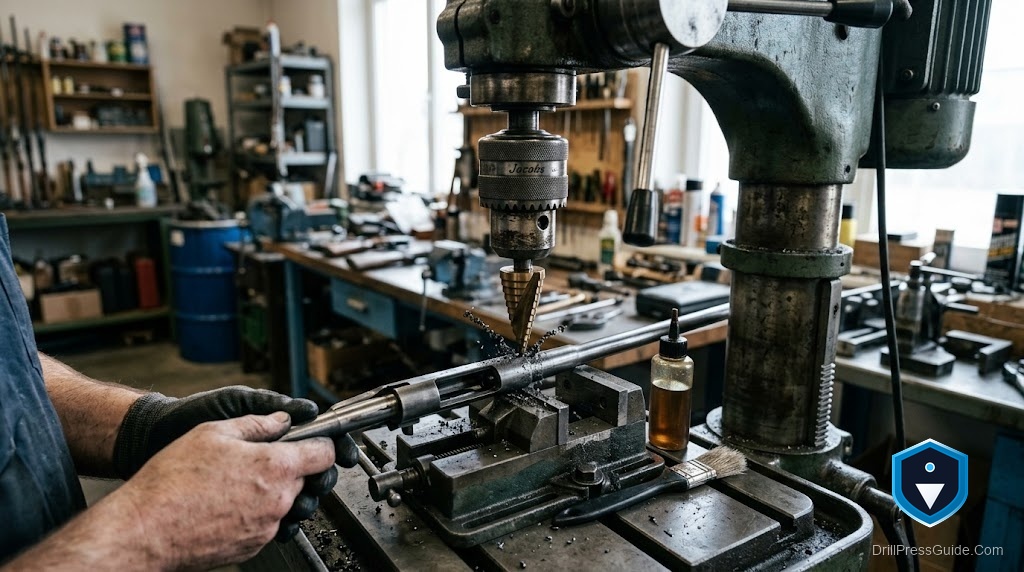
Bolt the machine to a solid bench or the floor so it cannot move under heavy load, because rigidity only helps if the base is anchored. Level it and square the table to the spindle. Match speed to the bit and material, slow for large bits and steel with cutting fluid, faster for small bits in wood, and use the machine’s power to let the bit cut rather than forcing the feed. Clamp the workpiece securely, since a heavy-duty machine has enough torque to spin a hand-held piece dangerously. Guard the point of operation and wear eye protection. A true heavy-duty machine rewards good setup with clean, straight holes in demanding material.
Conclusion
A heavy duty drill press machine is defined by capability, not by the words on the box: a rigid cast iron frame, a strong amperage-rated motor, ample spindle travel, a large chuck, and quality bearings that hold true under load. Match that capability to your real work, your largest routine hole, hardest material, and drilling frequency, and you avoid both over-buying capacity you will not use and under-buying a machine that bogs. A capable benchtop machine like the WEN 4214T covers a lot of demanding home-shop work, while genuinely industrial drilling calls for a full floor machine judged on the same specs. Anchor it, set it up square, clamp your work, and a real heavy-duty press earns its name every time you use it.
Frequently asked questions
What makes a drill press heavy duty? Measurable capability: a rigid cast iron frame, a strong amperage-rated motor, ample spindle travel, a large chuck, and quality bearings that resist flex under load. The label alone means nothing.
Do I need a heavy duty drill press? Only if you drill large holes, thick steel, run hole saws, or drill frequently. For occasional holes in wood and light metal, a standard machine is enough.
How do I judge motor power? By amperage rather than an inflated horsepower claim, because amperage better predicts how the machine holds speed when a big bit or dense material loads it down.
Is a benchtop machine ever heavy duty? Yes, if it has the fundamentals. A large benchtop press with a strong motor, good travel, a 5/8-inch chuck, and a rigid cast iron frame handles genuinely demanding work.
Why does rigidity matter so much? A heavy, rigid frame resists the flex and vibration that make holes wander and cause chatter under a big bit. Rigidity is what turns motor power into accurate, clean holes.
Bench-mounted or floor-mounted for heavy work? Either can be heavy duty. Choose a floor machine for the tallest, widest, and heaviest work and the most rigidity; a large benchtop machine suffices for demanding but smaller work.
References
- WEN Products, drill press specifications, wenproducts.com
- OSHA, Machine Guarding eTool: Drill Presses, osha.gov