Fleetwood Heavy Duty Drill Press: How to Evaluate One
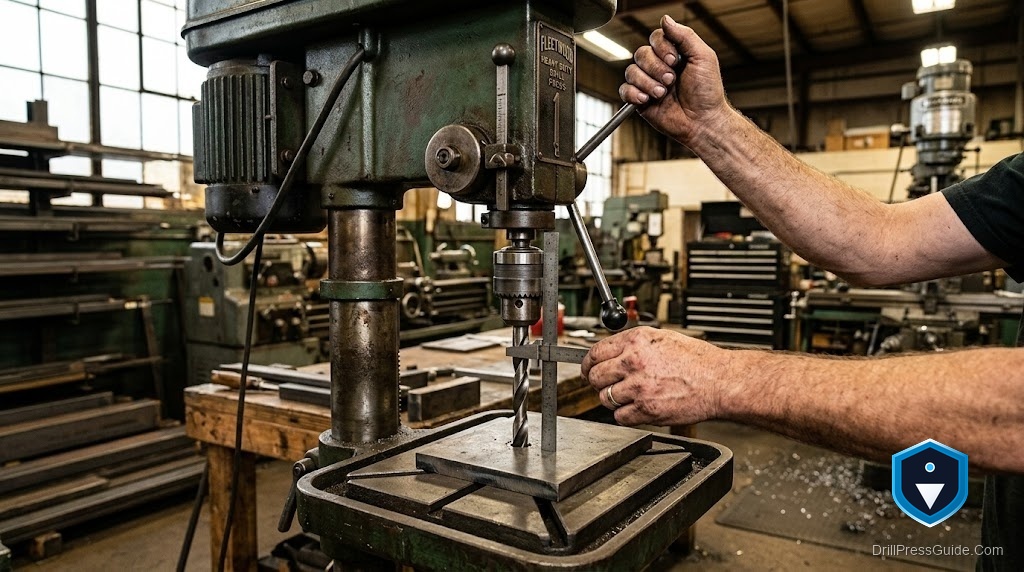
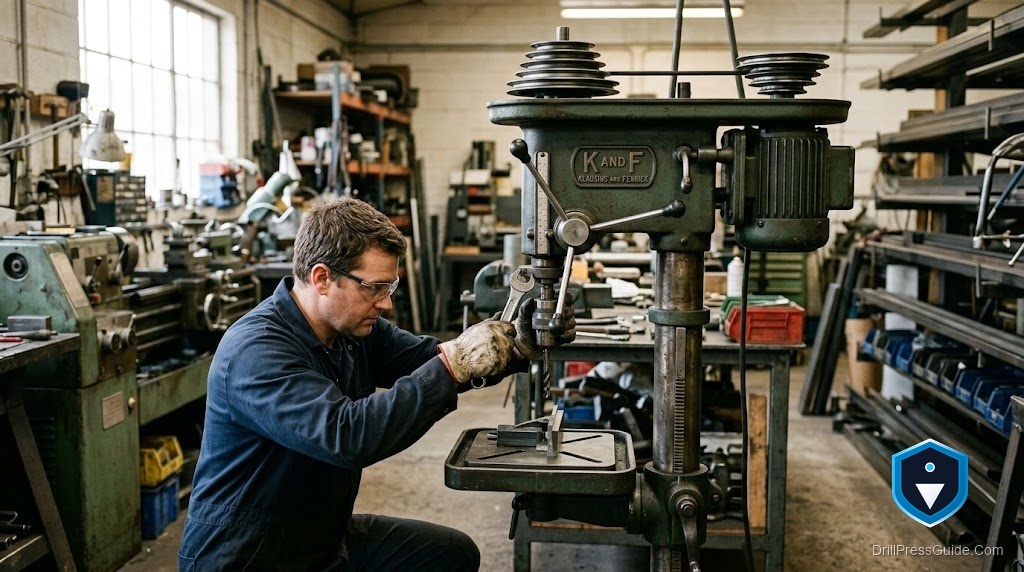
A Fleetwood heavy duty drill press is the sort of machine you meet secondhand: solid, cast iron, clearly built for real work, and wearing a name that is more familiar from old catalogs than from today’s tool aisle. The question is always whether it is a smart pickup or a lurking headache. With distributor-branded machines like these, the honest answer never comes from the badge. It comes from what you find when you inspect the spindle, the motor, and the wear parts, because those tell the true story the name cannot.
A Fleetwood heavy duty drill press is a stationary drilling machine sold under the Fleetwood name and built for heavy-duty use, generally a larger bench or floor model made for repeated drilling in wood and metal. As with many tools sold under importer and distributor names, the same machines were often produced by various manufacturers, which shapes both how you assess quality and how you find parts.
Short answer: evaluate the machine, not the label. A Fleetwood heavy duty drill press is worth owning if the spindle runs true, the motor is strong, and the wear parts are standard or obtainable. Because the badge is a distributor name rather than one factory’s mark, the condition of the spindle, bearings, motor, and table tells you what the name never will.
Why the name only starts the conversation
Many mid-market and industrial drill presses came from a small number of factories and were then sold under various names by importers and distributors. “Fleetwood” is that kind of name, a seller’s badge rather than the fingerprint of a single maker. Two consequences follow. First, quality depends on the era and the actual factory behind a given machine, so the badge alone tells you little. Second, you match parts by measurement and by the machine’s own dimensions far more dependably than through any brand-specific catalog, which may not exist. Treat the machine itself, not its name, as the evidence.
The inspection that tells the truth
Start with the spindle and quill. Chuck a straight bit, spin it by hand, and watch for wobble; runout means worn bearings or a bent spindle, and that is the costliest fault on any drill press. Pull the quill through its travel and feel for smoothness and side play. Then the motor: it should run without smoke, without humming while stalled, and without bogging under light load, with a sound switch and cord. Next the table and column: the table should raise, lower, and lock without slop, and the column should be free of deep rust or scoring that stops the head clamping true. Finally check the pulleys and belt. A machine that passes these is worth restoring; one that fails on the spindle usually is not.
Parts, the standard-component way
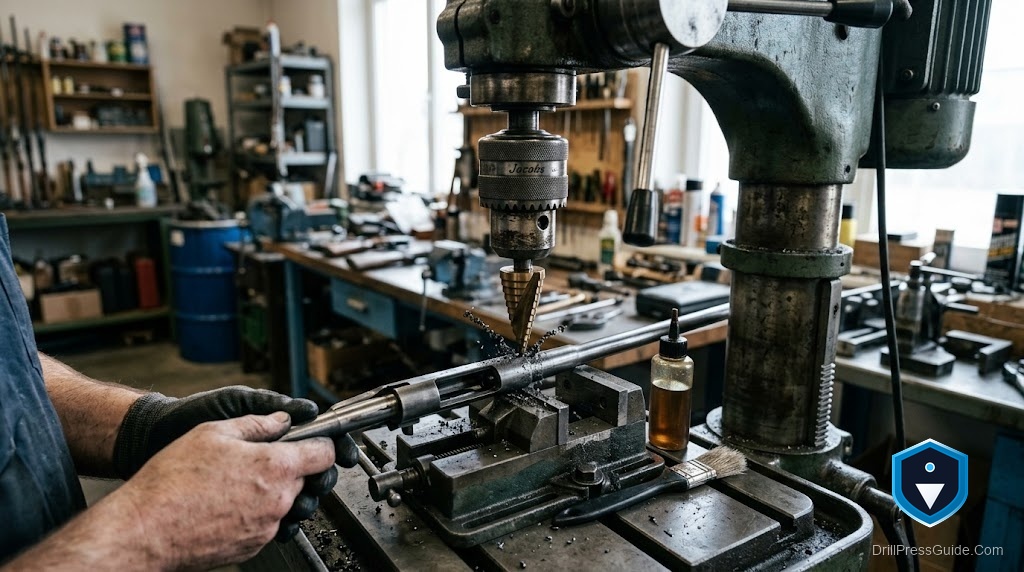
Because there is likely no factory parts line, lean on standard components. Bearings carry a code on the race that any bearing house can match. V-belts match by length and profile. A chuck matches by capacity and spindle taper, often a Morse taper on heavier machines, so confirm the taper before buying. Switches and springs match by dimension and rating. For anything genuinely machine-specific, a casting or a table rack, a used donor machine or a machine shop is the practical answer. The encouraging part with these old heavy-duty machines is that most of what wears is standard and cheap; the risk is the occasional part only an identical machine can provide.
Restore or replace: the honest math
Do the arithmetic before you commit. If a Fleetwood machine needs a spindle, bearings, a motor, and a chuck all at once, you are rebuilding a machine of unknown pedigree, and a new, warrantied press with variable speed and a clean motor may serve you better for comparable effort and outlay. Restore one when it is fundamentally sound and only needs wear items, because then you keep heavy cast iron and rigidity that budget new machines cannot match. Walk away when the core, spindle and casting, is compromised, since those are precisely the parts you cannot easily replace.
Conclusion
A Fleetwood heavy duty drill press is a judge-the-machine purchase, not a badge purchase. Because these were distributor-branded tools built by various makers, the name promises little and the condition proves everything. Inspect the spindle and quill first, then the motor, table, column, and belt, and source wear parts as standard components matched by measurement. Restore a sound machine and you gain rigid cast iron worth keeping; walk away from a worn-out core and you spare yourself a rebuild a new machine would beat. Buy the condition, not the label, and an old Fleetwood press can earn its place for decades more.
Frequently asked questions
Who made Fleetwood heavy duty drill presses? They were sold under a distributor and importer name, and the same machines were often produced by various factories for several brands. Quality varies with the era and actual maker.
Are Fleetwood drill presses good? They can be, if the spindle runs true and the motor and wear parts are sound. Because it is a distributor badge, judge the specific machine’s condition rather than the name.
How do I find parts for one? Match standard components by measurement: bearings by the code on the race, belts by length and profile, a chuck by capacity and spindle taper. Machine-specific castings usually need a donor machine.
What matters most to check? Spindle runout and quill play. Worn spindle bearings or a bent spindle are the costliest faults and the hardest to fix, so check them first.
What spindle taper is common on these? Heavier machines often use a Morse taper. Confirm the exact taper before buying a chuck or arbor, since a mismatch will not run true.
Is it better to restore one or buy new? Restore a fundamentally sound machine that needs only wear items. If the spindle, bearings, motor, and chuck all need replacing at once, a new warrantied press is often smarter.
References
- Vintage Machinery, manufacturer histories and machine documentation, vintagemachinery.org
- OSHA, Machine Guarding eTool: Drill Presses, osha.gov