Benchtop or Floor Drill Press: How to Decide
It is one of the most common crossroads in kitting out a shop: you know you want a drill press, but do you get the compact one that sits on the bench or the tall one that stands on the floor? Plenty of people overbuy a floor machine that spends its life half-idle, and plenty of others outgrow a benchtop model within a year. The good news is that the decision is not really about which is better in the abstract; it is about matching the machine to the work you actually do and the space you actually have.
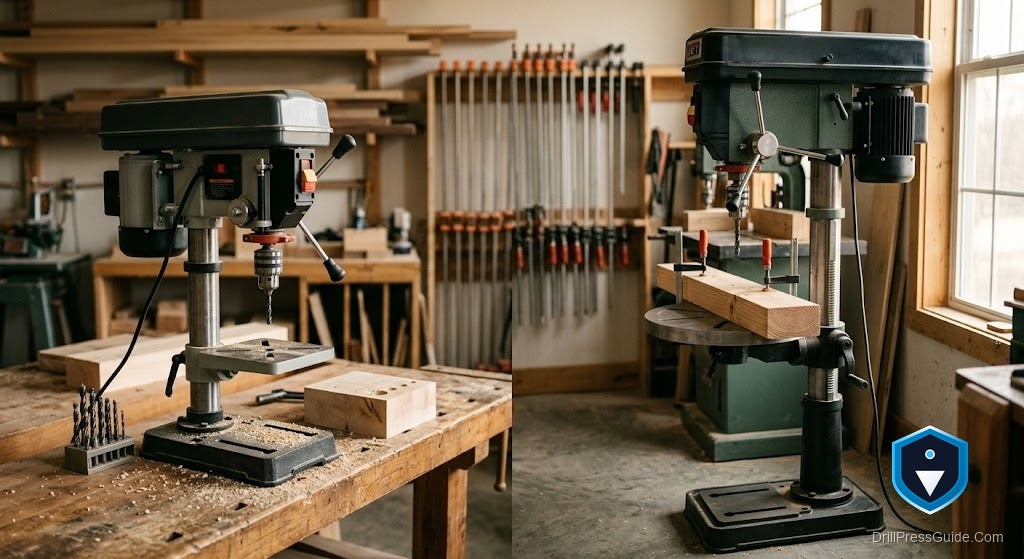
A benchtop drill press mounts on a workbench and is compact and lighter, while a floor drill press stands on the floor with a tall column, offering greater height capacity, more power, longer spindle travel, and a bigger table. The core difference is size and capacity: the floor model handles taller and heavier work, and the benchtop model saves space and money.
Short answer: choose a benchtop press if your work is small to medium, occasional, and space is tight, and choose a floor press if you regularly drill tall or heavy workpieces, drill often, or want maximum rigidity and power. The deciding factors are the size of your work, how much you drill, and how much floor and money you can commit.
What a benchtop press does well
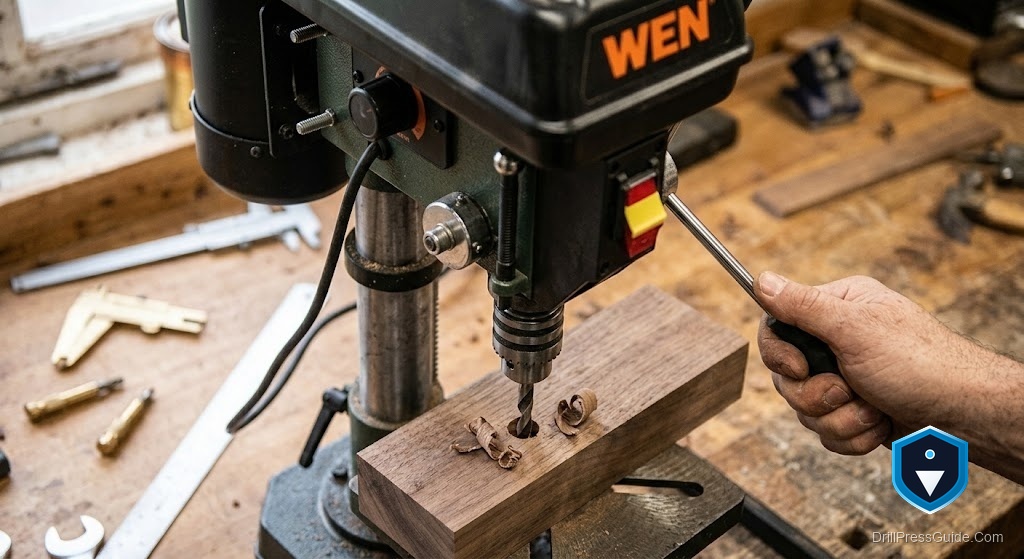
A benchtop drill press covers the large majority of home and hobby drilling. It handles small to medium workpieces, takes up no floor space because it lives on a bench, costs less, and can even be moved or stored if needed. For woodworking, light metal, and general shop tasks, a good benchtop machine drills just as accurately as a floor model; accuracy is not what you sacrifice. What you give up is height capacity, some power, and a bit of rigidity on the most demanding cuts. For someone whose work fits within its swing and travel, none of that matters, and the space and cost savings are real.
What a floor press adds
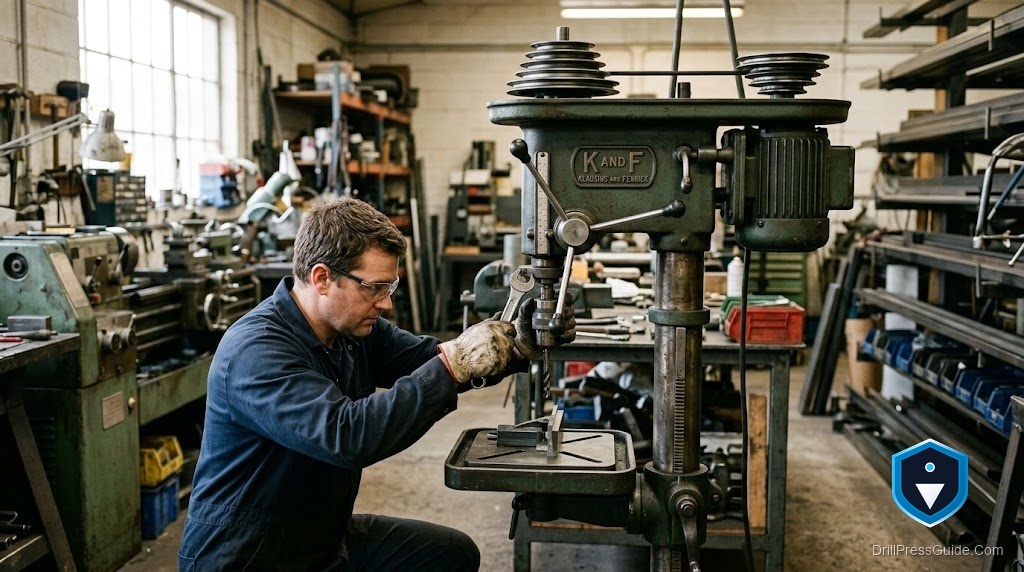
A floor drill press earns its footprint on bigger, heavier, and more frequent work. The tall column gives far more room between chuck and table for tall workpieces, and you can drill large items on the base. Floor models generally bring stronger motors, more speed steps, longer spindle travel, and a heavier, more rigid build that shrugs off vibration on large bits and thick stock. If your projects keep exceeding a benchtop machine’s height or bogging its motor, that added capacity is exactly the relief you need. The cost is permanent floor space, more money, the need to level and often secure the machine, and no portability.
The questions that actually decide it
Ask three things. First, how big is your work? If you routinely handle tall assemblies or long stock, lean floor; if it is small parts and boards, benchtop is plenty. Second, how often and how hard do you drill? Frequent or heavy drilling rewards a floor machine’s power and rigidity, while occasional holes do not. Third, what can your space and budget host? A cramped shop or a tight budget points to benchtop, while a dedicated shop with floor to spare can absorb a floor model. Answer these honestly and the machine almost picks itself, without the guesswork of comparing feature lists.
A few example machines
Most benchtop options you will meet look like the WEN 4208T 8-inch five-speed benchtop drill press for tight benches, or the larger-capacity WEN 4214T 12-inch variable-speed benchtop drill press when you want more swing and dial-in speed without going to a floor machine. A middle option like the Genesis GDP1005A 10-inch drill press shows how much capacity a benchtop machine can offer before a floor model becomes necessary. If even a 12-inch benchtop press keeps running out of height or power for your work, that is the clearest signal that a floor press is the right next step rather than another benchtop.
Conclusion
Deciding between a benchtop or floor drill press is not about which is superior; it is about fit. A benchtop machine wins on space, cost, and portability and drills small to medium work just as accurately, so it suits most home and hobby shops. A floor machine wins on height capacity, power, and rigidity, so it suits tall, heavy, or frequent drilling in a shop with room to spare. Ask how big your work is, how much you drill, and what your space and budget allow, and the answer becomes clear. Buy the machine your work needs, not the biggest one on offer, and you will not regret either the footprint or the spend.
Frequently asked questions
Is a floor drill press more accurate than a benchtop one? Not inherently. A good benchtop machine drills just as accurately for work within its capacity. The floor model adds height, power, and rigidity, not better precision on small parts.
When should I choose a benchtop drill press? When your work is small to medium, your drilling is occasional, and space or budget is tight. It covers most home and hobby tasks while saving floor space and money.
When is a floor drill press worth it? When you regularly drill tall or heavy workpieces, drill frequently, or want maximum rigidity and power, and you have the floor space and budget to commit to it.
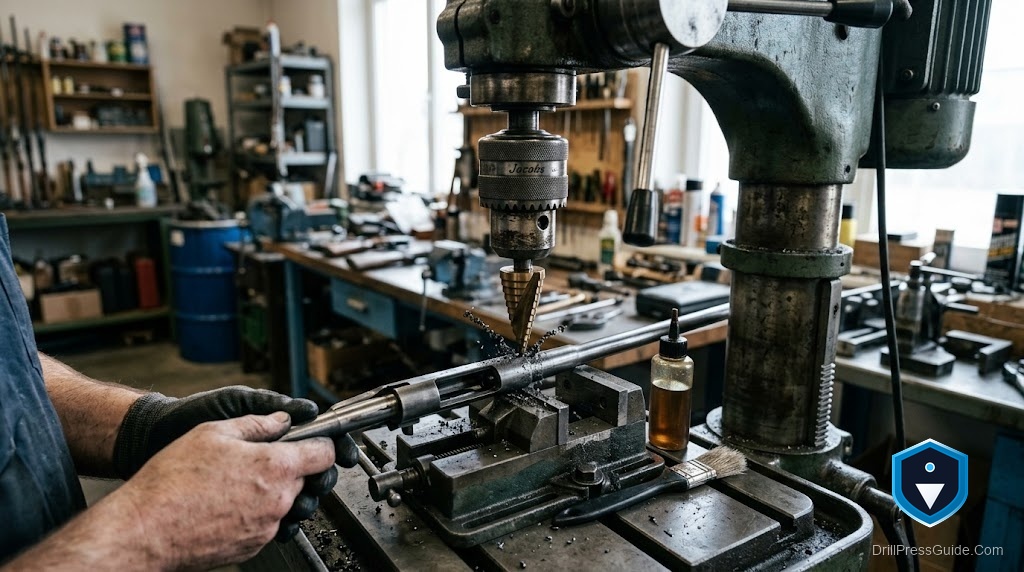
Can a benchtop press handle metal? Yes, light and moderate metal drilling, especially with the right speed and bits. Heavy, repeated metal drilling favors the power and rigidity of a floor machine.
Does a floor press take much more space? Yes. It claims a permanent floor footprint and stands tall and heavy, so it cannot be stored away like a benchtop machine. A cramped shop feels the difference immediately.
How do I know if I have outgrown a benchtop press? When your work regularly exceeds its height between chuck and table, or the motor bogs on the holes you need, that is the signal to move up to a floor machine.
References
- OSHA, Machine Guarding eTool: Drill Presses, osha.gov
- WEN Products, drill press documentation, wenproducts.com