Heavy Duty Floor Drill Press: Capacity, Setup, and Everyday Use
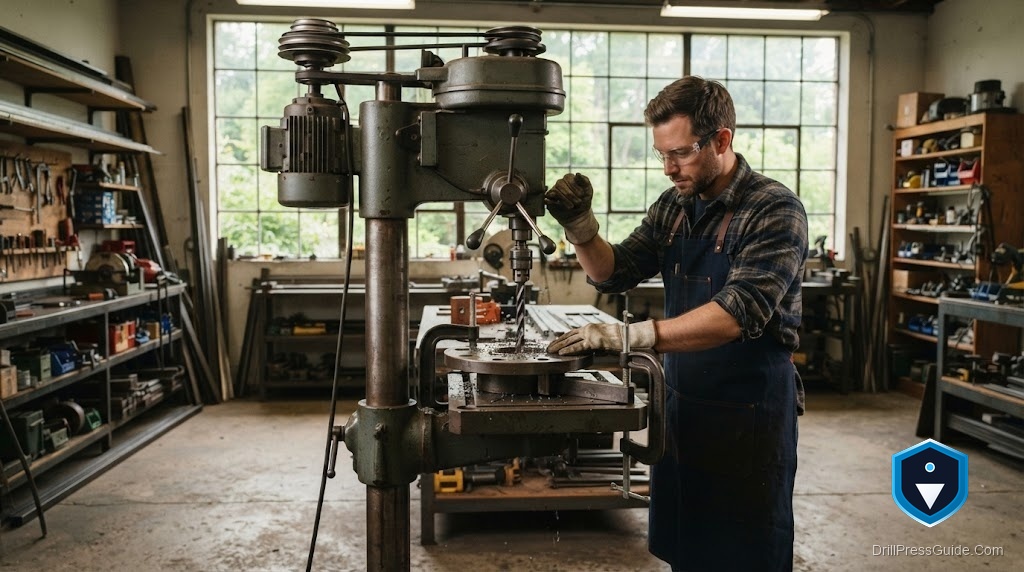
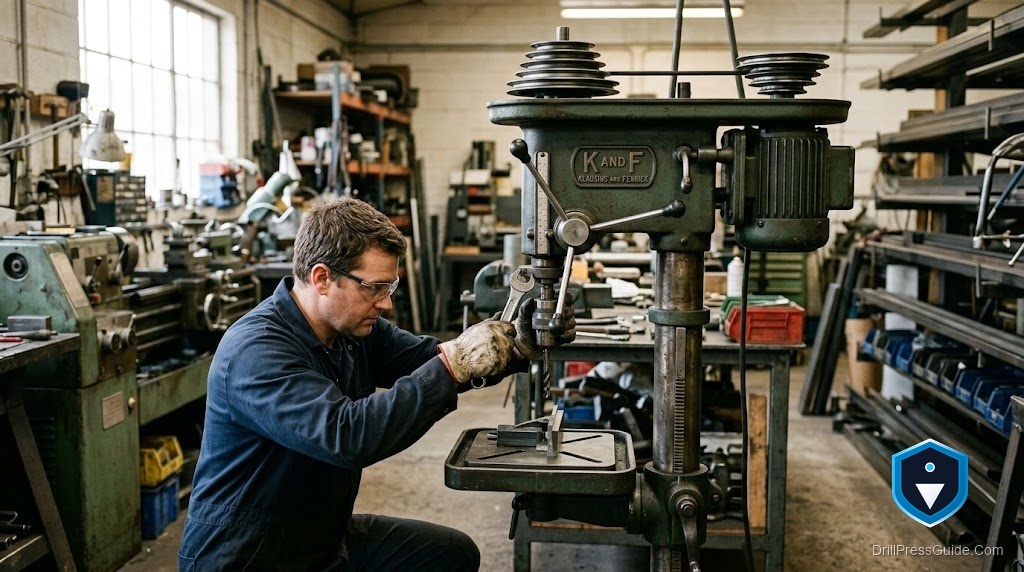
A heavy duty floor drill press is the machine you buy when a standard floor model still feels like a constraint. It is larger, more powerful, and built for continuous use in shops where the drill press is not a backup tool but a central workstation. These machines have motors of one horsepower or more, swings of fifteen to twenty inches, and columns that look like they came from a bridge. They are not for everyone. But for the shop that needs them, nothing else works.
I have used heavy duty floor presses in production woodworking shops, metal fabrication garages, and machine shops where the drill press runs for hours at a time. The good ones are invisible. You set the speed, lower the bit, and the hole is straight and clean, even in tough materials. The bad ones are expensive mistakes that vibrate, overheat, and need constant adjustment. The difference is not luck. It is understanding what heavy duty actually means and how to set the machine up for the work you do.
What Heavy Duty Means in Real Terms
Heavy duty is not a marketing label. It is a set of physical characteristics that separate a production machine from a home shop tool. The motor is one horsepower or larger, often three-phase in industrial settings, though single-phase models are available for home and small commercial shops. The swing is fifteen to twenty inches or more, which means you can drill the center of a workpiece up to thirty to forty inches wide. The column is thick steel, often two and a half inches in diameter or more, with a polished finish that lets the table move smoothly under heavy loads.
The table is large, typically twelve to fourteen inches square, cast iron, and equipped with a robust rack-and-pinion mechanism. The headstock is heavy, with large bearings and a spindle that handles high side loads without deflection. The base is massive, often with pre-drilled holes for bolting to the floor. The machine is not moving once it is in place, and it is not supposed to.
Motor Power and Electrical Requirements
A one-horsepower motor is the starting point for heavy duty work. Two horsepower is common in industrial models. The key is not just the power but the duty cycle. A heavy duty motor is rated for continuous operation, meaning it can run for hours without overheating. Home shop motors are rated for intermittent duty, meaning they need breaks to cool down. If you run a home shop motor continuously, it will overheat and the bearings will fail.
Most heavy duty single-phase presses run on standard two hundred twenty or one hundred ten volt circuits. Three-phase models are common in industrial shops and require a three-phase supply or a phase converter. Check your electrical supply before you buy. A three-phase machine on a single-phase circuit is a paperweight.
Speed Range and Control
Heavy duty presses usually have a wide speed range, from one hundred RPM to three thousand RPM or more. The low end is critical for large bits and tough materials. A heavy duty press should be able to reach one hundred to two hundred RPM for large hole saws in steel or massive Forstner bits in hardwood. The high end is for small bits and fast production drilling in soft materials.
Variable speed is common on heavy duty models, often with a mechanical gearbox or an electronic drive. The gearbox is more reliable but less precise. The electronic drive is more precise but more complex and prone to failure. For a production shop, a mechanical variable speed with a digital readout is the sweet spot. It gives you the range and the reliability without the delicate electronics.
The Table and Column
The table on a heavy duty press is a work surface, not just a support. It should be large enough to hold the workpiece without overhang, rigid enough to resist deflection under heavy feed pressure, and equipped with T-slots or tracks for clamps and fixtures. A table that is too small or too thin will flex, and the hole will wander. A table that does not have fixture mounting options limits your productivity.
The column is the backbone. It should be thick steel, polished or ground, and straight. A bent or rough column makes the table bind and the headstock wobble. Check the column runout by mounting a dial indicator on the table and rotating the headstock. The reading should be minimal. If the headstock wobbles as it rotates, the column is bent or the mounting is loose.
Setup and Installation
A heavy duty floor press is not a tool you unbox and use in an hour. It arrives on a pallet, often in a crate. The headstock, column, table, and base are separate pieces. The headstock may weigh one hundred pounds or more. Assembly requires a forklift, an engine hoist, or several strong people and a lifting plan. Once assembled, the machine is bolted to the floor, leveled, and aligned.
Leveling is critical. A heavy duty press that is not level will drill holes that are not square to the face. Use a precision level on the table and the base. Shim the base if necessary. Once level, bolt the base to the floor with expansion bolts or lag bolts. The machine should not move, vibrate, or tip under any load you are likely to apply.
Using a Heavy Duty Press for Production Work
The main advantage is consistency. A heavy duty press drills the same hole, at the same depth, at the same speed, all day long. The depth stop is precise and repeatable. The table is rigid enough for fixture mounting. The motor does not overheat during long runs. For a production shop, this consistency is worth the cost.
Use fixtures and jigs for repetitive work. A fixture that holds the workpiece in the same position for every hole reduces setup time and increases accuracy. The T-slots in the table are designed for this. Build a simple plywood or aluminum fixture with locating pins and clamps. Drill the first hole, move the workpiece to the next position, and repeat. The heavy duty press handles the load without complaint.
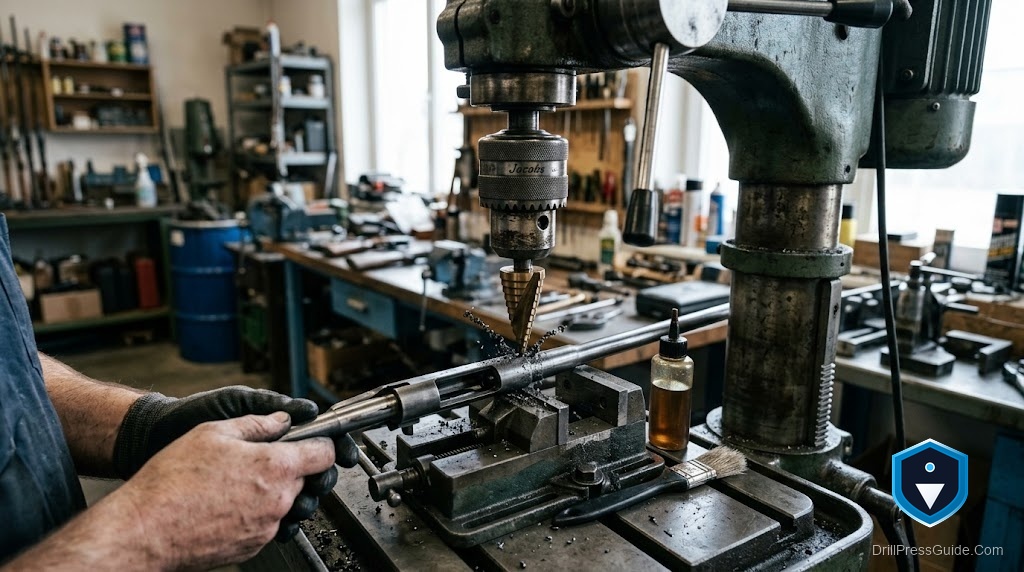
Use cutting fluid for metalwork. A heavy duty press generates more heat than a home shop machine because it cuts faster and deeper. Cutting fluid keeps the bit cool, extends tool life, and improves surface finish. A flood coolant system is ideal for production work. A spray bottle or brush-applied fluid is adequate for intermittent use.
Maintenance and Longevity
A heavy duty press is built for decades of use. The bearings are large, the castings are thick, and the motor is oversized. With proper maintenance, it lasts twenty years or more. The maintenance is simple but must be done regularly. Keep the column clean and greased. Check the belt tension every month. Replace the chuck when runout exceeds your tolerance. Lubricate the table rack and the quill according to the manual.
The motor bearings are typically sealed and maintenance-free, but the motor itself should be checked for overheating and vibration. If the motor hums or vibrates, the bearings may be failing. Replacement is straightforward but requires removing the motor from the headstock. For a production shop, a spare motor is a good investment to minimize downtime.
Who Needs a Heavy Duty Press
A heavy duty floor drill press is for the production shop, the commercial metal fabrication business, the furniture manufacturer, and the machine shop where the drill press is a central workstation. It is for the shop that drills hundreds of holes a day, that works with tough materials, and that needs consistency and reliability. It is for the owner who is tired of replacing benchtop presses every few years and wants a machine that outlasts the business.
It is not for the home shop. It is not for the hobbyist. It is not for the small business that drills occasional holes. A heavy duty press is overkill for those shops. It costs more, takes up more space, and requires more electrical and floor support than a home shop can provide. Buy it for the work you do, not the work you imagine doing.
The Verdict
A heavy duty floor drill press is a production machine, not a home shop tool. It gives you the power, the capacity, and the consistency to handle large workpieces, tough materials, and long production runs. The setup is involved, the space requirement is real, and the electrical needs may require upgrades. But for the shop that needs it, it is the only choice that makes sense. Buy it for the work you do, install it with care, maintain it with discipline, and it will drill accurate holes for decades.
FAQ
How much does a heavy duty floor press weigh? Five hundred to one thousand pounds is common. Larger industrial models can weigh more. The weight is part of the stability. You need a level floor, a solid foundation, and help to move it into place.
Do I need a three-phase electrical supply? Not always. Many heavy duty models run on single-phase two hundred twenty or one hundred ten volts. Three-phase models are common in industrial shops but require a three-phase supply or a phase converter. Check the specs before you buy.
What is the minimum motor size for heavy duty work? One horsepower is the minimum. Two horsepower is better for continuous production work. Less than one horsepower, and you are not in the heavy duty class.
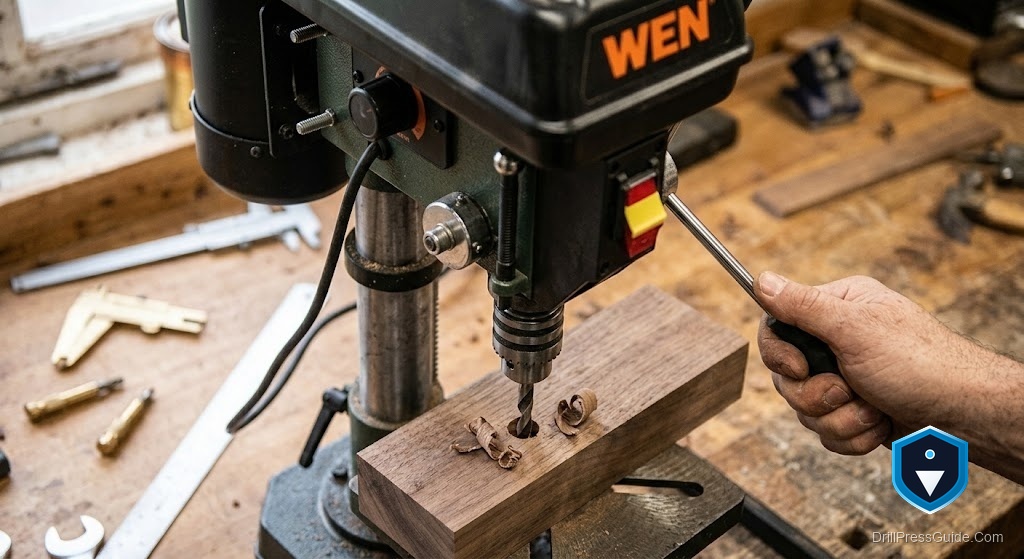
Can I use a heavy duty press for woodworking? Yes, and it excels at it. The large table, powerful motor, and long column make it ideal for large panels, thick stock, and deep mortising. Many heavy duty presses live in woodworking shops.
What is the difference between a heavy duty press and a standard floor press? Motor size, column thickness, table size, and bearing capacity. A heavy duty press is built for continuous use and high loads. A standard floor press is built for general shop work with intermittent use.
How do I level a heavy duty press? Use a precision level on the table and the base. Shim the base if necessary. Once level, bolt the base to the floor. The machine should not move or vibrate under load.
What kind of fixtures can I use? Any fixture that bolts to the table T-slots or clamps to the table surface. Plywood fixtures with locating pins are common for woodworking. Aluminum fixtures with clamps are common for metalwork. Build the fixture for the specific job and reuse it for repeat work.
How long does a heavy duty press last? With proper maintenance, twenty years or more. The bearings are large, the castings are thick, and the motor is oversized. In a production shop, it outlasts standard machines by a wide margin.
Should I buy a used heavy duty press? Yes, if you can inspect it. Check the bearings for play, the table crank for smoothness, and the column for straightness. A used quality press is often a better value than a new light-duty machine.
Can I use the same bits as my benchtop press? Yes, but you may need larger shanks for the bigger chuck. The spindle taper is standard, so standard accessories fit. The difference is the capacity and the power, not the tooling.