Heavy Duty Drill Press: When Standard Benchtop Models Are Not Enough
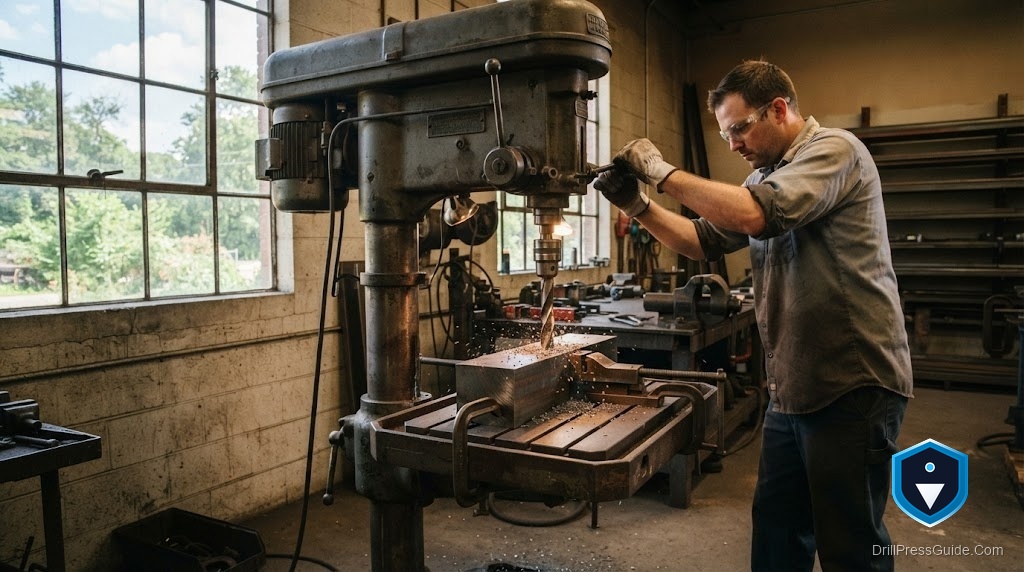
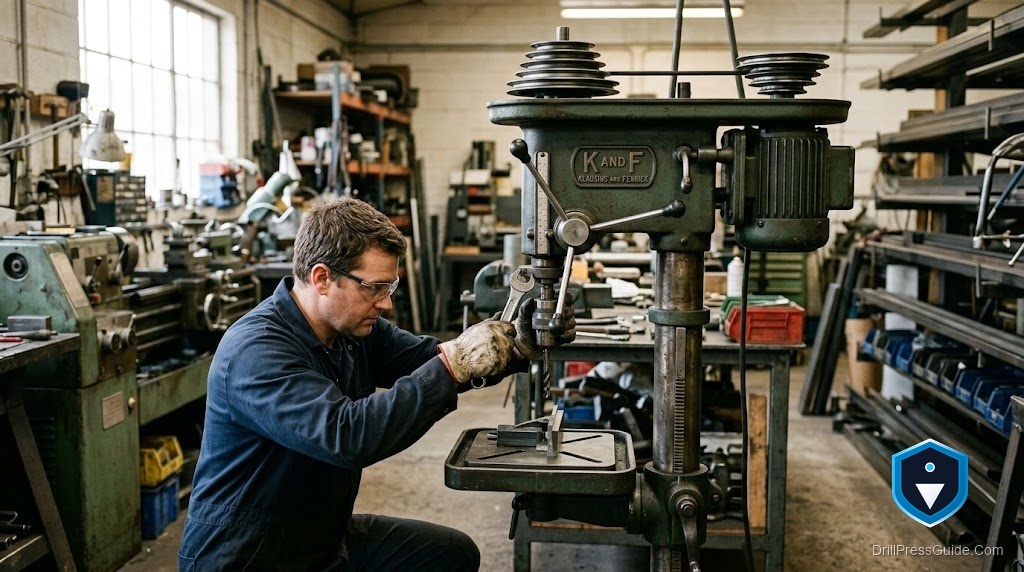
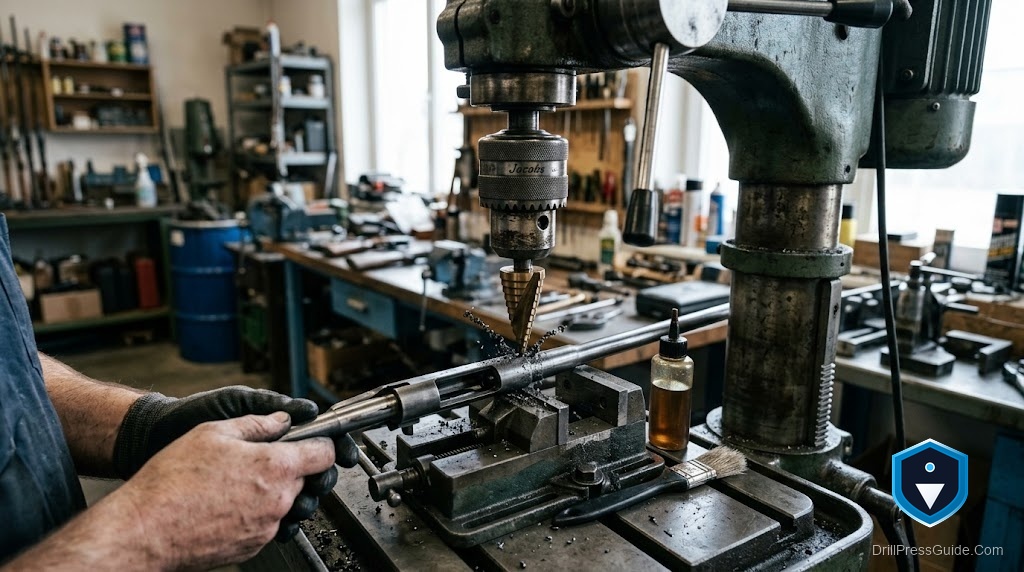
You are drilling through 2-inch thick hardwood with a 2-inch Forstner bit, boring holes in steel plate for a welding jig, or running a production batch of cabinet parts that needs to be identical from the first hole to the last. A standard benchtop drill press bogs down, vibrates, and overheats. The chuck slips, the table shifts, and the hole is not straight. You need a heavy duty drill press. These machines are built for real work, not for hobby projects. They have cast iron frames, powerful motors, and the rigidity to stay on target when the bit bites into stubborn material.
A heavy duty drill press is a floor or benchtop machine with a rigid frame, a high-torque motor, and a large work table. It is designed for continuous or demanding use in woodworking, metalworking, and fabrication. Heavy duty presses typically have 3/4 to 1 horsepower motors, 12 to 17 inches of swing, and tables that can handle large workpieces or jigs. They are heavier, more expensive, and more demanding of space and power than home-shop machines, but they deliver the repeatability and durability that serious work requires.
If you are drilling daily, working with hard materials, or need precise hole placement in large stock, a heavy duty drill press is a justified investment. It will not make your work more creative, but it will make it faster, more accurate, and less frustrating. The question is which machine matches your work and your budget without buying more capacity than you need.
What Makes a Heavy Duty Drill Press Different from a Standard Floor Model?
Motor power is the first difference. Heavy duty presses start at 3/4 horsepower and go up to 1 horsepower or more. A 3/4-horsepower motor handles most hardwood and mild steel without strain. A 1-horsepower motor is needed for thick steel, large hole saws, or continuous production work. The motor is usually an industrial induction type, sealed against dust, and rated for continuous duty.
Frame mass matters more than you think. A heavy duty press weighs 150 to 300 pounds or more. That mass absorbs vibration, keeps the bit on track, and prevents the machine from walking when you push the feed handle. Light machines deflect, and deflection causes chatter, oversized holes, and broken bits. A heavy duty frame does not deflect.
Table size and travel are also larger. Heavy duty tables are often 14 by 14 inches or bigger, with T-slots for clamps and fixtures. The table rises and lowers on a rack-and-pinion or crank mechanism, and some tables rotate or tilt for angled work. Spindle travel is usually 3 to 6 inches, which lets you drill deep holes in thick material without repositioning the workpiece.
Speed range and control are critical. Heavy duty presses offer more speeds, often 12 to 16 or variable speed, and the speed change is faster than a step-pulley system. For metalworking, you need low speeds with high torque. For woodworking, you need high speeds for clean cuts. A good heavy duty press covers both ranges without swapping belts.
Three Heavy Duty Drill Presses That Handle Real Work
The Grizzly G7944 12-Speed Heavy-Duty Bench-Top Drill Press is a 3/4-horsepower machine with a 14-inch swing and a cast iron head and table. It has 12 speeds from 140 to 3,050 RPM, a 3-1/4-inch spindle travel, and a table that tilts 45 degrees left and right. The base is heavy cast iron, and the machine weighs about 140 pounds. It is a benchtop model, not a floor model, which means it sits on a sturdy workbench rather than standing on the floor. That makes it more compact but still heavy duty in capacity.
The honest flaw is the benchtop format. A 140-pound machine on a bench creates a lot of leverage. If your bench is not solid and bolted down, the machine will vibrate and possibly shift under heavy loads. The 14-inch swing is also smaller than some floor models, so it will not handle the largest panels. For a shop with limited floor space and a heavy bench, the G7944 is a good compromise. For a production floor, buy a floor model.
Buy the Grizzly G7944 Heavy Duty Drill Press on Amazon
The JET JDP-17 17-Inch Floor Drill Press is a 3/4-horsepower industrial machine with a 17-inch swing and a cast iron head and table. It has 16 speeds from 210 to 3,500 RPM, which is a wider range than most home-shop machines. The table is 14 by 14 inches, rotates 360 degrees, and tilts 45 degrees left and right. The spindle travel is 3-1/8 inches, and the quill has a depth stop and a digital readout on some models. The cast iron base and column are solid, and the machine weighs about 250 pounds.
What keeps it from being perfect is the price. It is a significant investment for a home shop, and it requires a dedicated floor space and a 120-volt, 15-amp circuit. The 17-inch swing is also overkill if you only drill small parts. The motor is reliable but not a 2-horsepower beast. For thick steel or large hole saws, you may still need to slow down and take multiple passes. Skip the JDP-17 if your work is light or intermittent. It is built for daily use in a working shop.
Buy the JET JDP-17 Heavy Duty Drill Press on Amazon
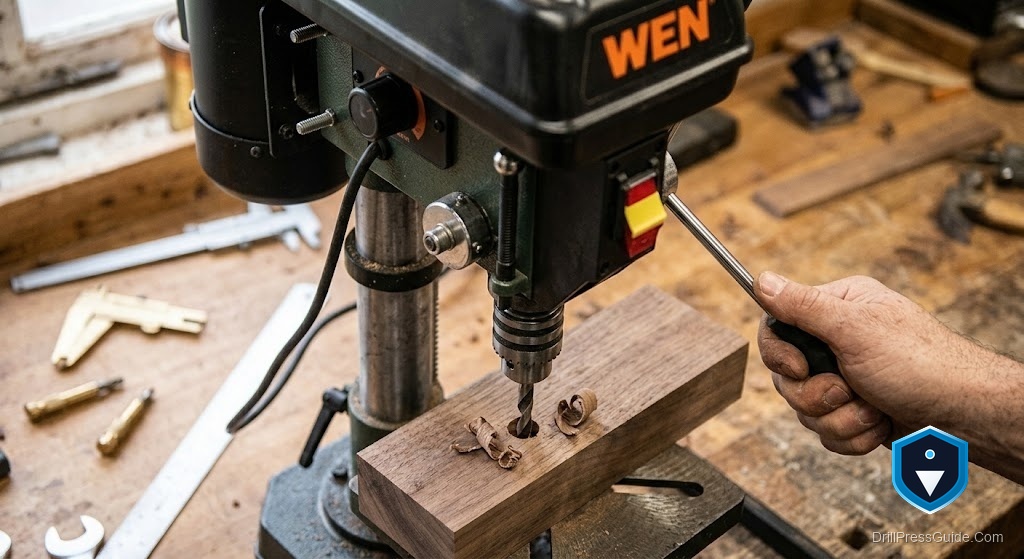
The WEN 4227T 13-Amp 12-Inch Variable Speed Floor Drill Press is a floor-standing machine with a 1/2-horsepower, 13-amp motor and a variable speed range from 530 to 3,100 RPM. The 12-inch swing handles panels up to 24 inches wide. The table is 10 by 10 inches, tilts 45 degrees left and right, and has a depth stop. The column is 30 inches, and the base is a cast iron pedestal. The press weighs about 130 pounds and stands 63 inches tall.
What keeps it from being heavy duty is the motor. A 1/2-horsepower motor is adequate for wood and plastic, but it is the minimum for heavy duty work. Thick steel, large hole saws, and continuous production will push it to its limit. The table is also small for large panels or jigs. For a home shop doing furniture and cabinet work, the WEN 4227T is a solid entry-level machine. For a production shop, buy the Grizzly or the JET.
Buy the WEN 4227T Heavy Duty Drill Press on Amazon
What to Look for in a Heavy Duty Drill Press
Motor horsepower should match your material. Wood and plastic need less power than steel. A 3/4-horsepower motor is the minimum for heavy duty work. If you drill large holes in steel or use hole saws and Forstner bits in hardwood, look for 1 horsepower or more. Check the motor duty rating. A continuous-duty motor is built for all-day use. An intermittent-duty motor will overheat if you lean on it for hours.
Swing and table size should match your workpieces. A 15-inch swing handles most cabinet and furniture panels. A 17-inch or larger swing is needed for wide sheet goods or large assemblies. The table should be large enough to support your work without extra jigs, and it should have T-slots or clamping holes for fixtures.
Speed range and control matter for bit life and cut quality. Metal needs low speeds, 200 to 500 RPM, with high torque. Wood needs high speeds, 2,000 to 3,000 RPM. A machine with 12 or more speeds, or a variable-speed control, lets you match the speed to the bit and material. Step-pulley changes are reliable but slow. Variable-speed belts or electronic controls are faster but may have less torque at low speed.
Spindle travel and depth stops are important for repeatability. A 3-inch travel is adequate for most work. A 5-inch or 6-inch travel is better for deep holes or mortising. A reliable depth stop, preferably with a micro-adjustment, lets you drill to the same depth repeatedly without measuring.
Finally, check the frame and base. Cast iron is the standard for heavy duty presses. Steel or aluminum frames are lighter but less rigid. The base should be wide and heavy enough to resist tipping. If the machine is a benchtop model, the bench must be heavy and bolted to the floor or wall.
Comparison: Three Heavy Duty Drill Presses for Different Shops
| Feature | Grizzly G7944 | JET JDP-17 | WEN 4227T |
|---|---|---|---|
| Type | Benchtop | Floor | Floor |
| Motor | 3/4 HP | 3/4 HP | 1/2 HP |
| Swing | 14 inches | 17 inches | 12 inches |
| Speed range | 140 to 3050 RPM | 210 to 3500 RPM | 530 to 3100 RPM |
| Spindle travel | 3-1/4 inches | 3-1/8 inches | 3-1/8 inches |
| Table size | 12-3/8 x 12-3/8 inches | 14 x 14 inches | 10 x 10 inches |
| Table rotation | 360° | 360° | 360° |
| Table tilt | 45° left and right | 45° left and right | 45° left and right |
| Honest flaw | Needs a heavy bench | Heavy and expensive | Motor is minimum for heavy duty |
Who Should Skip a Heavy Duty Drill Press?
If you are a hobbyist, a weekend woodworker, or a DIY homeowner, a heavy duty drill press is overkill. The weight, the price, and the power requirements are not justified for occasional use. A benchtop or floor model in the 1/2-horsepower range is more appropriate for home shops.
Also, if your shop is small and you have no floor space, a 250-pound floor press is not a practical option. Buy a heavy benchtop model or a quality benchtop with a large swing. You can do excellent work on a smaller machine if you match the work to the capacity.
Verdict and Takeaways
A heavy duty drill press is a production tool, not a luxury. The Grizzly G7944 is the best benchtop heavy duty press for a shop with a solid bench but no floor space. The JET JDP-17 is the best choice for a serious shop that needs maximum swing and a wide speed range. The WEN 4227T is the best entry-level floor press for home shops that need more capacity than a benchtop but not industrial power.
Before you buy, measure your stock, check your power, and be honest about your daily use. A heavy duty press will drill straighter, deeper, and longer than any home-shop machine, but only if you have the work to justify it.
Frequently Asked Questions
What is the minimum horsepower for a heavy duty drill press?
Three-quarters of a horsepower is the practical minimum for heavy duty work. It handles most wood, plastic, and mild steel without strain. For thick steel, large hole saws, or continuous production, 1 to 2 horsepower is better. Match the motor to your heaviest routine work, not your occasional extreme task.
Can a benchtop drill press be heavy duty?
Yes, if it is heavy, rigid, and powerful. A 140-pound benchtop with a 3/4-horsepower motor and a cast iron frame is heavy duty in capacity, even if it sits on a bench. The key is the bench itself. A flimsy bench will negate the rigidity of the machine. Bolt the press to a heavy, stable bench or a reinforced stand.
How much swing do I need for heavy duty work?
Fifteen inches is the minimum for most heavy duty applications. That lets you drill the center of a 30-inch panel. Seventeen inches is better for large sheet goods and assemblies. If you only work with small parts, a smaller swing is fine, but then you may not need a heavy duty press at all.
What is the difference between a floor drill press and a benchtop drill press?
A floor drill press stands on a pedestal and has a longer column, larger table, and usually more power. A benchtop drill press sits on a workbench and is more compact. Floor models are better for large work and heavy production. Benchtop models are better for small shops and lighter work. Heavy duty versions exist in both formats.
Do heavy duty drill presses need special electrical circuits?
Most 3/4-horsepower machines run on standard 120-volt, 15-amp circuits. One-horsepower and larger machines may need 20-amp circuits or 240-volt power. Check the motor specifications before you buy. If your shop has limited power, a 3/4-horsepower machine is the safer choice.
Can I use a heavy duty drill press for woodworking?
Yes. In fact, many woodworkers prefer heavy duty presses because the mass and power handle large Forstner bits and hole saws without bogging down. Just use high speeds for wood and keep the table clean of metal shavings. A dedicated wood drill press is not necessary if the machine is well maintained.
How do I maintain a heavy duty drill press?
Keep the quill and spindle clean and lubricated. Check the belt tension monthly. Blow dust out of the motor and pulley covers. Inspect the table and base for cracks or damage. If the machine has a digital readout or variable-speed control, keep the electronics dry and clean. Heavy duty presses are built for long service, but they still need regular care.
What is spindle travel and why does it matter?
Spindle travel is the distance the chuck moves downward when you turn the feed handle. More travel means fewer stops to reposition your work. For example, a 3-inch travel lets you drill through a 2-inch board and still have clearance. A 5-inch or 6-inch travel is better for deep holes or mortising. For heavy duty work, 3 inches is the minimum.
References
- Grizzly Industrial. “G7944 12-Speed Heavy-Duty Bench-Top Drill Press.” Grizzly Official Site. Accessed via manufacturer specifications.
- JET Tools. “JDP-17 17-Inch Floor Drill Press.” JET Tools Official Site. Accessed via manufacturer specifications.
- WEN Products. “WEN 4227T 13-Amp 12-Inch Variable Speed Floor Drill Press.” WEN Products Official Site. Accessed via manufacturer specifications.
- Occupational Safety and Health Administration (OSHA). “Drill Press Safety.” OSHA.gov. General safety guidance for drill press operation.