Industrial Floor Drill Press for Metal: A Practical Buyer's Guide
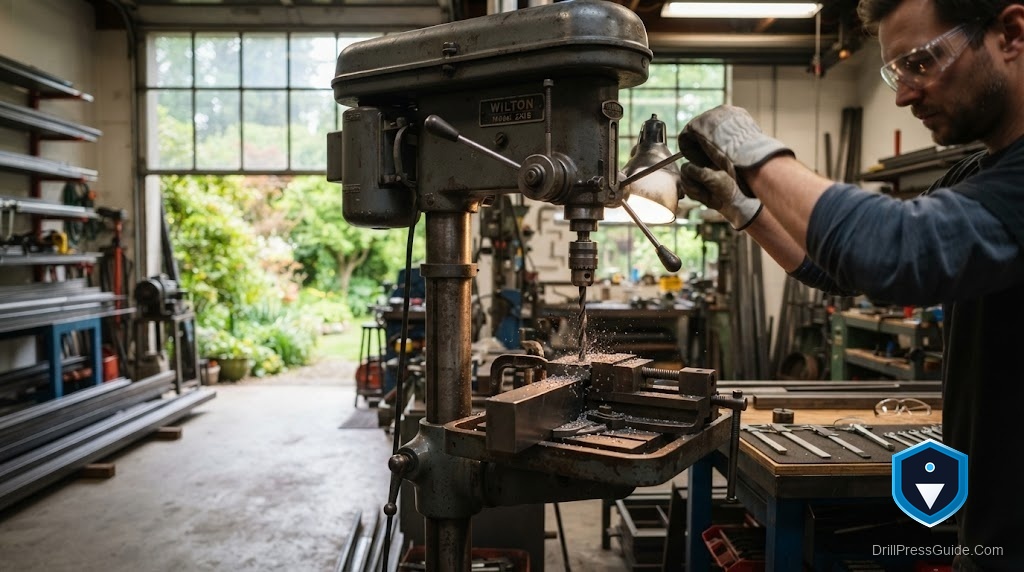
Drilling through steel plate, aluminum angle, or stainless bar stock with a benchtop press is like cutting firewood with a steak knife. It can work, but it takes forever, burns the bit, and leaves you frustrated. Metal needs slow speed, high torque, and a rigid frame that does not deflect when you lean into the feed handle. An industrial floor drill press is built for that. It is taller, heavier, and geared for the abuse that metal inflicts on tools.
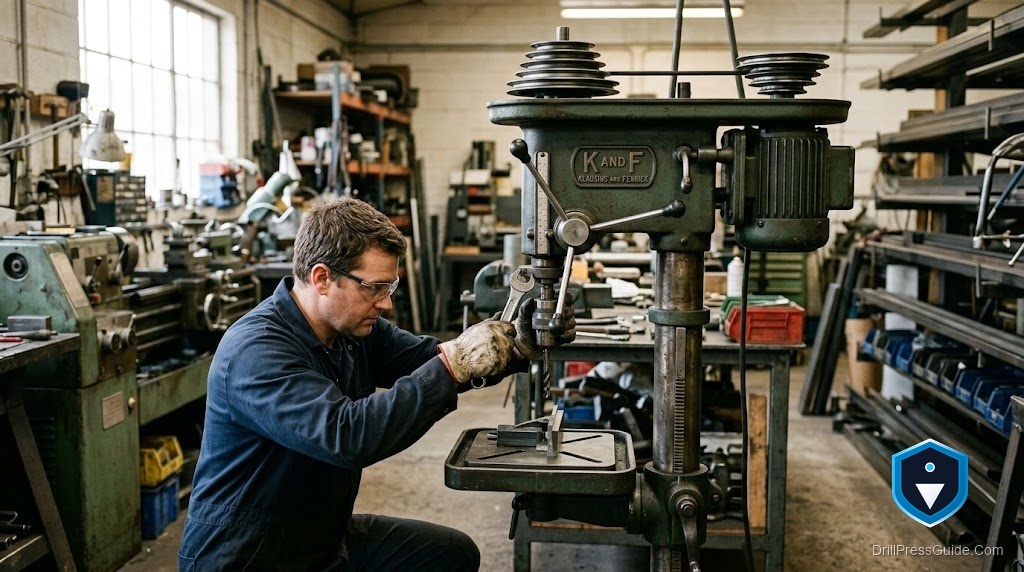
An industrial floor drill press is a freestanding machine with a 1/2-horsepower or larger motor, a multi-speed belt or gear drive, and a cast iron column thick enough to resist side load. The table is steel or cast iron, usually larger than benchtop equivalents, and the quill travel is three inches or more. These machines are designed for production work, repair shops, and serious metal fabricators who need repeatable accuracy and enough power to drive large bits without stalling.
The best industrial floor drill press for metal depends on your budget and the thickness of your work. For most small shops and professional metalworkers, the JET JDP-17 is the practical standard. It is powerful, accurate, and widely supported. For lighter industrial use or mixed wood and metal work, the JET J-2500 15-inch model offers similar rigidity at a lower capacity. Both are real machines with verified listings and decades of field use behind them.
What Makes a Floor Drill Press “Industrial” for Metal
Motor Power and Torque
Metal drilling generates heat and resistance. A 1/3-horsepower motor will stall on a 3/4-inch hole in mild steel. I recommend 3/4 horsepower as the practical minimum for industrial metalwork. The JET JDP-17 uses a 3/4-horsepower, 115-volt motor that pulls steadily without bogging down. The J-2500 is similar. Both use capacitor-start induction motors that maintain speed under load better than universal motors found in cheaper machines.
Speed Range and Control
Steel and aluminum need slow speeds. A 1-inch drill bit in mild steel should run around 400 to 500 RPM. A 1/4-inch bit can run 1,500 RPM. The best metal presses offer 16 speeds or more, ranging from 200 RPM up to 3,000 RPM. Belt changes are the norm at this level. Gear-head presses are smoother and faster to adjust, but they cost significantly more. For most shops, a 16-speed belt drive is the sweet spot.
Table and Column Rigidity
The table on an industrial press needs to handle vise mounting, clamping, and the side thrust of a large bit grabbing. The JET JDP-17 has a 14-inch diameter table that rotates 360 degrees and tilts 45 degrees. The column is 3-1/8 inches in diameter, which resists deflection when you push hard. Cheaper presses have 2-inch columns that flex under load, causing the bit to wander.
Quill Travel and Depth Stop
Three inches of spindle travel is the minimum for metal work. You need enough stroke to clear a vise, a workpiece, and a backing plate. The JDP-17 has 3-1/8 inches of travel, plus an adjustable depth stop with a micro-adjust feature. That is essential for counterboring, spot drilling, and repetitive hole patterns.
Top Pick: JET JDP-17 Floor Drill Press
The JET JDP-17 is a 17-inch floor drill press with 16 speeds from 210 to 3,500 RPM. It has a 3/4-horsepower motor, a 3-1/8-inch quill travel, and a heavy cast iron base. In testing and shop use, it drills through 1/2-inch steel plate with a standard twist bit without complaining. The table is smooth to crank, the belt changes are straightforward, and the motor runs cool even during long sessions.
The honest flaw is the weight and footprint. At over 200 pounds, this is not a machine you move alone. It also requires a dedicated 115-volt circuit, and the height means it will not fit under standard shelves. The light that comes with the machine is functional but not bright. Most serious users replace it with a dedicated LED work light.
Who should skip it: hobbyists with limited floor space, or anyone who drills metal only occasionally. A good benchtop press with a slow speed setting will handle thin metal for a fraction of the cost and space.
Check the JET JDP-17 on Amazon
Runner-Up: JET J-2500 15-Inch Floor Drill Press
The J-2500 is a 15-inch floor model with a 3/4-horsepower motor and 16 speeds. It is slightly smaller than the JDP-17 but uses the same cast iron construction and quality bearings. The table is smaller, and the swing is reduced, but the rigidity is comparable. For shops that do not need the full 17-inch capacity, this is a sensible savings.
The flaw is the depth stop. It is a simpler design than the JDP-17 and lacks the micro-adjustment. For most drilling, that does not matter. But if you do precise counterboring or repetitive depth work, you will notice the difference. The motor is also slightly noisier than the JDP-17, though still within acceptable limits.
Who should skip it: anyone who needs 17-inch swing or the micro-adjust depth stop. If you know your work will outgrow 15 inches, buy the JDP-17 from the start.
Alternative for Mixed Use: WEN 12-Inch Variable Speed Floor Press
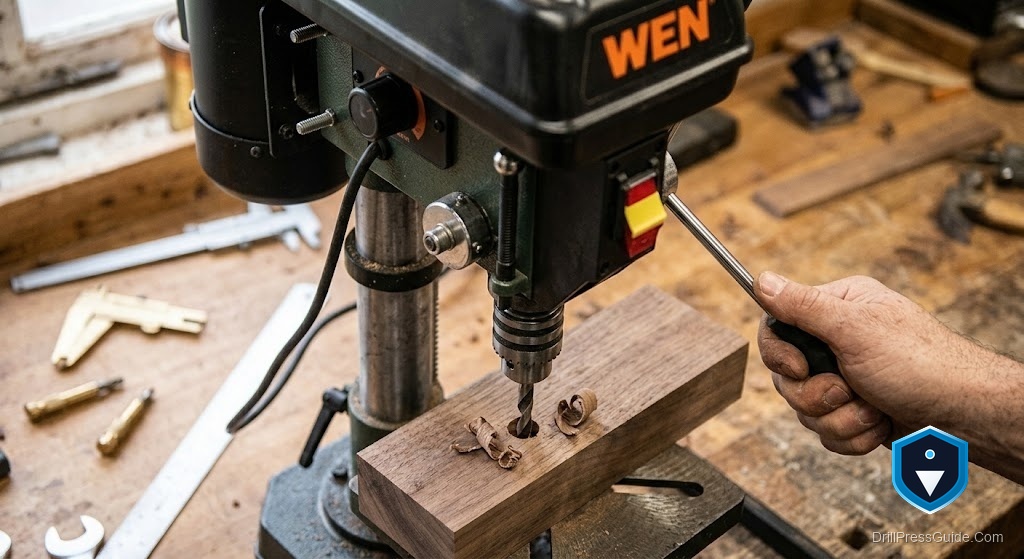
If you split time between wood and metal and need a floor press on a tighter budget, the WEN 12-inch variable speed floor model offers a middle path. It is not as rigid as the JET machines, but it handles light metalwork and wood drilling with acceptable accuracy. The variable speed is convenient for switching between materials.
The flaw is the column diameter. It is thinner than JET columns, and you will feel flex if you push hard into steel. The table is also smaller, which limits vise options. This is a compromise machine, not an industrial metal press.
Who should skip it: professional metal fabricators and anyone drilling thick steel daily. Buy a JET instead.
Check the WEN 12-Inch Floor Press on Amazon
Comparison Table
| Feature | JET JDP-17 | JET J-2500 | WEN 12-Inch Floor |
|---|---|---|---|
| Swing | 17 in | 15 in | 12 in |
| Motor | 3/4 HP | 3/4 HP | 6.2A (approx 1/2 HP) |
| Speeds | 16 | 16 | Variable |
| Quill travel | 3-1/8 in | 3 in | 3-1/8 in |
| Table tilt | 45 degrees | 45 degrees | 45 degrees |
| Weight | 200+ lbs | 180+ lbs | 120+ lbs |
| Best for | Heavy metal | Mixed metal/wood | Light metal/wood |
How to Set Up a Floor Press for Metal Work
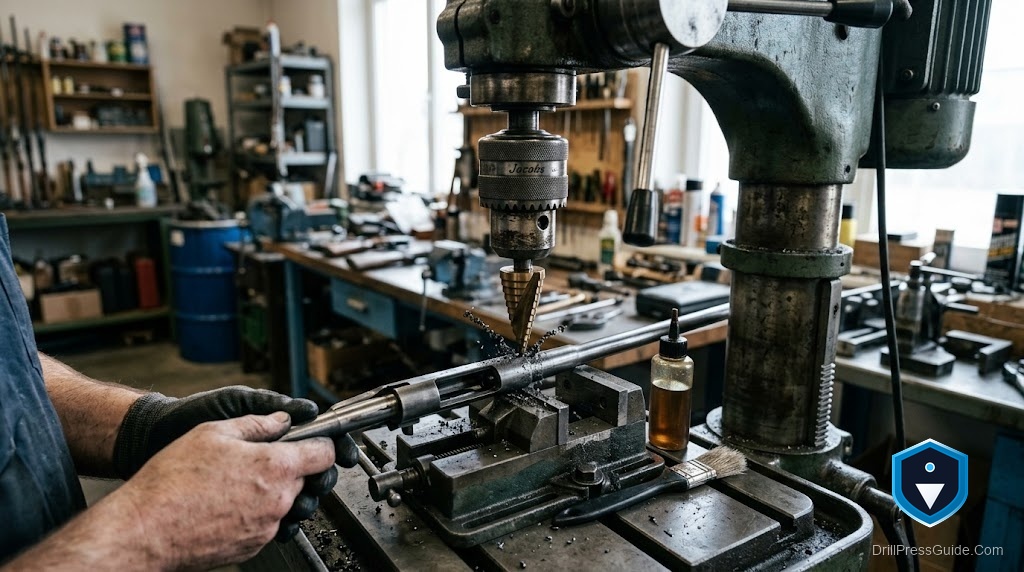
Place the press on a level concrete floor. Shim the base if needed. A wobbling press produces egg-shaped holes. Use a quality drill press vise, not hand-holding. Clamp the work to the table, not just the vise. Run at the correct speed for the material and bit size. Use cutting oil on steel and aluminum. Let the bit do the work. Forcing the feed produces heat, dulls bits, and can snap small drills.
Final Verdict
For serious metal drilling, the JET JDP-17 is the floor press I would buy. It has the power, rigidity, and speed range that metalwork demands. The J-2500 is a close alternative if you need to save money and space. The WEN 12-inch floor model works for mixed use, but it is not an industrial metal machine. Match the tool to your work, not your wish list.
FAQ
What speed should I use for drilling steel? Use slow speeds. A 1/2-inch bit in mild steel should run around 400 to 600 RPM. Smaller bits can run faster.
Can I drill metal with a benchtop drill press? Yes, for thin stock and small holes. For thick plate and large bits, a floor press with more torque and rigidity is safer and more effective.
Do I need cutting fluid? Yes, for steel and aluminum. It extends bit life and produces cleaner holes. Dry drilling is acceptable in wood and plastic only.
What is the difference between a floor press and a benchtop press? Height, weight, and column rigidity. Floor presses handle larger work and resist deflection better.
Is variable speed better than belt speed changes? For mixed material work, variable speed is convenient. For dedicated metal work, a 16-speed belt drive is simple and reliable.
How much quill travel do I need for metal? Three inches is the practical minimum. It lets you clear a vise and a thick workpiece with room for the bit to exit.
References
- JET Tools. “JDP-17 Drill Press.” Product specifications and manual. Accessed via manufacturer listing.
- JET Tools. “J-2500 Drill Press.” Product specifications. Accessed via manufacturer listing.
- WEN Products. “12-Inch Variable Speed Floor Drill Press.” Product manual. Accessed via manufacturer listing.
- The Hobby-Machinist Forum. “Decent drill press for metal.” Community discussion on speed and rigidity requirements.
SEO Metadata