A Practical Guide to Floor Drill Press for Woodworking
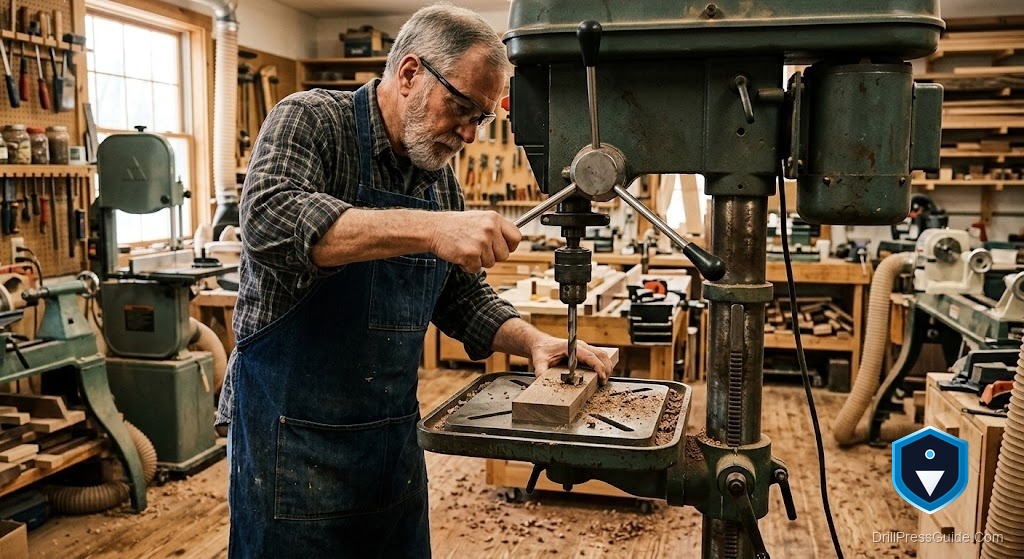
A floor drill press in a woodworking shop can feel like overkill until you use one. Woodworkers do not need the raw power that metalworkers chase, so the case for a floor model rests on different strengths: table height for tall work, a long quill stroke for deep holes, and the stability that keeps a large Forstner bit from wandering. Whether those strengths are worth the floor space is the real question this guide answers.
Short answer: a floor press earns its place in a woodworking shop if you drill tall workpieces, want more capacity for jigs and tables, or run large boring bits often. If your work is small boxes and typical furniture parts, a benchtop press covers you with less footprint.
Where the floor format helps woodworkers
The height is the headline. A floor press lets you raise the table high or lower it far down the column, so you can drill into the end of a tall leg or a long board without contortions. The extra quill travel on many floor models also drills deeper holes in one stroke, which matters for lamp rods, dowel joinery, and deep mortising setups. And the mass keeps the machine steady when a large bit grabs, which wood bits do more than people expect.
Speed still matters more than power
Woodworking does not tax a motor the way steel does, so do not choose a floor press for horsepower. Choose it for a speed range that reaches low, because large Forstner bits and hole saws must run slow to avoid burning. A machine that offers genuinely low speeds is worth more to a woodworker than one with a big motor and a high floor speed. Read the low end of the range first.
A floor machine that suits wood
A floor press with a wide speed range and a solid table handles woodworking comfortably. A machine like the Klutch 13-inch 16-speed floor drill press offers a broad range of speeds, including the low steps large wood bits need, along with the table height and stability that make tall work and big bores easier. The many speed steps mean you can slow right down for a large Forstner without fighting the machine.
Add a wood table and fence
A metal drill press table is small and slippery for wood. The single best addition for woodworking is an auxiliary wooden table with a fence and a replaceable insert. It backs up the cut to stop blowout, gives you a fence to register repeat holes, and protects bits when they break through. This turns a general-purpose floor press into a proper woodworking machine and costs little.
Workholding for wood
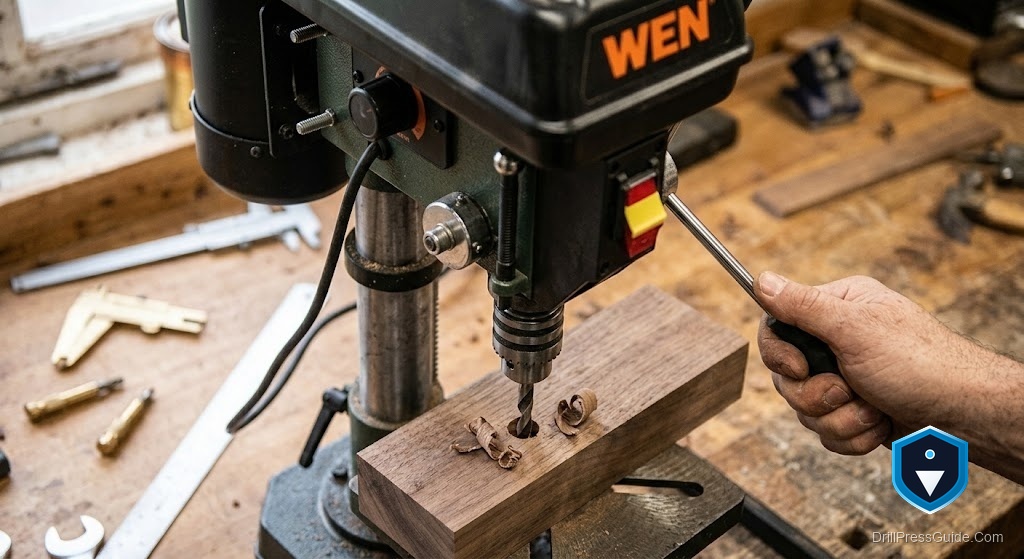
Wood spins on a drill press more often than beginners expect, especially with large bits and hole saws. Clamp the piece to the table or against the fence. Use a backer board under the exit face to prevent tear-out. A hold-down or a simple clamp keeps your hands clear and the hole clean. The floor press supplies stability; clamping supplies the clean result and the safety.
The verdict
A floor press is a good woodworking choice for specific reasons, not by default:
- Buy it for table height, quill travel, and stability on tall work and large bores.
- Prioritize a low speed range over motor power, because wood bits need slow speeds.
- Add a wood table with a fence and always clamp the work.
Who should stick with a benchtop press? Woodworkers building small to medium parts in a tight shop. The floor model pays off mainly when work gets tall or bits get large.
Frequently asked questions
Do woodworkers need a floor press? Only for tall work, deep holes, or frequent large bores. Most furniture and box work is comfortable on a benchtop press.
Is a big motor important for wood? No. Wood does not load the motor like steel. A low speed range for large bits matters far more than horsepower.
Why do large wood bits need low speed? A big Forstner or hole saw covers a lot of distance per turn, so a high speed overheats and scorches the rim. Slow speeds keep the cut clean.
What is the best first accessory? An auxiliary wood table with a fence and a replaceable insert. It backs up cuts, registers repeats, and protects bits at breakthrough.
Can a floor press drill angled holes? Yes if the table tilts, or with an angled jig. The height of a floor press can make angled setups on tall work easier to manage.
How much swing do I need for woodworking? A 12 to 15 inch swing suits most work. Swing is twice the column-to-bit distance, so it sets how far into a panel you can reach.
References
- OSHA Woodworking eTool, Drill Press: https://www.osha.gov/etools/woodworking/production/machines-tools/drill-press
- WEN Drill Press FAQs: https://wenproducts.com/pages/drill-press-faqs
- Delta 17-900 Instruction Manual: https://powertool.manualsonline.com/manuals/mfg/delta/17900.html