A Practical Guide to Heavy Duty Drill Press for Gunsmithing
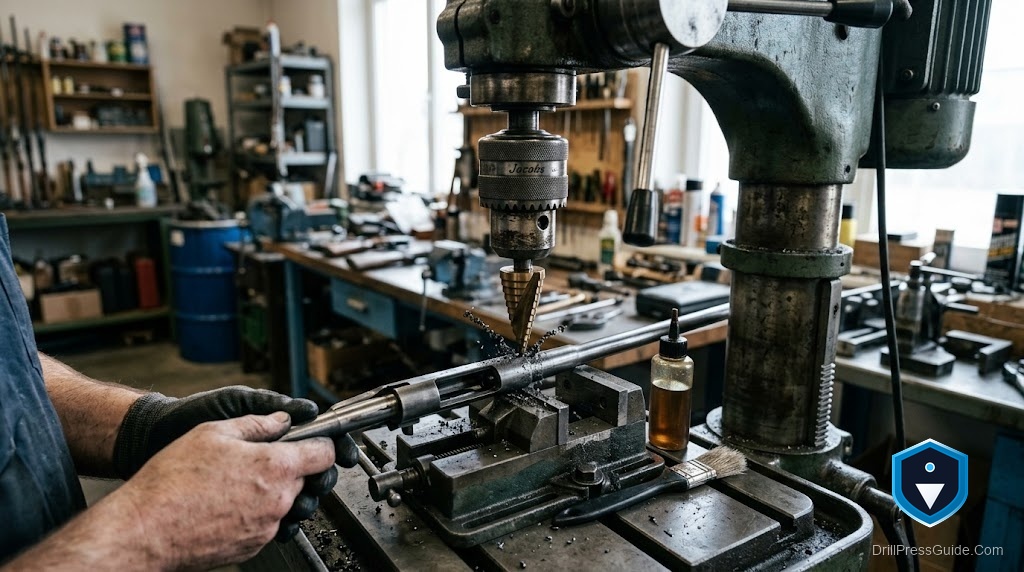
Gunsmithing asks more of a drill press than general shop work does. The holes are small, the tolerances are tight, and the material is often hardened steel that punishes any wobble or heat. A light benchtop machine can drill a bracket, but it will chatter and drift on the precise, repeatable holes gunsmithing demands. This is a job where a heavier, more rigid machine genuinely changes the result.
Short answer: for gunsmithing you want rigidity, low and steady speeds, minimal runout, and enough table stability to index precise holes. A heavy floor-standing press with a slow low-speed range and a solid table hits those needs far better than a small benchtop unit.
Why rigidity matters more here
Drilling and tapping small holes in receivers, mounts, and hardened parts leaves no room for deflection. A flexible column or a quill with play lets the bit wander a few thousandths, which is enough to ruin a scope mount hole or snap a small tap. A heavy press resists that flex. The mass and a large-diameter column keep the spindle where you put it, which is the whole point when the hole has to land exactly on a layout line.
Low speed is not optional
Hardened and alloy steels drill slow. Small bits in tough steel still need control, and larger holes need genuinely low RPM so the edge does not overheat and lose temper. A press with a wide speed range that reaches down into the low hundreds of RPM gives you the room to slow down for hard material. Machines that bottom out at higher speeds force you to cook bits, which is the opposite of what precision work needs.
A machine that fits the work
A heavy floor-standing press suits gunsmithing because it combines rigidity, a broad speed range, and a stable table. A machine like the WEN 4227T 12-speed floor-standing drill press offers twelve speeds down into the low range and the mass to stay steady on precise, repeatable holes. The floor format also gives table height for jigs and fixtures, which gunsmithing leans on heavily.
Runout is the number to watch
Runout is how much the chuck wobbles off true as it spins, and it directly limits how accurate a small hole can be. For gunsmithing, low runout matters more than raw power. Check it with a dial indicator against a precision rod in the chuck; a small amount is normal, but excess runout will show up as oversized, out-of-round holes exactly where you need precision. A quality chuck seated cleanly on a true spindle is worth more here than extra horsepower.
Support the precise work
Precision holes need precise holding. A solid drill press vise, a cross-slide table for indexing, and good layout with a center punch or transfer punch turn the machine’s rigidity into accurate results. The press provides the vertical accuracy; fixtures provide the horizontal position. Both have to be right, because a rigid spindle over a part that can shift still gives you a hole in the wrong place.
The verdict
For gunsmithing, the machine choice is about control, not size for its own sake:
- Choose a heavy, rigid press so the spindle does not deflect on precise holes.
- Insist on a low speed range for hardened and alloy steels.
- Check runout and back the machine with a solid vise or cross-slide for indexing.
Who can skip the heavy machine? Someone doing only occasional light work. Anyone drilling and tapping precise holes in hardened parts will feel the difference a rigid, slow, low-runout press makes.
Frequently asked questions
Can a benchtop press handle gunsmithing? Light tasks, yes. Precise, repeatable holes in hardened steel expose a benchtop machine’s flex and limited low speed, which is why heavier presses are preferred.
What speed range should I look for? One that reaches well down into the low hundreds of RPM, because hard and alloy steels and larger holes need slow, controlled cutting.
How much runout is acceptable? As little as possible for precision work. Check with a dial indicator; excess runout shows up as oversized, out-of-round holes.
Do I need a floor model specifically? Not strictly, but floor models tend to be heavier and more rigid, and the table height suits the jigs and fixtures gunsmithing uses.
Is horsepower the priority? No. Rigidity, low speed, and low runout matter more than raw power for the small, precise holes this work involves.
What supports precise hole placement? A solid vise, a cross-slide table for indexing, and careful layout with a center or transfer punch. The press holds vertical; fixtures hold position.
References
- CCOHS, Metalworking Machines - Drill Presses: https://www.ccohs.ca/oshanswers/safety_haz/metalworking/drillpresses.html
- Delta 17-900 Instruction Manual: https://powertool.manualsonline.com/manuals/mfg/delta/17900.html
- Grizzly G7948 Drill Press FAQ: https://support.grizzly.com/hc/en-us/articles/4411307933079-FAQ-G7948-Drill-Press-Discontinued