A Practical Guide to Wood Milling Bits for Drill Press
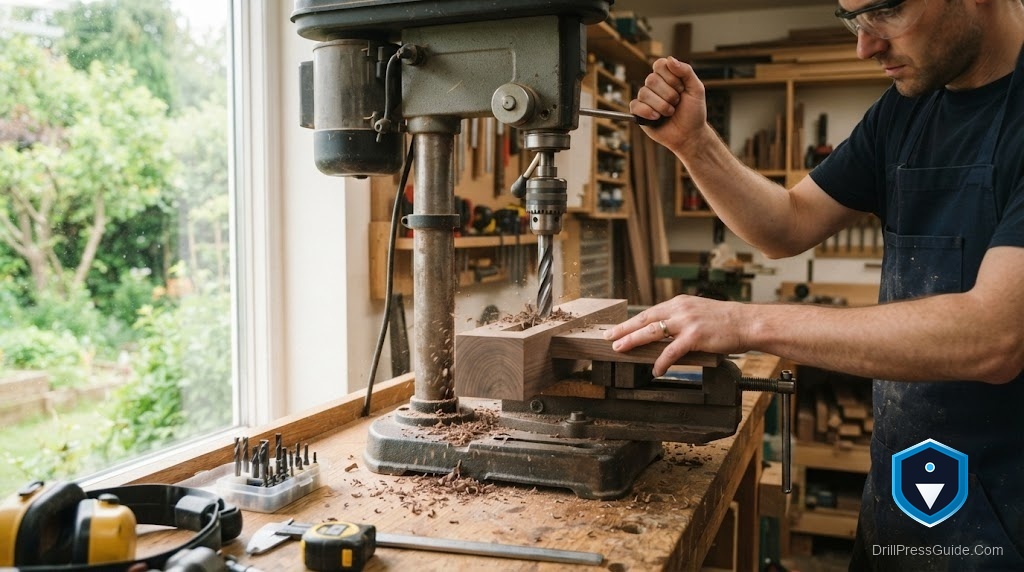
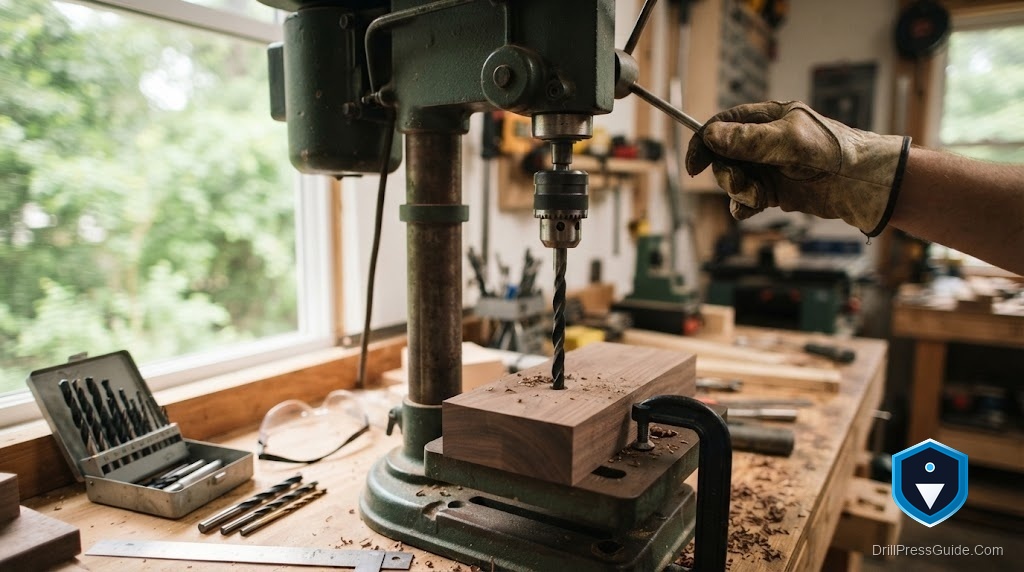
The drill press came with a chuck and maybe a cheap bit, and for a while you make holes and think that is all it does. Then you watch someone bore a flat-bottomed recess for a clock movement, or drill a clean row of shelf-pin holes without a single blowout, and you realize the machine was never the limit. The bits were. Wood milling bits for a drill press are the small, cheap upgrade that turns a hole-maker into a joinery tool, and picking the right one for the cut is most of the skill.
Wood milling bits for a drill press are the cutting tools built to bore and shape wood in a fixed vertical machine: Forstner bits for flat-bottomed holes, brad-point bits for clean through-holes, spade and auger bits for speed, and hole saws for large diameters. Each is designed for a different cut, and using the wrong one is why holes tear, scorch, or wander.
The short answer to which bit you need: brad-point for accurate small holes, Forstner for flat-bottomed and overlapping holes, spade or self-feed for fast rough work, and a hole saw for anything large. Match the bit to the cut and run it at the right speed, and clean wood holes stop being luck.
Forstner bits: the drill press specialty
If one bit type belongs on a drill press more than any other, it is the Forstner. It cuts a flat-bottomed hole with sheer walls, bores cleanly on the edge of a board or over the lip of an existing hole, and leaves a finish smooth enough to show. That flat bottom is why cabinetmakers reach for it: European hinge cups, inlay recesses, and plug holes all want it.
A carbide-tipped Forstner bit set holds its edge through hardwoods and plywood glue lines far longer than plain steel, which dulls fast in abrasive sheet goods. The honest drawback is that Forstners need a press and low speed to shine; freehand in a hand drill they are hard to control, and run too fast they scorch. Skip a Forstner if all you drill is fast rough through-holes in framing lumber, where a spade bit is quicker and cheaper. Large Forstners in particular want slow spindle speeds, around 500 RPM, because their wide cutting rim covers a lot of surface per turn.
Brad-point, spade, and hole saws
Brad-point bits have a center spur that bites first, so they start exactly where you marked and do not walk, and side spurs that slice the wood fibers for a clean rim. They are the everyday choice for accurate small to medium through-holes and dowel holes. Run them faster than Forstners, often 1,500 to 3,000 RPM for small sizes, and back a scrap board under the work to stop exit blowout.
Spade and self-feed bits trade finish for speed. When you need a rough hole for a pipe or a cable run and nobody will ever see it, they are quick and cheap, but they tear the rim and are not for show work. Hole saws handle the big diameters, cutting only a ring so the center pops out as a plug. Run them slow, clear the dust often, and back the cut, because a hole saw that overheats will burn and bind.
Speed is the difference between clean and scorched
The single most common reason a wood hole comes out burned is running the bit too fast for its diameter. A big bit covers a lot of wood per revolution, so its rim speed climbs even at modest RPM, and past a point the wood scorches instead of cutting. Small twist and brad-point bits are happy at high speed. Large Forstners and hole saws want the spindle slowed right down.
Fine Woodworking’s published bit-speed guidance lines up with shop experience: small bits near 3,000 RPM in wood, large Forstners down around 500. If a hole comes out brown-ringed and smells scorched, the fix is almost always a slower speed and a steadier feed, not a sharper bit, though a dull bit makes it worse.
Matching bit to job, side by side
Think of it as four lanes. Need an accurate hole you will see? Brad-point. Need a flat bottom, an overlapping bore, or a hinge cup? Forstner. Need a fast, hidden hole? Spade or self-feed. Need something large? Hole saw. A brad-point gives a cleaner rim than a spade every time; a Forstner gives a flat bottom a brad-point cannot; a hole saw goes bigger than a Forstner practically can. Owning one of each covers almost all wood drilling, and the press gives every one of them the accuracy a hand drill cannot.
The bottom line
Wood milling bits for a drill press are cheap next to the machine and they decide the quality of every hole. Buy a good brad-point set for everyday accuracy, a carbide-tipped Forstner set for flat-bottomed and joinery work, and add spade bits and a hole saw for rough and large holes. Then match speed to diameter, back the cut with scrap, and let the press do what a hand drill cannot.
- Use brad-point for accurate through-holes, Forstner for flat-bottomed and overlapping bores.
- Buy carbide-tipped Forstners if you cut hardwood or plywood; steel dulls fast in glue lines.
- Slow the spindle for large bits; scorching is almost always too much speed.
- Back the workpiece with scrap to kill exit blowout on through-holes.
Get the bit and the speed right and the same press turns out furniture-grade holes.
Frequently asked questions
What bits work best in a drill press for wood? Forstner bits for flat-bottomed and overlapping holes, brad-point bits for accurate through-holes, spade or self-feed bits for fast rough holes, and hole saws for large diameters. Each suits a different cut.
Can I use a Forstner bit in a drill press? Yes, the drill press is where Forstners work best. The fixed spindle keeps them square and steady, which is hard to do freehand. Run large Forstners slowly, around 500 RPM, to avoid scorching.
Why does my wood hole come out burned? Usually the bit is spinning too fast for its diameter, so the rim scorches the wood instead of cutting it. Slow the spindle, feed steadily, and make sure the bit is sharp.
What speed for large wood bits on a drill press? Large Forstners and hole saws want low speed, around 500 RPM. Small twist and brad-point bits can run much faster, often 1,500 to 3,000 RPM. Bigger diameter means slower spindle.
How do I stop blowout when the bit exits? Clamp a scrap backer board tight under the workpiece so the bit exits into the scrap, not into open air. This supports the fibers and prevents the ragged breakout on the back face.
Are carbide-tipped bits worth it for wood? If you cut hardwood, plywood, or MDF often, yes. Plywood glue lines and MDF dull plain steel quickly, and carbide holds its edge far longer for a cleaner cut over time.
References
- Fine Woodworking, drill bit speed chart (PDF): https://images.finewoodworking.com/app/uploads/2020/01/22111726/drill-bit-speed-chart.pdf
- WOOD Magazine, drill press tables and technique: https://www.woodmagazine.com/woodworking-tools/reviews/drill/drill-press-tables
- OSHA, machine guarding and point-of-operation safety: https://www.osha.gov/machine-guarding