Drill Press Bits for Steel: Speed, Tooling, and Workholding Choices
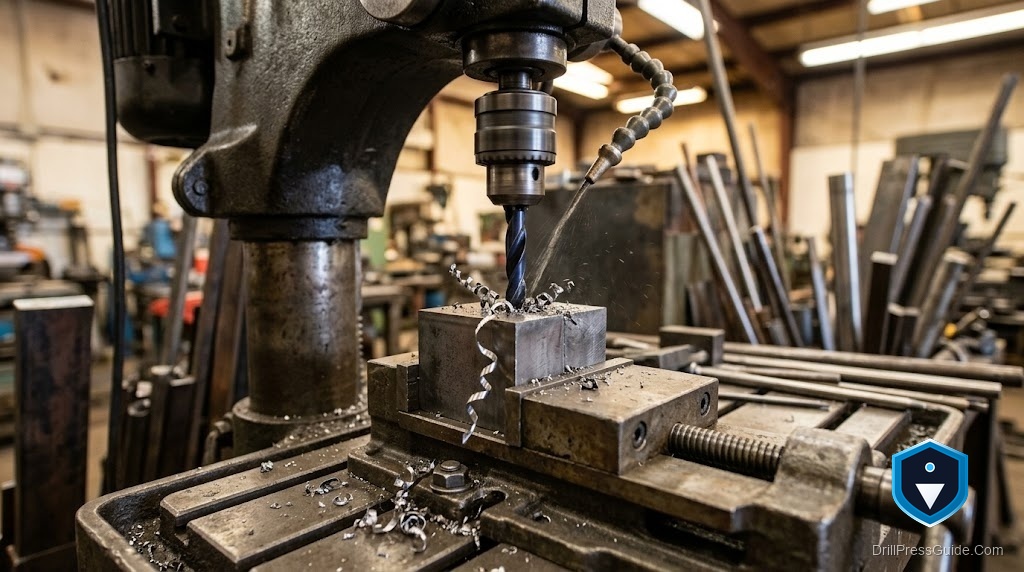
A bit that drills mild steel beautifully can die in ten seconds when it hits stainless. I have watched a brand-new twist bit go from silver to blue to useless in a single hole, and the reason was not the machine or the operator. It was the wrong bit for that steel. Choosing drill press bits for steel is less about brand and more about matching the bit’s material, coating, and geometry to the exact steel on your table.
Drill press bits for steel are cutting tools rated to drill ferrous metal without dulling prematurely, and the useful categories are high-speed steel, black-oxide HSS, cobalt, and carbide, each suited to a harder tier of steel. The right pick depends on whether you are drilling mild steel, hardened steel, or stainless.
The short version: plain and black-oxide HSS handle mild steel, cobalt is the honest choice for stainless and hardened steel, and carbide is a specialist for the hardest work. Pair the bit with the correct speed and firm workholding and it will last, because most bit deaths in steel are really speed and heat failures in disguise.
The four bit tiers, and where each stops
High-speed steel (HSS). Fine for mild steel and general shop work. It is inexpensive and sharpenable. It gives up quickly in stainless or anything hardened.
Black-oxide HSS. The same steel with a surface treatment that resists rust and helps chips slide. A small step up in life and heat tolerance, still a mild-steel tool at heart.
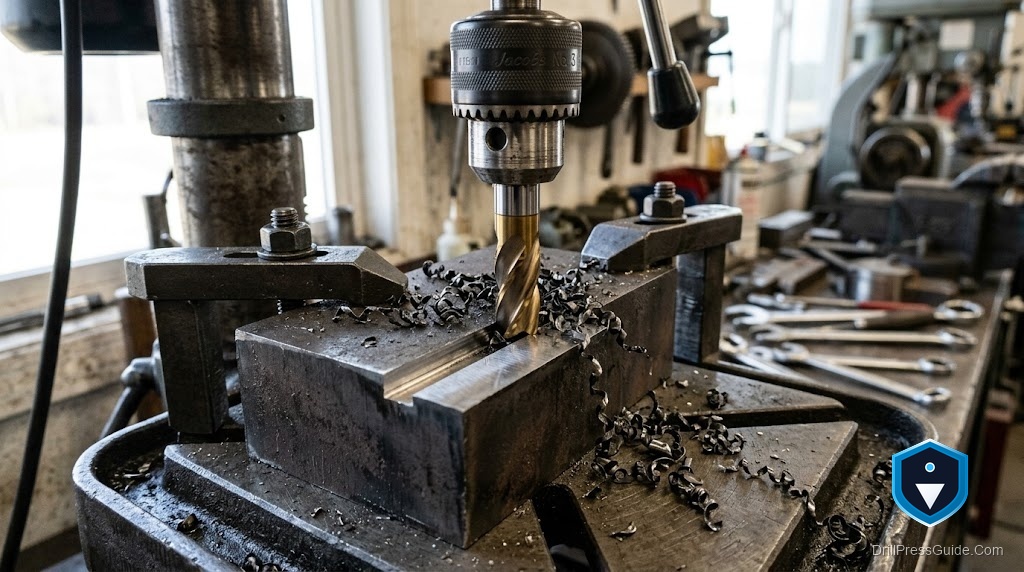
Cobalt (M35 or M42). HSS alloyed with cobalt so it keeps its hardness hot. This is the tier that changes stainless from a nightmare to a routine hole. A cobalt M35 twist drill set is the upgrade most people feel immediately, and for smaller kits a 13-piece M35 cobalt set covers the common sizes. Cobalt is more brittle than plain HSS, so it chips if you let the work chatter.
Carbide. Extremely hard, holds an edge at high heat, and shrugs off abrasive material. It is also brittle and unforgiving of any deflection, which makes it a poor match for a light, flexing press. Save it for rigid setups and truly hard stock.
Geometry: the detail that stops walking
Point angle matters as much as material. A 118-degree point is the general-purpose default. A 135-degree split point self-centers and resists walking, which is what you want in hard steel and stainless. If your bits skate across the mark, a split point plus a center punch usually ends it.
For thick plate, a step down in approach helps: drill a pilot hole first, then open it up. The pilot removes the web’s rubbing and lets the larger bit cut cleanly instead of screeching.
Speed and workholding make the bit last
Even the right bit dies at the wrong speed. Set RPM by surface speed and diameter: mild steel around 80 to 100 SFM, stainless 20 to 40. That puts a 1/4-inch cobalt bit near 1400 RPM in mild steel and near 600 RPM in stainless. Keep steady feed so the flutes take a real chip; dwelling in stainless work-hardens the surface and glazes the tip.
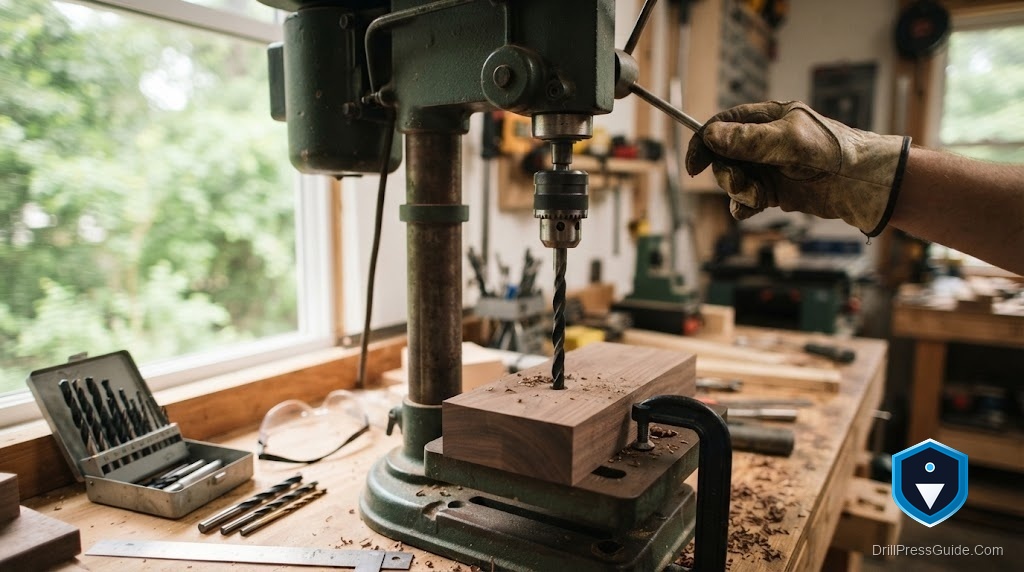
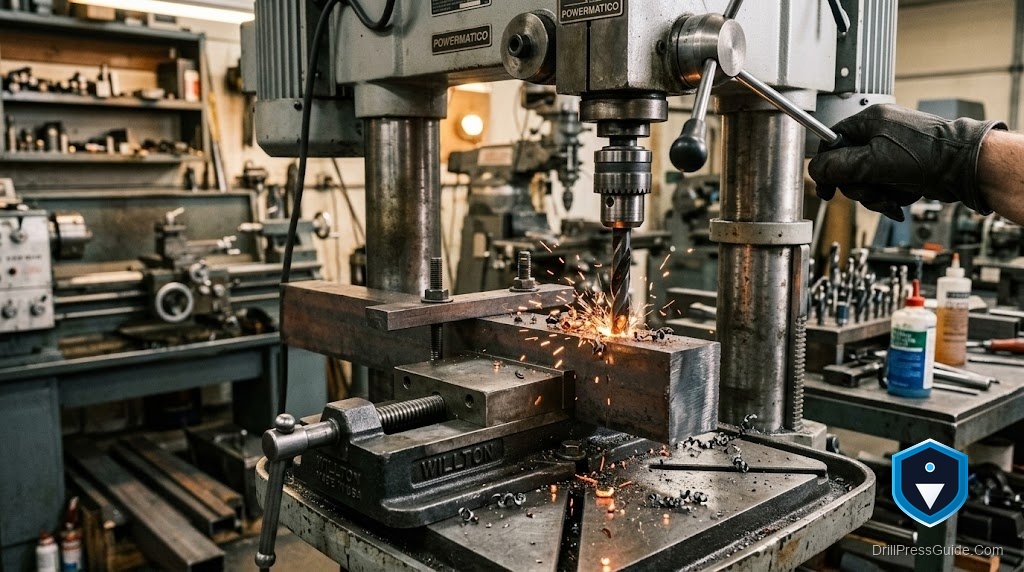
Clamp the work in a drill press vise or to the table. Steel grabs hard on breakthrough, and an unheld part spins into a hazard while it also ruins the hole. Add cutting fluid, wear eye protection, and clear hot chips with a brush, not a hand.
Matching the bit to the steel
| Steel | Best bit | Rough SFM | Notes |
|---|---|---|---|
| Mild steel | HSS or black oxide | 80 to 100 | Cutting fluid still helps |
| Stainless (300 series) | Cobalt M35 or M42 | 20 to 40 | Constant feed, never dwell |
| Hardened / tool steel | Cobalt, then carbide | Low | Pilot hole, rigid setup |
| Cast iron | HSS or cobalt | 100 to 150 | Drills dry, very dusty |
The verdict
For drilling steel on a drill press, cobalt is the bit that solves the most problems, because stainless and hardened steel are where cheap bits fail. Keep plain HSS for mild steel, reach for cobalt when the metal gets hard, and treat carbide as a specialist. Then let correct speed, a pilot hole, cutting fluid, and a clamped part do the rest.
Worth keeping:
- Buy cobalt before you buy an expensive machine if you drill stainless.
- A 135-degree split point and a center punch cure most walking.
- Slow the speed and keep the feed steady to make any bit last.
- Clamp the work and use fluid; heat and movement kill more bits than metal does.
Frequently asked questions
What is the best drill bit for stainless steel? Cobalt, in M35 or M42. It stays hard when hot, which is exactly what stainless demands. Run it slow with constant feed.
Is cobalt or HSS better for steel? For mild steel, plain HSS is fine and cheaper. For stainless or hardened steel, cobalt lasts far longer and is the better value over time.
Do I need cutting fluid to drill steel? Yes for most steel. Fluid carries away heat, extends bit life, and improves the finish. Cast iron is the exception and is usually drilled dry.
Why does my bit stop cutting halfway through stainless? The surface work-hardened because the bit dwelled or ran too fast. Slow down, keep firm constant pressure, and do not pause mid-hole.
What speed for a 1/2-inch bit in mild steel? Around 700 RPM, using roughly 90 SFM. Drop closer to 300 RPM for the same size in stainless.
Can I use carbide bits in a benchtop drill press? Only with a very rigid setup. Carbide is brittle and chips if the machine or work flexes, so it suits heavy presses more than light ones.
References
- Carbide Depot, HSS Twist Drill Recommended Speeds and Feeds: https://www.carbidedepot.com/formulas-drills-speeds.htm
- Norseman Drill and Tool, Feeds and Speeds for Drills: http://www.norsemandrill.com/feeds-speeds-drill.php
- Viking Drill and Tool, Drill Feeds and Speeds: http://www.vikingdrill.com/viking-Drill-FeedandSpeed.php