Drill Press Drill Bits for Metal: Speed, Tooling, and Workholding Choices
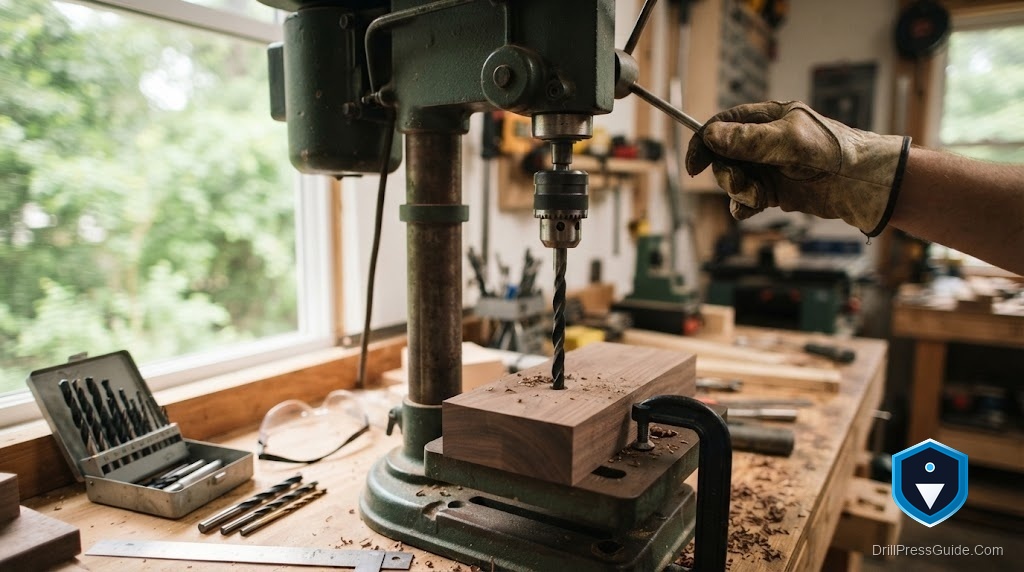
The bit does more to decide a metal hole than the machine does. A cheap bit at the perfect speed still tears and wanders; a good bit forgives a lot of small mistakes. Most people who struggle with metal on a drill press are fighting the wrong bit for the material, or a good bit run at the wrong speed. Sort out the tooling and the rest of the job gets easier.
Quick answer: for metal, use high-speed steel bits for aluminum and mild steel, and step up to cobalt for stainless and hardened steel. Match the speed to the diameter and material, and hold the work in a vise. The bit choice sets the ceiling for what the machine can do.
High-speed steel versus cobalt
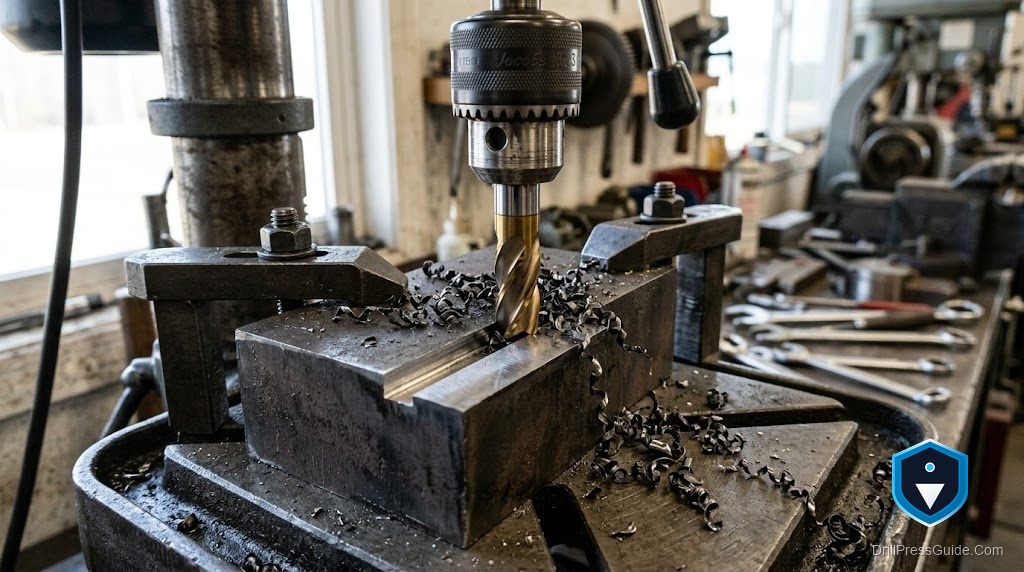
Standard high-speed steel bits handle aluminum and mild steel well when they are sharp and run at the right speed with fluid. Cobalt bits are high-speed steel with cobalt blended in, which lets them keep their edge at higher temperatures. That heat resistance is why cobalt is the choice for stainless and tougher alloys, where a plain bit dulls almost immediately. A set that covers the common sizes in cobalt is a strong default for mixed metal work; a kit like this cobalt drill bit set spans the fractional sizes with a split-point tip that starts cleanly.
Why the point angle matters
Metal bits usually carry a 135-degree split point rather than the 118-degree tip common on general bits. The split point self-centers, so it starts without a pilot hole and resists skating on smooth metal. The flatter 135-degree angle also spreads the cutting load, which suits harder materials. For metal, a split-point tip is worth seeking out because it removes the most common starting problems before you even set the speed.
Speed follows the bit and the metal
A good bit still needs the right RPM. As starting points for sharp bits: mild steel near 1500 at 1/4 inch, 1000 at 3/8, 750 at 1/2. Stainless runs at roughly half those speeds. Aluminum runs much faster. The bit sets what is possible; the speed decides whether you get there without cooking the edge. Confirm with chip color: silver or straw is good, blue means slow down.
Keep the flutes clear and the bit cool
Bits fail in metal from heat and packed chips. Use cutting fluid to carry heat off the edge, and peck deeper holes to clear the flutes so chips do not pack and grind. A sharp bit that stays cool lasts many times longer than the same bit run dry and hot. This is why two people can use identical bits and get very different life out of them; the difference is fluid and chip clearing, not the tooling.
Hold the work
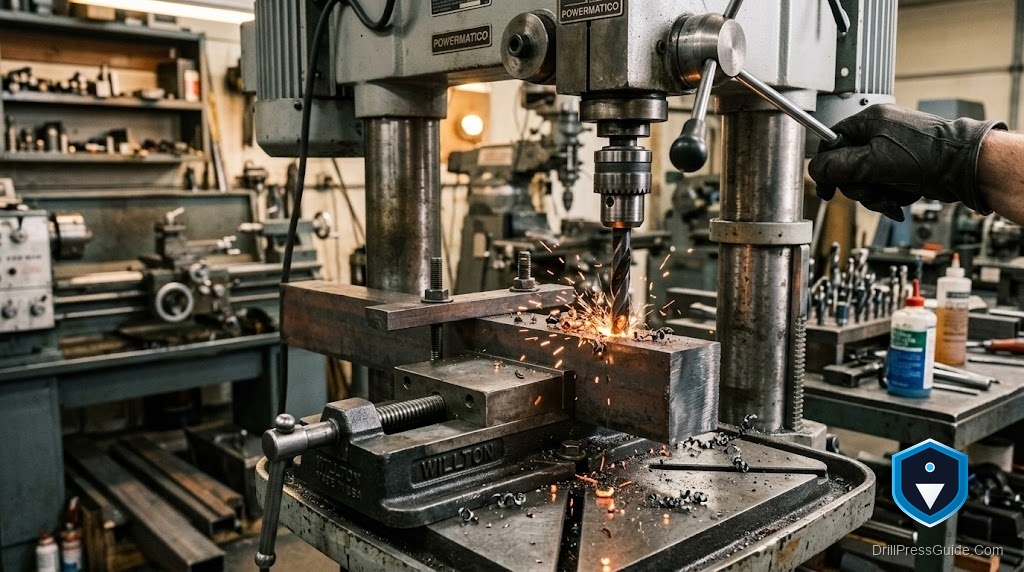
Even the best bit will grab at breakthrough, and an unclamped part becomes a spinning hazard. Hold metal in a drill press vise or clamp it to the table. This protects the hole’s accuracy as much as your hands, because a part that shifts at breakthrough tears the exit and throws off the hole.
The verdict
Choosing metal bits is about matching material, tip, and speed:
- Use high-speed steel for aluminum and mild steel, cobalt for stainless and hard alloys.
- Favor a 135-degree split point so bits start clean without skating.
- Run the correct speed, use fluid, clear chips, and clamp the work.
Who wastes money on bits? People who run good bits dry and fast, dull them in one hole, and blame the tooling. Fluid, correct speed, and clamping make even mid-range bits last.
Frequently asked questions
Are cobalt bits worth it over high-speed steel? For stainless and hard alloys, yes, because they hold an edge under heat. For aluminum and mild steel, good high-speed steel is enough.
What point angle should metal bits have? A 135-degree split point self-centers and starts without skating, which suits metal better than the 118-degree tip on general bits.
Why do my metal bits dull so fast? Usually heat from no cutting fluid, too high a speed, or packed chips. Add fluid, slow down, and peck to clear chips.
Do I need a pilot hole with split-point bits? Split points start without a pilot for small and medium bits. For large holes, a pilot still helps the big bit track true and eases the machine.
Can I drill stainless with regular bits? You can start a small hole, but plain bits dull quickly in stainless. Cobalt at slow speed with fluid is far more reliable.
What is the single best habit for bit life? Cutting fluid. It cools the edge and flushes chips, which is what keeps a metal bit sharp far longer than running it dry.
References
- Dynabrade HSS Drill Speed Recommendation Chart: https://www.dynabrade.com/pdf/lit/D1201_Singles/D12.01_pg134.pdf
- CCOHS, Metalworking Machines - Drill Presses: https://www.ccohs.ca/oshanswers/safety_haz/metalworking/drillpresses.html
- Delta 17-900 Instruction Manual: https://powertool.manualsonline.com/manuals/mfg/delta/17900.html