Can You Use Regular Drill Bits in a Drill Press? What Works and What Does Not
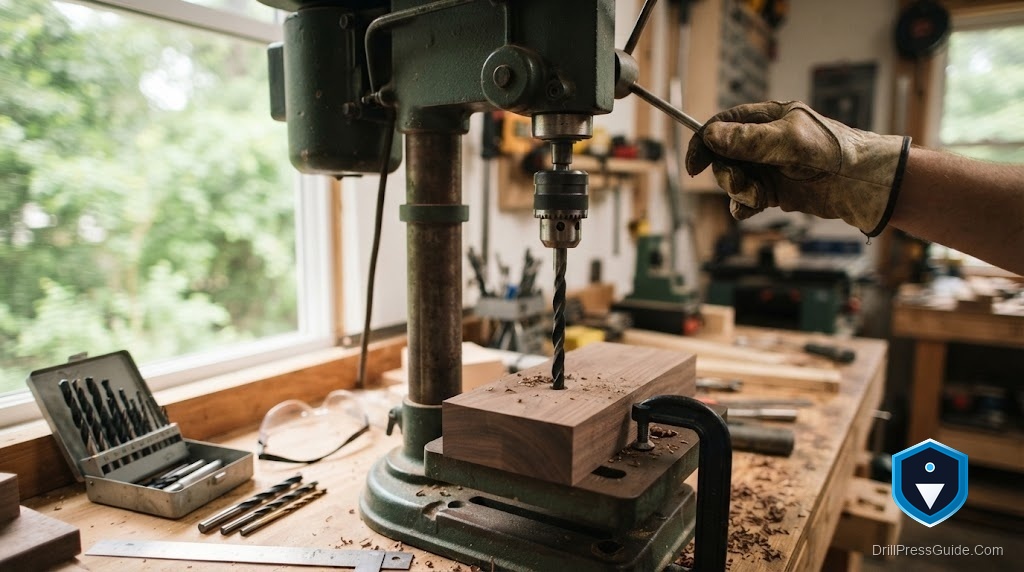
Here is a fear that stops a lot of new owners: you have a coffee can full of ordinary twist bits from your handheld drill, and you are not sure whether dropping them into the shiny new press will wreck something. Good news up front. Those everyday bits are exactly what a drill press wants. The confusion starts when people assume that because the machine looks industrial, it needs special bits, or worse, that any bit-shaped cutter will work in it. Both ideas cause trouble.
Yes, you can use regular drill bits in a drill press, and standard twist bits are the normal, intended tool for it. The real question is not whether ordinary bits work, it is which other cutters do not belong in a drill chuck: router bits, mortise bits, and milling bits each fail for a specific reason worth understanding before you try them.
Regular twist bits are the default
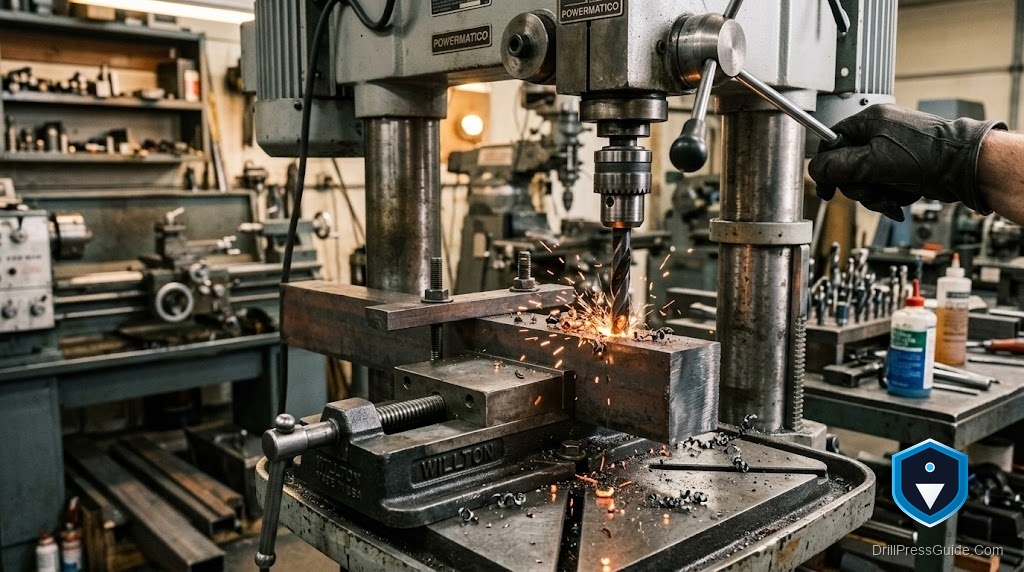
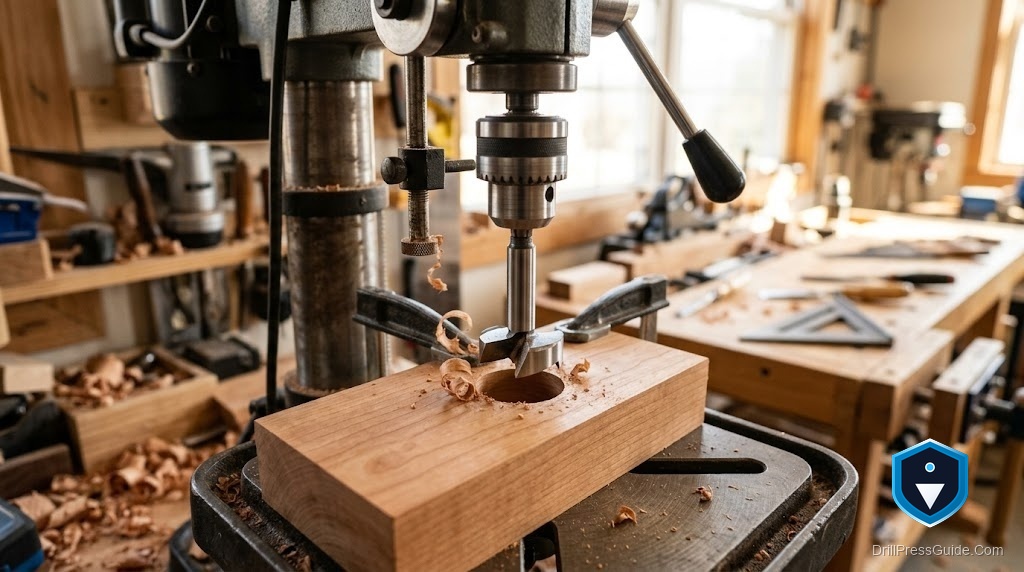
A drill press chuck grips a round shank, and that is precisely what a standard twist bit has. Your handheld drill bits, brad-points, spade bits, and Forstner bits all chuck up and run beautifully, usually better than in a handheld drill because the press keeps them square and lets you set the right speed. If anything, the press flatters your existing bits, since a bit that wandered in your hand now cuts a clean, straight hole.
Match the speed to the bit and material and you are set: slower for large bits and metal, faster for small bits in wood. That single habit does more for hole quality than any special bit ever would.
The cutters that do not belong
This is where the keyword questions cluster, so here is each one honestly.
Router bits. No. Router bits are made to cut sideways at very high speed in a router’s collet. A drill press turns too slowly for them to cut cleanly and cannot take the side load routing demands, so the result is poor and the setup is unsafe.
Mortise bits. Only with the right attachment. A hollow chisel mortising bit needs a mortising attachment that holds the square chisel while the bit drills inside it. Chucked bare into a drill press, a mortise bit is the wrong tool. Some presses accept a dedicated mortising kit, which is the correct path.
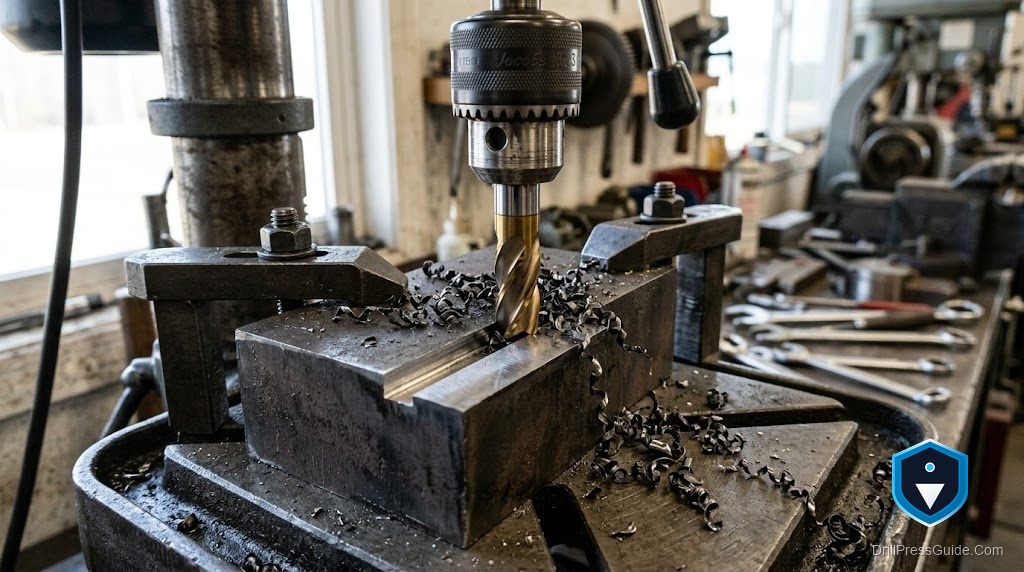
Milling bits (end mills). No, not for their real job. An end mill is built to cut sideways, and a drill press spindle and chuck cannot safely take side loads. Plunging straight down with a center-cutting end mill is a narrow exception, but ordinary side milling is off the table.
Masonry and other specialty bits. Masonry bits work for drilling masonry at the right slow speed, though a press is rarely where you drill brick. The point is that the bit must match the job, not just fit the chuck.
Quick reference
| Bit or cutter | Use in a drill press? | Note |
|---|---|---|
| Twist bit | Yes | The standard, intended tool |
| Brad-point bit | Yes | Great for clean wood holes |
| Spade and Forstner | Yes | Ideal, press keeps them square |
| Hole saw | Yes | Slow speed, clamp the work |
| Router bit | No | Wrong speed, side-load unsafe |
| Mortise bit | Only with attachment | Needs a mortising kit |
| End mill | Plunge only | No side milling |
Why fit alone does not mean safe
The trap is simple: many cutters physically fit a drill chuck, and fit feels like permission. It is not. The OSHA drill press eTool and CCOHS both frame drill press safety around the point of operation and keeping the tool matched to its job, and a cutter that fits but is built for sideways force turns that point of operation into a hazard. A round-shank drilling bit pulls the work down onto the table, which is what the machine is built to resist. A side-cutting bit tries to throw the work, which it is not.
The verdict
Can you use regular drill bits in a drill press? Absolutely, and they are the right tool: standard twist, brad-point, spade, and Forstner bits all belong there and cut better for the machine’s steadiness. The cutters to keep out are the ones built for a different motion, router bits and end mills for side cutting, and mortise bits unless you add a proper mortising attachment. Three takeaways: your existing drilling bits are exactly what the press wants, match speed to bit and material for clean holes, and never treat chuck fit as proof a cutter is safe. Who should be most careful? Anyone tempted to chuck a router bit or bare mortise bit, where fit hides a real danger.
Frequently asked questions
Can you use regular drill bits in a drill press? Yes. Standard twist bits, along with brad-point, spade, and Forstner bits, are the normal, intended tools. The press holds them square and lets you pick the right speed.
Can you use router bits in a drill press? No. Router bits need very high speed and cut sideways in a collet. A drill press turns too slowly and cannot take the side load, making the result poor and unsafe.
Can you use a mortise bit in a drill press? Only with a mortising attachment that holds the hollow square chisel around the bit. A bare mortise bit chucked directly is the wrong setup.
Can you use a milling bit in a drill press? You can plunge a center-cutting end mill straight down into soft material, but you cannot side mill. The spindle and chuck cannot safely take sideways loads.
Do drill presses need special bits? No. They use ordinary drilling bits. What matters is matching bit type and speed to the material, not buying press-specific bits.
Can I use my hand drill bits in a drill press? Yes. The round shanks fit the chuck, and most bits cut more accurately in the press because it keeps them vertical and steady.
Why do some bits fit but still not work? Fitting the chuck only means the shank is round. Bits built to cut sideways, like router bits and end mills, are unsafe because the drill press resists downward force, not side force.
References
- OSHA, Woodworking eTool: Drill Press. https://www.osha.gov/etools/woodworking/production/machines-tools/drill-press
- CCOHS, Metalworking Machines: Drill Presses. https://www.ccohs.ca/oshanswers/safety_haz/metalworking/drillpresses.html
- Pro Tool Reviews, How to Use and Set Up a Drill Press. https://www.protoolreviews.com/how-to-use-drill-press/